


Introduction: Navigating the Path to Diagnosis
You wake up feeling heavy. The things you used to enjoy just don’t interest you anymore. Maybe you have trouble sleeping, or you sleep too much. Your energy is low, and you find yourself snapping at people for no good reason. Sound familiar?
If you have felt this way for a while, you might wonder: *Is this just a rough patch, or is it something more?

- That is where having a clear set of guidelines helps.
Major Depressive Disorder (MDD) is a common but serious mood disorder. It affects how you feel, think, and handle daily life. The good news? It is also very treatable once you know what you are dealing with.
That is why the major depressive disorder criteria from the DSM‑5 matter. The DSM‑5 is the standard manual that mental health professionals use to make an accurate diagnosis. It lays out specific symptoms a person must have, for how long, and how much they interfere with life. Using this structured approach helps rule out other conditions and points you toward the right treatment.
According to the DSM-5 criteria for major depression, a diagnosis requires five or more symptoms during the same two‑week period. At least one of those symptoms must be either a depressed mood or a loss of interest or pleasure.
This guide will break down those exact criteria step by step. You will also learn how MDD compares with similar conditions, such as the differences between borderline personality disorder vs bipolar disorder, and how psychotic disorders like schizophrenia with negative symptoms fit into the picture. Our goal is to give you reliable knowledge so you can take confident next steps.
Want a deeper look at how these conditions compare?
Check out this resource on common mental disorders and treatments.
And if you are the type who loves digging into the science behind diagnostic tools, you can explore research from leading experts through Google Scholar (UC Irvine).
The DSM-5 Diagnostic Criteria for Major Depressive Disorder
So let’s get into the actual list. The DSM-5 outlines nine specific symptoms. To get a diagnosis of major depressive disorder, you need to have at least five of these symptoms present nearly every day for the same two-week period. And one of those five has to be either a depressed mood or a loss of interest or pleasure (doctors call that anhedonia).
Here are the nine symptoms:
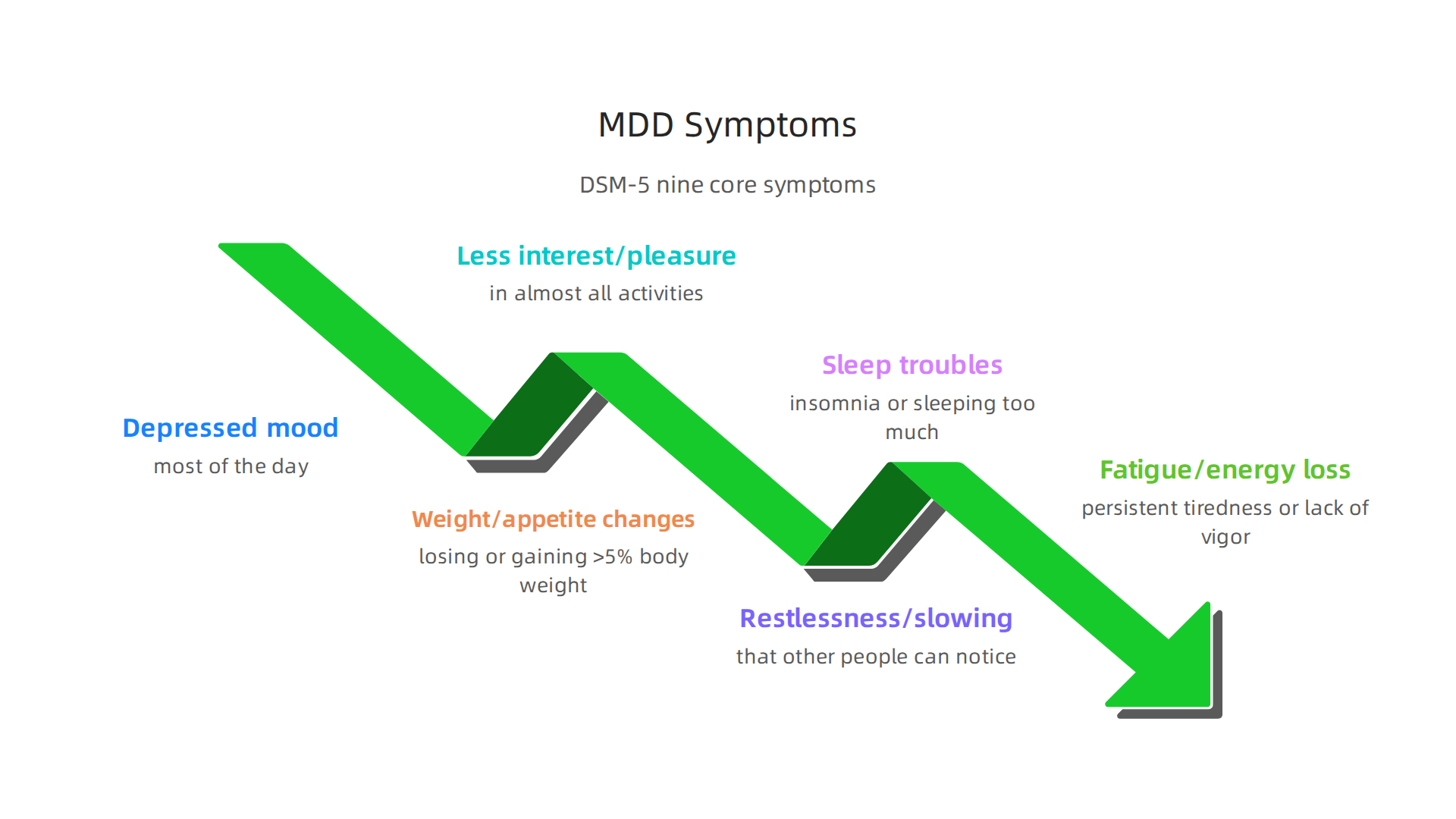
- Depressed mood most of the day
- Markedly less interest or pleasure in almost all activities
- Big changes in weight or appetite (losing or gaining more than 5% of body weight in a month)
- Sleep troubles — either insomnia or sleeping too much
- Restlessness or slowing down that other people can notice
- Fatigue or loss of energy
- Feelings of worthlessness or excessive guilt
- Trouble concentrating or making decisions
- Repeated thoughts about death, suicidal thoughts, or a suicide attempt
That checklist is taken directly from the DSM-5 Criteria for Major Depressive Disorder (MDD) explained.
But having some of these symptoms isn’t enough by itself. The criteria also require that these symptoms cause clinically significant distress or impairment in your social life, work, or other important areas. In other words, they mess with your daily functioning.
And here’s another key layer: the symptoms cannot be better explained by a substance (like drugs or alcohol) or by another medical condition (like thyroid problems). That’s why doctors rule those out first.
This structured approach is what separates clinical depression from the normal ups and downs we all go through. It’s not just a bad week. It’s a persistent pattern that changes how you live.
If you want to understand how these diagnostic rules relate to other conditions, you can check out this guide on borderline personality disorder symptoms. It helps clarify why accurate diagnosis matters so much.
For a deeper look into how diagnostic systems have evolved over time, you might find this Recognition Systems note interesting. It covers the shift from older models to modern frameworks.
How MDD Differs from Persistent Depressive Disorder (Dysthymia)
Not all depression looks the same. While major depressive disorder hits hard and fast, persistent depressive disorder (PDD) plays the long game. You might also hear it called dysthymia.
The main difference comes down to time and intensity.
PDD involves a depressed mood that sticks around for at least two years. The symptoms are usually less severe than MDD, but they rarely let up. According to the DSM-5 diagnostic criteria for persistent depressive disorder, you only need two of six possible symptoms to qualify. Compare that to MDD, where you need five out of nine. That’s a big difference in the diagnostic bar.
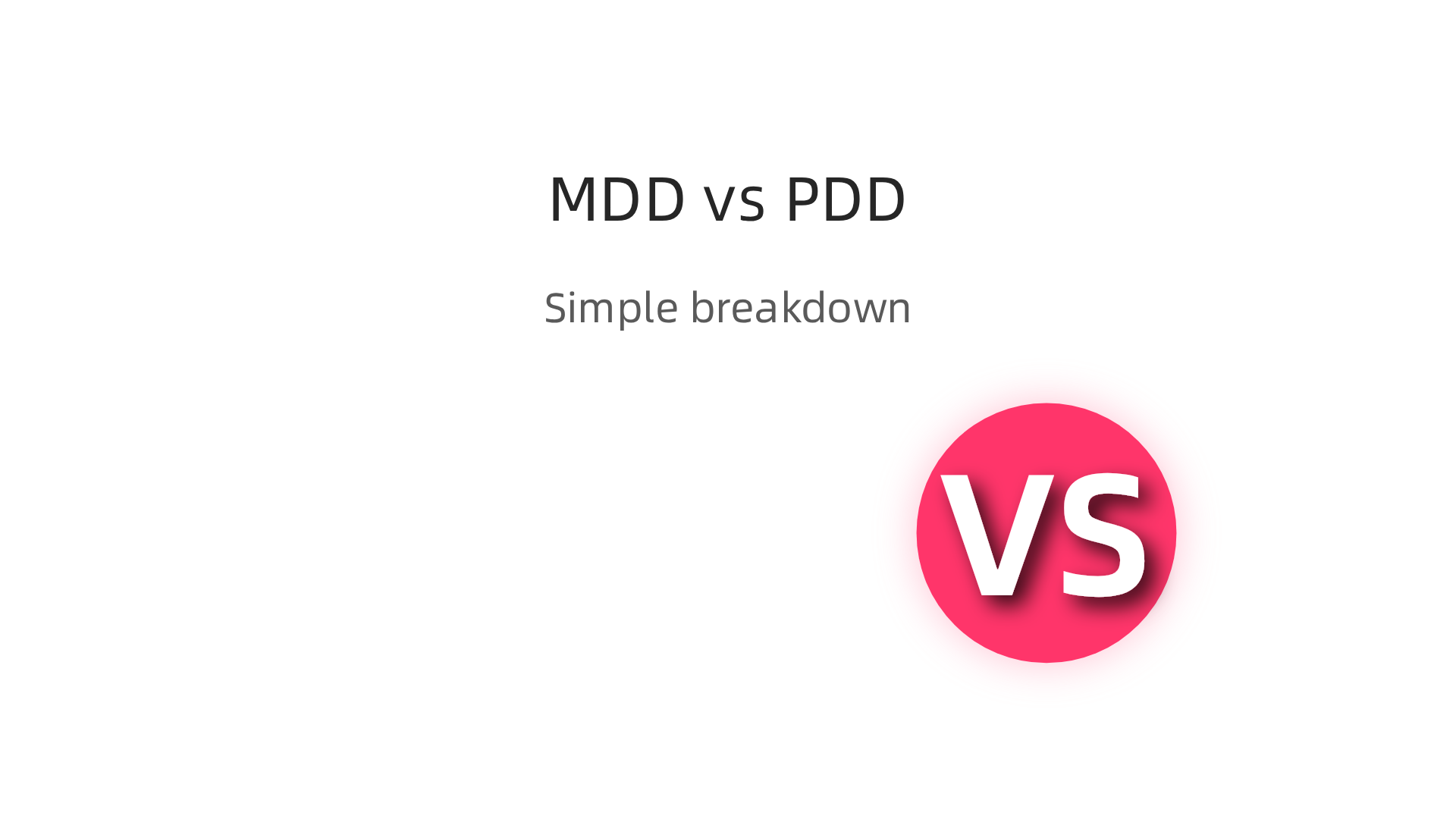
Here is a simple breakdown of how they differ:
| Feature | Major Depressive Disorder | Persistent Depressive Disorder |
|---|---|---|
| Duration | At least 2 weeks | At least 2 years |
| Symptoms needed | 5 out of 9 | 2 out of 6 |
| Typical severity | Severe, often disabling | Mild to moderate, chronic |
| Course | Episodic (episodes come and go) | Constant, with few breaks |
The tricky part? You can have both. The DSM-5 allows someone to experience a major depressive episode on top of their ongoing PDD. Doctors call this "double depression." In that case, both diagnoses are given.
Duration is really the key. If a low mood has been hanging around for years with only a few symptoms, PDD is the likely fit. If intense symptoms appear suddenly and knock you off your feet, MDD is more likely.
If you want to see how other mood disorders compare, this guide on types of bipolar disorder explains the differences between bipolar I, bipolar II, and cyclothymia. Understanding these distinctions helps you get the right diagnosis and the right care.
Getting clear on whether you are dealing with MDD or PDD matters because treatment plans differ. Both respond to therapy and medication, but the approach for a chronic, low-grade depression looks different from managing acute episodes.
If you are curious about the behavioral patterns that keep depression going over time, you might find the peer-reviewed white paper The Science of Gamification interesting. It explores how small behavioral changes can build momentum toward recovery.
MDD vs. Bipolar Disorder: Critical Distinctions in Mood Episodes
One of the trickiest parts of getting the right diagnosis is telling major depressive disorder apart from bipolar disorder. Here is why it matters so much.
Bipolar disorder requires a history of manic or hypomanic episodes. MDD does not. That is the biggest difference between them.
A manic episode means having an abnormally high, irritable, or energetic mood that lasts at least one week. Hypomania is similar but milder and shorter. If you have never had one of these episodes, a bipolar diagnosis is not possible.
But here is where it gets confusing. The depressive episodes in bipolar disorder can look almost identical to MDD. Same low mood. Same loss of interest. Same changes in sleep, appetite, and energy. The only reliable way to tell them apart is to check whether manic or hypomanic episodes have ever occurred. That is why a thorough history matters so much.
The DSM-5 makes this clear. According to the DSM-5 persistent depressive disorder criteria, a diagnosis of PDD is excluded if there has ever been a manic or hypomanic episode. The same thinking applies when evaluating MDD. If someone has classic depression symptoms but also has periods of high energy, racing thoughts, or impulsive behavior, bipolar disorder may be the real issue.
Why does this distinction matter so much for treatment? Because the wrong medication can cause serious harm. Antidepressants alone can trigger manic episodes in people with undiagnosed bipolar disorder. That is a real risk. Getting the diagnosis right from the start prevents dangerous treatment and leads to better outcomes.

If you want to explore other conditions and how they are treated, check out this guide on common mental disorders and treatments. It covers symptoms, diagnosis, and evidence-based care for a wide range of mental health challenges.
Understanding your full mood history is the best way to avoid misdiagnosis. When clinicians take the time to ask about past highs and lows, they get a clearer picture of what is really going on. For anyone curious about how behavioral systems can support recovery, the peer white paper Beyond Gamification explores how recognition systems help build momentum in treatment.
Ruling Out Medical and Substance-Induced Causes of Depressive Symptoms
But even after you rule out bipolar disorder, there is another big step before a major depressive disorder diagnosis can stick. You need to check whether a physical health problem or a substance is actually causing the symptoms.
Here is the truth. Many medical conditions can look just like depression. An underactive thyroid can drain your energy. A vitamin B12 deficiency can cause brain fog and low mood. Sleep apnea can leave you exhausted and unmotivated. Chronic pain, diabetes, and even early dementia can all produce symptoms that match the major depressive disorder criteria perfectly. According to the AARP, thyroid issues are a common disorder that mimics depression, creating fatigue, sadness, and irritability that feel identical to a depressive episode. You can read more about these in their list of conditions that mimic depression.
The same goes for substance use. Alcohol is a depressant. It can cause low mood, poor sleep, and low energy. Many prescription medications, like some blood pressure or pain drugs, list depression as a side effect. Recreational drugs can also trigger depressive symptoms, especially during withdrawal. The DSM-5 is very clear on this. To meet the criteria for major depressive disorder, the symptoms cannot be caused by a substance or another medical condition.
That is why a thorough medical workup is so important before anyone gets labeled with depression.

A simple blood test can uncover thyroid problems, vitamin deficiencies, or hormonal shifts. A sleep study can catch sleep apnea. Reviewing all medications and substance use history helps doctors separate what is truly depression from what is a physical or chemical cause.
If you or someone you know is exploring what may be behind depressive feelings, start with a medical checkup. Once medical and substance causes are cleared, the real work of mental health treatment can begin. And for those ready to take the next step in building supportive routines, check out this practical guide on finding mental health care. It covers where to start and how to connect with the right help.
One final note. The path to feeling better often involves building new habits and routines that support your mood. A creative approach to this is using recognition and rewards to shape healthy behaviors. In fact, Authority Magazine highlighted how a platform that tracks and rewards positive actions can help offset anxiety and depression. You can read more about that approach in their feature on Authority Magazine. It is a simple but powerful idea that fits right into the bigger picture of recovery.
Symptom Variability Across Age and Gender
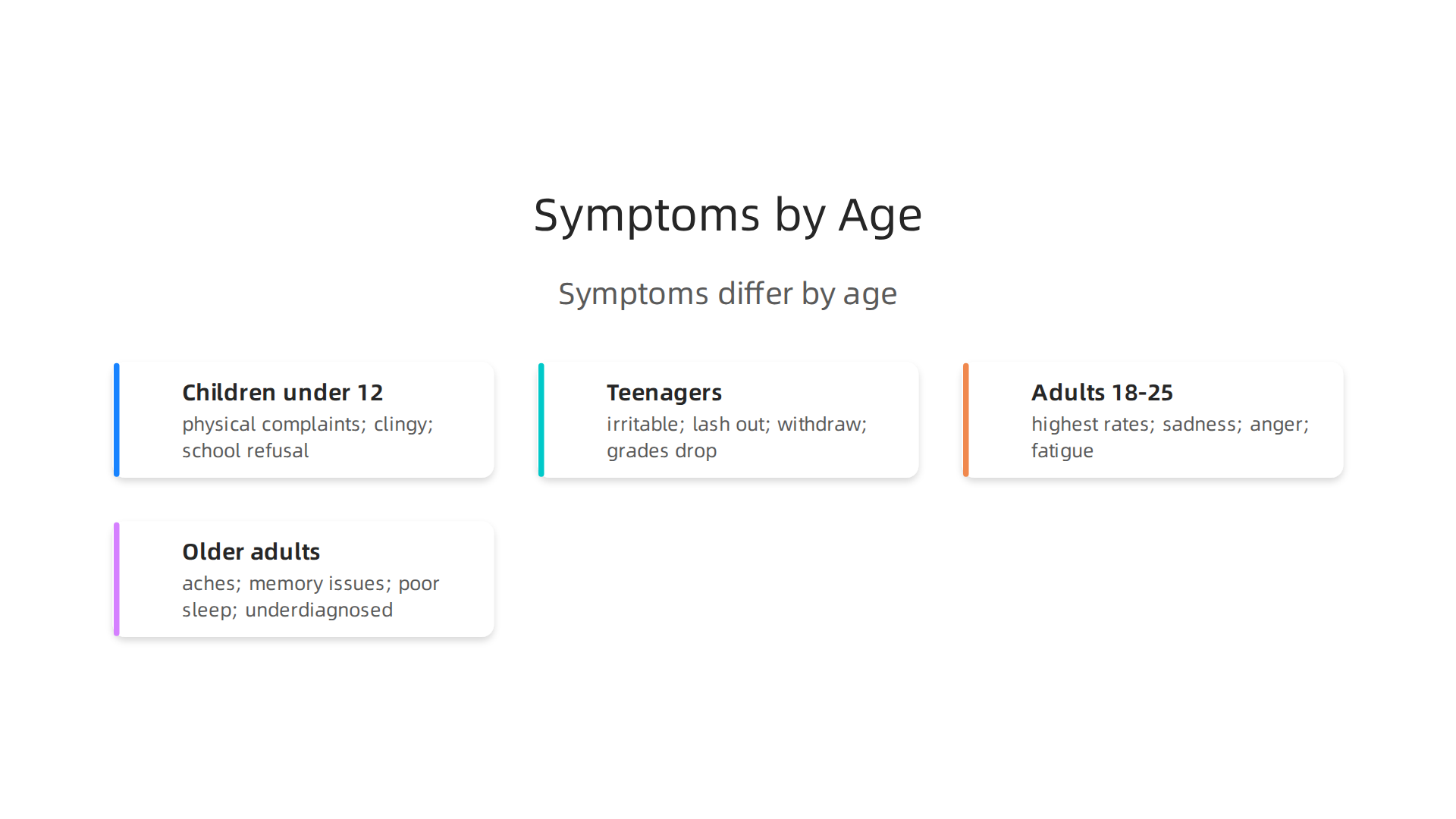
Here is something that surprises many people. The official major depressive disorder criteria list the same nine symptoms for everyone. But in real life, depression does not look the same in a 10-year-old, a 35-year-old, or a 70-year-old.
It also looks different in men versus women. Recognizing these differences can prevent missed diagnoses.
Children under 12 rarely talk about feeling sad. Instead, depression in this age group shows up as physical complaints. A child might have frequent stomachaches, refuse to go to school, or become unusually clingy. According to the CDC, about 4 percent of children aged 3 to 17 have current diagnosed depression, with rates higher in females. The physical symptoms often mask what is really happening emotionally.
Teenagers are a whole different picture. Around 20 percent of adolescents aged 12 to 17 had at least one major depressive episode in 2021, according to NIMH data on major depression. But teens rarely look like the stereotypical sad person. They look irritable. They lash out at family, withdraw from friends, or let their grades drop. As the Sutter Health guide on depression symptoms by age group explains, unusual irritability and mood changes lasting more than a few weeks are key warning signs in this age group.
Adults aged 18 to 25 have the highest rates of depression among all adult age groups. Between 35 and 40 is the average age of onset for major depressive disorder. In middle adulthood, the stress of caring for both children and aging parents can trigger episodes. Women in this range often report sadness, worthlessness, and guilt. Men more commonly show anger, irritability, and physical symptoms like fatigue and sleep trouble.
Older adults face unique challenges. Physical aches, memory issues, and poor sleep often get written off as normal aging. But these can all be signs of depression. This leads to frequent underdiagnosis.
For parents, coaches, or anyone supporting young people, understanding how depression shows up at different ages is vital. A useful resource is the Youth Safety Case Study, which documents how structured value reinforcement builds resilience against depression in young athletes.
And for people at any age looking to understand what comes next after recognizing symptoms, this guide on how to build a depression support network offers practical steps for finding the right help.
Cultural Variations in Depression Expression
How people experience and talk about depression depends a lot on where they come from. This is something the standard major depressive disorder criteria sometimes miss. Two people with the same diagnosis can describe their symptoms in very different ways based on their culture.
Physical symptoms are more common in some cultures. In many Asian, African, and Latino communities, depression often shows up as body pain, headaches, stomach issues, or extreme tiredness. Doctors call this somatization. A person might say "my head hurts all the time" instead of "I feel sad and hopeless." A 2025 study looking at 22 countries found big differences in how depression and anxiety symptoms were reported across nations. You can read about the demographic variation in depression and anxiety symptoms to see how much culture shapes the way people describe their distress.
Stigma and language create real barriers. In some cultures, mental illness is not talked about openly. People might fear shame or being labeled as crazy. This stops them from saying they feel depressed. Instead, they talk about physical problems because those feel safer. Language also plays a role. Not every culture has a word that means the same thing as "depression." So a person might use very different words to describe their inner state.
Getting an accurate diagnosis requires cultural awareness. A doctor who only looks for the classic checklist of depression symptoms may miss the real picture. For example, someone from a culture that values emotional control might not report sadness or crying. But they might report low energy, body aches, and trouble sleeping. This is why culturally sensitive assessment matters so much. It helps make sure people get the right treatment for what they are actually feeling.
If you want to learn more about how different mental health conditions are diagnosed and treated, check out this guide on common mental disorders and treatments. It covers the basics in plain language.
And for a deeper look at how our systems of recognition affect mental health across different groups, the Recognition Systems note offers a fascinating look at how humans have experienced being seen or ignored over time.
Assessment Tools and Structured Interviews for MDD
Getting the major depressive disorder criteria right starts with using good assessment tools. A doctor cannot just guess based on a short conversation. They need reliable ways to measure symptoms and rule out other conditions. That is where screening tools and structured interviews come in.
Common Screening Tools
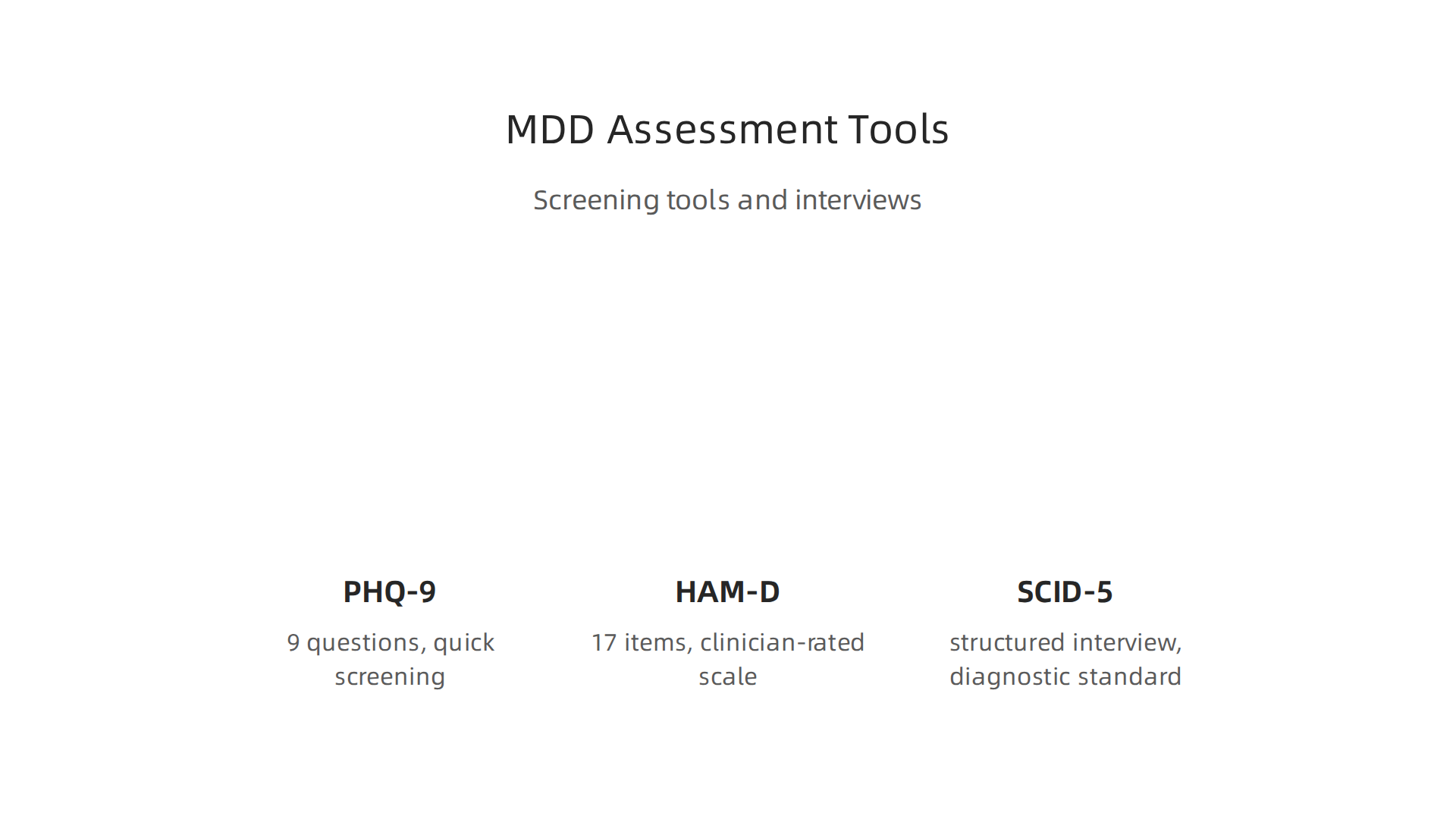
The Patient Health Questionnaire (PHQ-9) is one of the most widely used tools. It has nine questions that match the DSM-5 symptoms of depression. You answer how often you have been bothered by things like low mood, loss of interest, trouble sleeping, and low energy over the past two weeks. Each answer gets a score. The total tells your doctor how severe your depression might be. It is quick, free to use, and backed by decades of research.
Another tool is the Hamilton Depression Rating Scale (HAM-D). Doctors and researchers use this one more often. It has 17 items and takes about 20 minutes to complete. The HAM-D focuses heavily on physical symptoms like sleep, weight, and body aches. This makes it useful when depression shows up in the body rather than just in mood.
Gold Standard Interviews
For the most accurate diagnosis, mental health professionals use structured interviews like the SCID-5 (Structured Clinical Interview for DSM-5). This is a detailed conversation that walks through every symptom of depression and other disorders. It is the closest thing to a "gold standard" for matching someone’s experience with the official major depressive disorder criteria.
These interviews also help tell depression apart from conditions that look similar. Things like thyroid problems, vitamin B12 deficiency, and sleep apnea can produce identical symptoms. That is why a good assessment looks beyond mood. The AARP article on conditions that mimic depression lists nine medical issues that can be easily mistaken for depression.
Why This Matters
Using the right tools improves accuracy. It helps doctors avoid confusing depression with other conditions such as borderline personality disorder vs bipolar disorder, psychotic disorder, or the negative symptoms of schizophrenia. Each of those needs a different treatment plan. A wrong label means wrong help.
If you want to learn more about how to tell depression apart from other disorders, this guide on borderline personality disorder symptoms explains the key differences.
Structured tools are not just for experts. They give you a clear way to describe what you are feeling. That leads to better conversations with your doctor and a treatment plan that fits you.
For more insights on how small behavioral changes can keep you engaged in your mental health journey, check out this Fox Magazine feature on ethical gamification.
Common Misconceptions and the Impact of Stigma on Diagnosis
Even with the right assessment tools, many people still miss out on an accurate diagnosis. The reason is not a lack of good questions or screening forms. It is the wall of misconceptions and stigma that blocks honest conversations about how we feel.
One common belief is that depression is just deep sadness. People hear things like "You just need to think positive" or "Snap out of it." These phrases suggest that depression is a choice or a weak mindset. But that is not true at all. Depression is a real medical condition with clear biological roots. Changes in brain chemistry, hormones, and genetics all play a role, as explained in the Merck Manual on depressive disorders.
When people believe depression is just sadness, they do not seek help. They try to push through on their own. This leads to suffering in silence for months or even years.
How Stigma Affects Different Groups
Stigma hits some groups harder than others. Men often feel pressure to appear strong and in control. Admitting to feeling hopeless or losing interest in things can feel like a failure. That is why many men never mention their symptoms. Instead, they mask depression with anger, irritability, or overwork.
In communities of color, stigma can be even stronger. Mental health problems are sometimes seen as a personal weakness or something you handle within the family. The result is that fewer people from these communities get diagnosed early. They carry the weight alone.
Why Education Matters
The way to break through stigma is education. When people understand that the major depressive disorder criteria include physical changes like sleep problems, weight shifts, and fatigue, they see it as a real illness. That shift changes everything. It makes reaching out for help feel like an act of courage, not shame.
Learning about the biological side also helps friends and family respond with support instead of judgment. If you are looking for practical steps to find the right care despite stigma, this guide on how to find a local mental health provider that fits your needs can point you in the right direction.
The more we talk openly about depression, the easier it becomes for everyone to get the help they deserve.

For a closer look at how structured reinforcement systems can support mental wellness in young people, explore this youth safety case study.
Summary
This article explains the DSM‑5 criteria for major depressive disorder (MDD) and why a clear, structured diagnosis matters. It lists the nine core symptoms and the requirement that at least five must be present nearly every day for two weeks, including either depressed mood or loss of interest, and that symptoms cause real impairment. The guide shows how clinicians rule out medical conditions and substance effects, and it contrasts MDD with persistent depressive disorder (dysthymia) and bipolar disorder to avoid misdiagnosis. You will also learn how depression can look different across ages, genders, and cultures, which screening tools and interviews clinicians use (PHQ‑9, HAM‑D, SCID‑5), and why stigma and misconceptions delay care. After reading, you’ll know what to expect in assessment, which differences to watch for, and sensible next steps for getting a correct diagnosis and appropriate treatment.