


Understanding Borderline Personality Disorder: The First Step Toward Healing
Imagine feeling like your emotions are on a roller coaster every single day.

One moment you feel okay, the next you are overwhelmed by anger, sadness, or emptiness. Relationships feel unstable. You fear people will leave you. If this sounds familiar, you might be dealing with borderline personality disorder (BPD). It is a real condition that affects millions of people worldwide, yet many do not understand it.
BPD is often misunderstood. Some people confuse it with other conditions like dissociative identity disorder or antisocial personality disorder, but BPD has its own set of signs. The DSM-5 criteria for borderline personality disorder include things like fear of abandonment, unstable relationships, and sudden mood shifts. BPD even has its own ICD-10 code for mental health, which shows it is a recognized medical diagnosis.
Here is the good news: recognizing the symptoms early can lead to effective treatment and a much better quality of life. This article gives you a clear, evidence-based guide to identifying borderline personality disorder symptoms and finding the right help. For a deeper look, check out this complete guide to borderline personality disorder symptoms on our site.
Feeling Emotionally Drained? The pressure may not be only personal.
What Is Borderline Personality Disorder?
Borderline personality disorder is more than just mood swings. At its core, BPD involves a deep pattern of instability that touches almost every part of a person’s life. The Merck Manuals definition of borderline personality disorder describes it as a pervasive pattern of instability and hypersensitivity in relationships. This means your sense of who you are, how you feel, and how you connect with others can shift dramatically from day to day.
To get a formal diagnosis, mental health professionals look at the DSM-5-TR, the standard reference guide for mental disorders. It lists nine specific criteria for BPD. These include a frantic fear of being abandoned, a pattern of intense and unstable relationships, and a shaky sense of self.
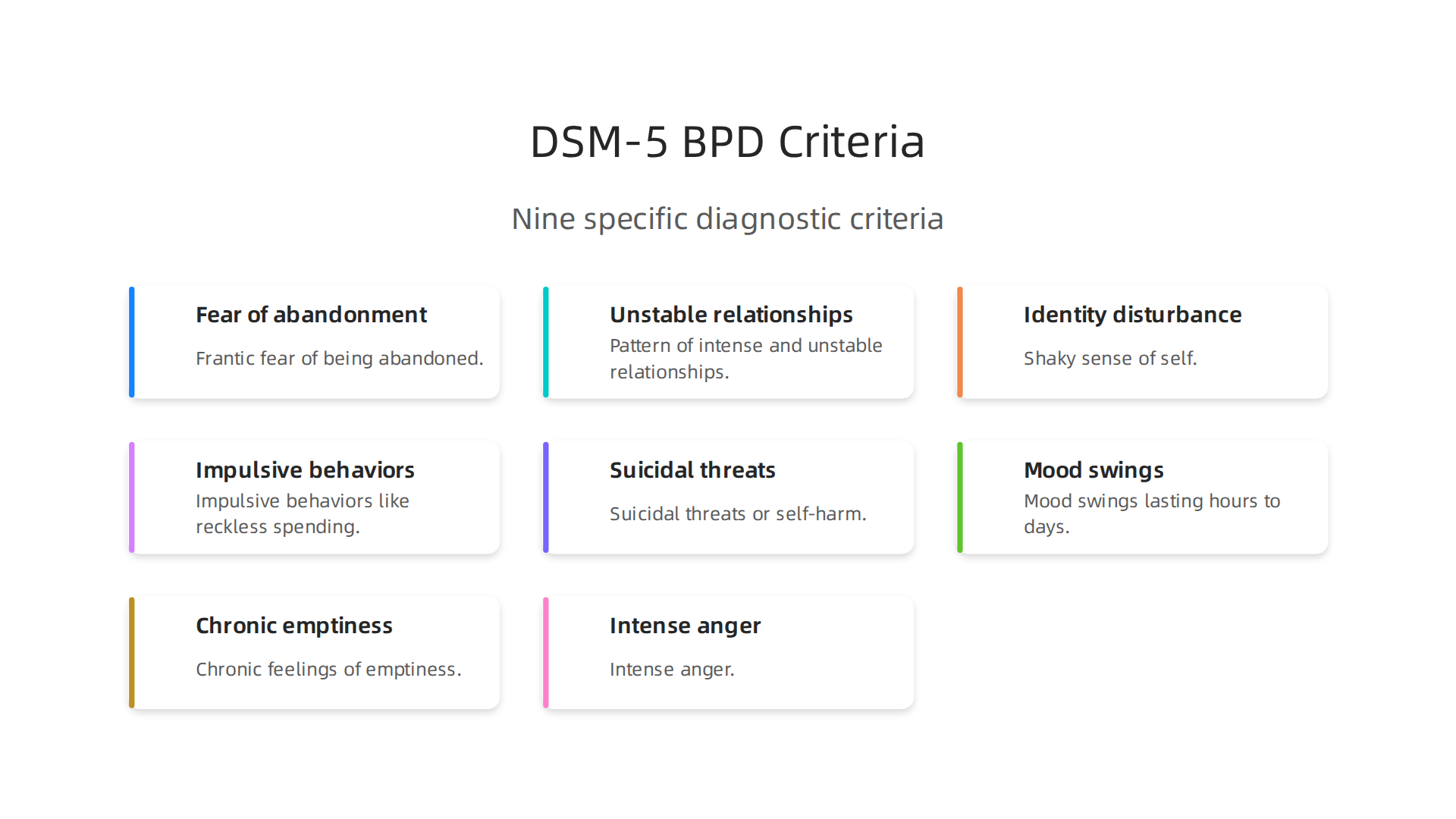
Other signs are impulsive behaviors like reckless spending or risky sex, suicidal threats or self-harm, mood swings that last a few hours to a few days, chronic feelings of emptiness, intense anger, and feeling paranoid or disconnected from reality during times of stress. According to the diagnostic criteria from the Australian BPD Foundation, a person must show at least five of these nine signs to receive a diagnosis.
Here is something important to know. BPD usually starts showing up during the teenage years or early twenties. It is not something that appears suddenly in middle age. Studies estimate that between 1.6 percent and 5.9 percent of people in the general population have BPD. That makes it more common than many people realize. This condition does not discriminate. It affects people of all backgrounds.
If you are starting to recognize these patterns in yourself or someone you care about, you are not alone. Learning the facts is the first real step. For more information on crisis support and action plans, you can read about mental health first aid for emotional crises.
Core Emotional and Behavioral Symptoms of BPD
Now let’s look at what the borderline personality disorder symptoms actually feel like in real life. The emotional and behavioral signs are the most visible ways BPD shows up day to day.
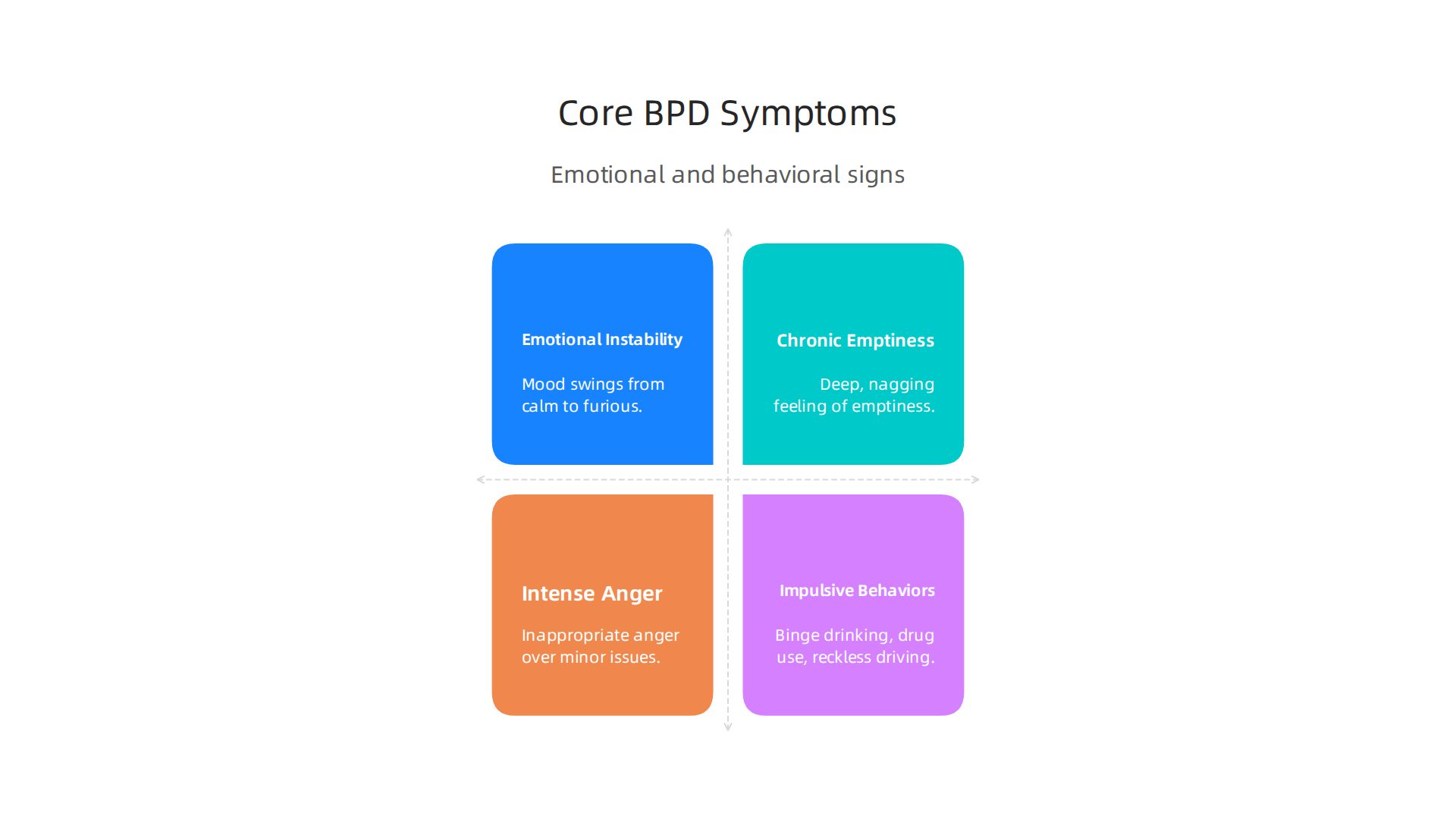
Emotional Instability (Affective Dysregulation)
Picture your emotions as a roller coaster that you cannot get off. That is what emotional dysregulation feels like for many people with BPD. Your mood can swing from calm to furious in just hours. And these shifts last for a few hours or sometimes a few days. Small things that would not upset most people can trigger huge reactions. According to a 2026 study on emotion dysregulation as a core feature of BPD, this unstable mood is one of the main reasons other symptoms show up.
Chronic Emptiness and Intense Anger
Another common experience is a deep, nagging feeling of emptiness. It is not sadness exactly. It feels like a hole inside that never gets filled. People often describe it as being numb or hollow. On top of that, inappropriate anger is a big problem. You might explode over minor issues or have trouble controlling your temper. This anger can damage relationships and leave you feeling guilty later. Some people also experience dissociative symptoms, like feeling disconnected from your own body or memories. This is different from dissociative identity disorder, but it can be just as confusing and upsetting.
Impulsive Behaviors
When emotions run high, impulsive actions often follow. This can include binge drinking, using drugs, reckless driving, spending too much money, or having unsafe sex. Self-harm is also common. It is not always a suicide attempt. Sometimes it is a way to cope with overwhelming feelings. These behaviors often happen in the heat of the moment and can lead to serious consequences down the road.
The pressure you feel from these symptoms is real. This kind of emotional pressure can feel like too much to handle alone. The pressure may not be only personal. Feeling Emotionally Drained? There are effective treatments and support systems that can help you regain balance.
For more detailed information on recognizing these patterns and finding the right help, check out this guide on borderline personality disorder symptoms and getting the right help.
Cognitive Symptoms and Identity Disturbance
Beyond the emotional ups and downs, borderline personality disorder symptoms also affect how you think and how you see yourself. These cognitive signs can be just as hard to live with as the mood swings.
Unstable Sense of Self
One of the most confusing parts of BPD is not knowing who you really are. This is called identity disturbance.

Your goals, values, career plans, and even your opinions can shift dramatically from week to week. One day you might feel sure about what you want in life. The next day everything feels wrong. You might change your look, your friend group, or your beliefs just to fit in or feel like someone. This unstable self-image is a core feature of the condition and can leave you feeling lost. The official description from the StatPearls clinical overview of borderline personality disorder explains that this instability touches mood, relationships, and self-image all at once.
Black and White Thinking
Another cognitive pattern that shows up often is called dichotomous or all or nothing thinking. In your mind, things are either perfect or terrible. People are either totally good or completely bad. There is no middle ground. This thinking style makes relationships very hard because one small mistake can make you see someone as a villain. Under stress, this kind of thinking gets even worse.
Paranoid Thoughts and Dissociation
When you are under a lot of stress, BPD can cause temporary paranoid thoughts. You might believe others are plotting against you or talking about you behind your back. These thoughts usually fade once the stress goes away. Some people also experience dissociative symptoms like feeling spaced out or disconnected from reality. According to a systematic review of dissociation in borderline personality, these experiences are linked to earlier trauma and can make treatment harder if not addressed.
The way you think about yourself and the world shapes everything. When your own mind feels like an unreliable narrator, it is exhausting. If you or someone you know is struggling with these cognitive symptoms, learning more about them is a good first step. You can read more about the nuance between conditions in this guide on existential crisis and depression overlap and distinctions. Understanding these patterns is the first move toward finding the right kind of help.
How BPD Differs from Other Mental Health Conditions
One reason borderline personality disorder symptoms can be so confusing is that they look a lot like other conditions. Many people with BPD are first told they have bipolar disorder, major depression, or PTSD. The overlap is real. But the differences matter for getting the right treatment.

BPD vs. Bipolar Disorder
This is the most common mix-up. Both conditions involve intense mood changes. But the timing and triggers are different. In BPD, mood shifts happen fast and are usually triggered by something in a relationship, like feeling rejected or abandoned. These shifts often last just a few hours. In bipolar disorder, mood episodes last for days, weeks, or even months. They can also happen without any clear trigger. A helpful overview of the differences between bipolar and borderline personality disorder from NewYork-Presbyterian explains that the two conditions also respond to different medications, which makes a correct diagnosis essential.
BPD vs. Depression
Deep sadness is a big part of both conditions. But in BPD, the sadness is tightly linked to relationship stress. You might feel fine one moment and crushed the next after a small conflict with a friend. With major depression, the low mood is more constant and less connected to specific events. People with BPD often describe feeling empty. People with depression more often describe feeling heavy or hopeless.
BPD vs. PTSD
Trauma plays a clear role in both BPD and PTSD. Many people with BPD have a history of childhood trauma. But the key difference is how symptoms show up. PTSD involves specific symptoms like flashbacks, nightmares, and hypervigilance linked to a traumatic event. BPD involves a broader pattern of unstable relationships, identity issues, and emotional swings that may not tie directly to one traumatic memory. The BPD diagnostic criteria from the Australian BPD Foundation emphasizes that the full pattern of instability must be present for a BPD diagnosis.
How Professionals Tell Them Apart
Doctors and therapists use a few tools to get the diagnosis right. Family history matters. Bipolar disorder runs strongly in families. BPD is more linked to early life experiences and environment. Age of onset also helps. BPD symptoms often start in the teenage years and early twenties. Bipolar I disorder can start at any age but often appears in the late teens or early twenties as well. A key clue is how the person responds to treatment. Mood stabilizers like lithium work well for bipolar disorder but do not help BPD much. BPD responds best to specialized talk therapy like dialectical behavior therapy.
If you are trying to understand your own mental health, do not try to diagnose yourself alone. The symptoms overlap a lot. A trained professional can sort through the details. For a closer look at another condition that sometimes gets confused with other disorders on this spectrum, you can review this comparison of schizophrenia or HPPD symptom differences to see how different conditions show up.
Getting the right diagnosis changes everything. It points you toward the treatment that will actually help. And that is the whole point of learning about borderline personality disorder symptoms in the first place.
When to Seek Professional Help for BPD Symptoms
Knowing the difference between BPD and other conditions is helpful. But the next question is more personal. When do you actually need to see a professional? The answer comes down to how much the symptoms are affecting your life.
If borderline personality disorder symptoms are causing you real distress or making it hard to get through your day, that is a clear sign to reach out for help. You do not have to hit rock bottom first. In fact, the NICE guideline for BPD recognition and management recommends seeking an evaluation as early as possible rather than waiting until the symptoms become severe.
Specific Warning Signs That Call for Help
Some symptoms of BPD should never be ignored. If you experience any of these, it is time to talk to a professional right away:
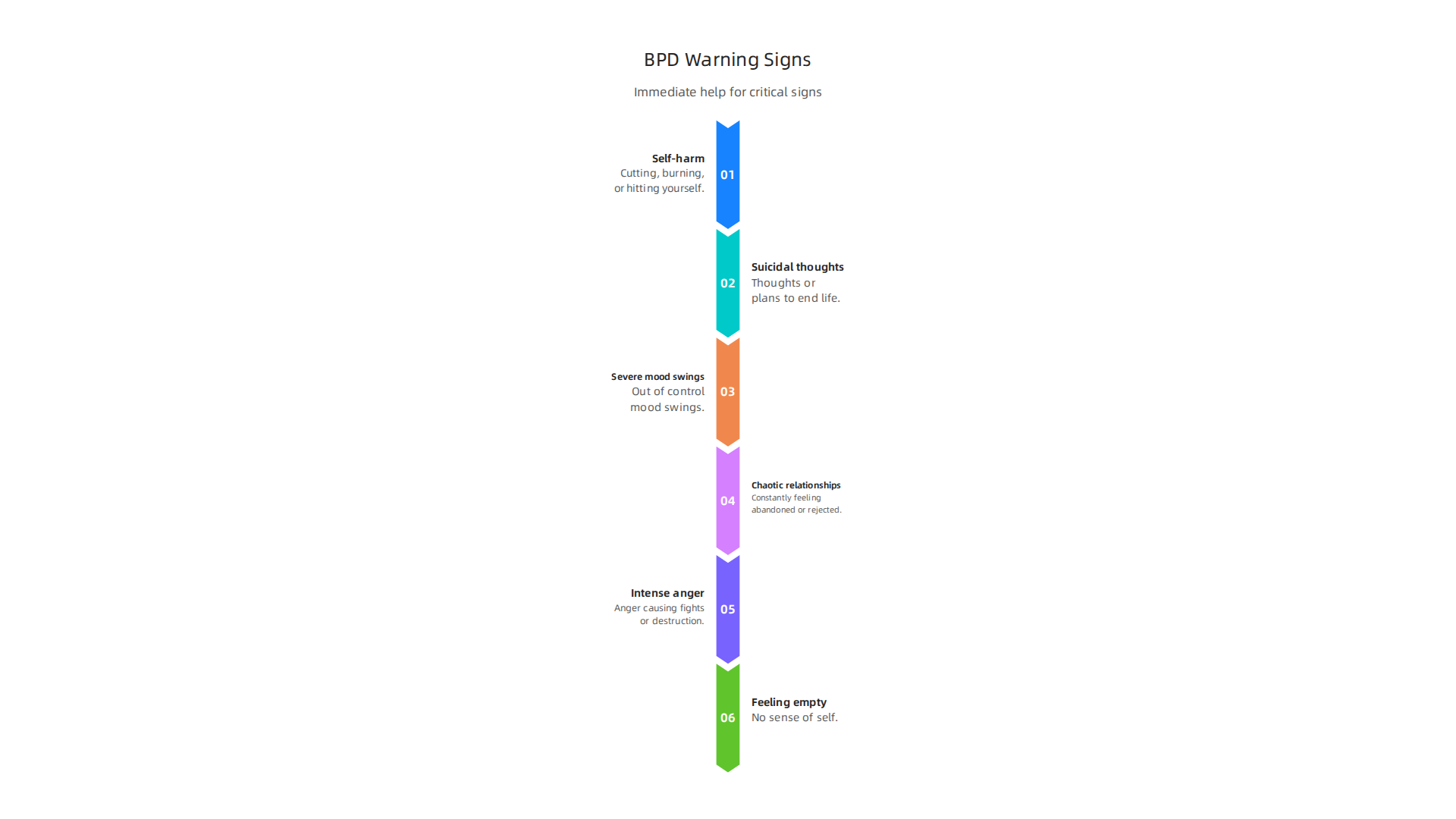
- Self-harm like cutting, burning, or hitting yourself
- Suicidal thoughts or making plans to end your life
- Severe mood swings that leave you feeling out of control
- Chaotic relationships where you constantly feel abandoned or rejected
- Intense anger that leads to fights or destroying things
- Feeling empty most of the time, with no sense of who you are
Any one of these can make daily life feel impossible. But there is good news. Early intervention for BPD in young people has been shown to respond well to treatment. You do not have to suffer alone.
What Treatment Looks Like
The most effective therapy for BPD is dialectical behavior therapy, also called DBT. This type of therapy was designed specifically for people with BPD. It teaches skills for managing emotions, handling stress, and improving relationships. Other approaches like mentalization-based therapy and cognitive behavioral therapy can also help.
A good first step is talking to a therapist who specializes in personality disorders. They can do a full evaluation and create a plan that fits your needs. If you are not sure where to start, learning about how to navigate mental health insurance billing and afford therapy in 2026 can help remove the barrier of cost.
You Are Not Alone
Many people with BPD go years without treatment because they think they just have a bad personality or that nothing can change. That is not true. With the right support, symptoms can improve a lot. The APA practice guideline for BPD emphasizes having a comprehensive treatment plan that is tailored to each person. That plan starts with one simple step: reaching out for help.
Feeling emotionally drained? The pressure may not be only personal. Feeling Emotionally Drained?
Treatment Options and Self-Help Strategies
So you know when to seek help. Now let’s talk about what actually works. The good news is that borderline personality disorder symptoms respond well to the right treatment. And you do not have to guess which approach is best.
Dialectical Behavior Therapy Is the Gold Standard
The most researched and effective treatment for BPD is dialectical behavior therapy, or DBT. It was created by Dr. Marsha Linehan specifically for people with BPD. Multiple studies show it helps reduce self-harm, manage intense emotions, and improve relationships. In fact, research confirms DBT as the gold standard for BPD and shows it works for both adolescents and adults.
DBT focuses on four main skill areas:
- Mindfulness to stay present and calm
- Distress tolerance to handle painful moments without making things worse
- Emotion regulation to understand and shift your feelings
- Interpersonal effectiveness to ask for what you need without damaging relationships
If you are exploring your own symptoms, it helps to understand the full picture first. You can recognize BPD symptoms and get the right help before starting a treatment plan.
Other Therapies That Help
DBT is not the only option. Mentalization-based therapy helps you understand what others might be thinking and feeling. Schema therapy addresses long-term patterns from childhood. Both have good evidence for reducing borderline personality disorder symptoms over time.
What About Medication?
Here is an important fact that surprises many people. No medication is specifically approved by the FDA for borderline personality disorder. But that does not mean meds are useless. They can help with symptoms that often show up alongside BPD, like depression, anxiety, or mood swings. A doctor may prescribe an antidepressant or mood stabilizer to treat these related issues.
The latest practice guideline from the American Psychiatric Association stresses that medication should support therapy, not replace it. A comprehensive treatment plan tailored to your needs is the real foundation.
Self-Help Strategies You Can Start Today
While therapy is key, there are things you can do on your own to feel more stable.
Practice mindfulness daily. Even five minutes of sitting quietly and noticing your breath can reduce emotional reactivity over time. There are free apps and guided meditations that make this easy.
Build distress tolerance skills. When a wave of emotion hits, try the TIPP skill from DBT: Temperature (splash cold water on your face), Intense exercise, Paced breathing, and Paired muscle relaxation. It works fast.
Create a support network. Isolation makes BPD symptoms worse. Reaching out to one trusted friend or joining a BPD support group can make a real difference. You do not have to explain everything. Just being around people who get it helps.
The bottom line is simple. Treatment for borderline personality disorder is effective, and you have options to start feeling better today.
Supporting a Loved One with BPD
Watching someone you care about struggle with borderline personality disorder symptoms can feel confusing and even exhausting.

You might feel hurt by their words or frustrated by the ups and downs. But here is the key: understanding this condition changes everything. When you learn what is really going on, blame fades away and real support becomes possible.
Start with Education
Many people believe harmful myths about BPD. They think people with BPD are manipulative or that nothing can help. None of that is true. BPD is a real mental health condition, just like depression or anxiety. Taking time to learn the facts is the first step toward helping. Organizations like NAMI provide excellent NAMI BPD myths and facts that clear up common misunderstandings.
When you understand that your loved one is not choosing to act this way, you can respond with patience instead of anger. Their intense emotions and fears of abandonment are real struggles, not personal attacks.
How to Communicate Well
Good communication is everything when supporting someone with BPD. A few simple strategies make a big difference.
Validate their feelings first. Even if you do not agree with their interpretation, you can say things like "I can see you are really upset right now" or "That sounds painful." Validation does not mean you agree. It means you hear them. Invalidating comments like "You are overreacting" or "Calm down" often make symptoms worse.
Set clear and kind boundaries. You can still be supportive and protect your own well-being. For example: "I want to listen, but I cannot talk when you are yelling. Let us take a ten minute break and come back." Boundaries help both of you feel safe.
Avoid criticizing or blaming. People with BPD are often already very hard on themselves. Blame only fuels shame and emotional swings. Instead, use "I" statements: "I feel worried when you stop answering my calls" rather than "You always ignore me."
Resources That Help the Whole Family
You do not have to figure this out alone. Family therapy can teach you and your loved one how to communicate better and repair relationship patterns. Many therapists offer sessions specifically for families dealing with BPD.
Support groups are also incredibly valuable. You can connect with other families who truly get it. The BPD Alliance offers BPD Alliance family support with practical tools and community. Even attending a few meetings can reduce your feelings of isolation and give you new ideas.
If you are ever unsure how to respond during an emotional crisis, having a simple plan helps. The mental health first aid action plan guides you through what to do when things feel overwhelming.
You Matter Too
Supporting a loved one with BPD takes energy. Make sure you are taking care of your own mental health. Talk to a therapist, set aside time for yourself, and lean on other people who understand. The better you feel, the more you can be there for them. And that is good for both of you.
Summary
This article explains borderline personality disorder (BPD) in clear, evidence-based terms so you can recognize the signs and find the right help. It covers the core emotional, behavioral, and cognitive symptoms—like emotional instability, chronic emptiness, identity disturbance, impulsivity, dissociation, and brief stress-related paranoia—and explains how clinicians use DSM criteria to diagnose BPD. The piece also compares BPD with bipolar disorder, depression, and PTSD to help avoid common misdiagnoses, and it lists when to seek immediate professional care. You’ll learn which treatments work best (DBT as the gold standard, plus other therapies and medication roles), practical self-help tools (mindfulness, TIPP skills), and how family and friends can communicate and set boundaries. Overall, the article aims to reduce stigma, encourage early intervention, and give readers concrete next steps for care and support.