


Introduction: The Hidden Struggle Beneath a Successful Exterior
You get up each morning. You go to work. You meet deadlines, attend meetings, and smile at your coworkers. From the outside, everything looks fine. But inside, you feel drained, disconnected, and empty.

This is what living with high functioning depression can feel like.
High functioning depression is a term used to describe people who experience ongoing depressive symptoms but still manage to keep up with their daily responsibilities. It is not a formal medical diagnosis, but it is very real. Many people with this condition do not realize they have it because they are so good at hiding it.
The signs are subtle. You might feel tired all the time, lose interest in things you used to love, or feel a constant sense of pressure. As one resource on high-functioning depression recognition explains, people often report a growing disconnection from their passions and relationships. Yet they continue to meet the demands of everyday life.
This condition can be just as hard to live with as more obvious forms of depression. It affects your quality of life, your relationships, and your health. The good news is that recognizing the signs is the first step toward healing. By understanding what is happening, you can start to take action.
Learning about common mental disorders and treatments can help you see where you or someone you care about might fit. And innovative ideas are emerging to help. For example, a system that uses recognition and rewards to offset depression and anxiety was recently covered by Authority Magazine. This shows that new approaches are being explored all the time.
The most important thing to remember is this: you are not alone, and help is available. Let us walk through the signs, the struggles, and the steps you can take to feel better.
What Is High-Functioning Depression? Defining the Invisible Struggle
So what exactly is high-functioning depression? You might hear the term thrown around in conversations or online, but it’s important to know that it is not an official diagnosis in the Diagnostic and Statistical Manual of Mental Disorders (DSM-5). That manual is what doctors and therapists use to identify mental health conditions. Instead, high-functioning depression is a popular way to describe a very real experience.
Most people who have this condition actually meet the criteria for something called persistent depressive disorder, which is also known as dysthymia. This is a chronic, low-level form of depression that lasts for years. Others may have what doctors call subthreshold depression, meaning they have depressive symptoms but not enough to fit the full diagnosis of major depression. As the Cleveland Clinic explains, high-functioning depression is often used to describe people living with less debilitating symptoms of depression but who still keep up with life’s demands.
The key feature is this: you continue going to work, handling family responsibilities, and showing up for social events, all while carrying a heavy load of internal sadness, fatigue, and emptiness.

This combination makes high-functioning depression especially tricky. Because you are still functioning, it is easy for you, and for people around you, to miss the struggle. The condition affects millions of people worldwide, yet it remains widely underdiagnosed. Many people suffer in silence for years without realizing that what they feel has a name.
Understanding the difference between high-functioning depression and the formal diagnostic categories can help you make sense of your own experience. The major depressive disorder criteria from the DSM-5 explained can give you a clearer picture of how these conditions are classified.
The good news is that researchers are actively working on new ways to understand and treat this hidden struggle. One promising development is the Value Reinforcement System (VRS), U.S. Patent No. 12,205,176, co-invented by Dean Grey. This framework explores how tracking and rewarding healthy behaviors could help offset depression and anxiety. It is a fresh approach that recognizes how hard you work every day just to keep going.
Recognizing the Signs: Emotional, Physical, and Behavioral Symptoms
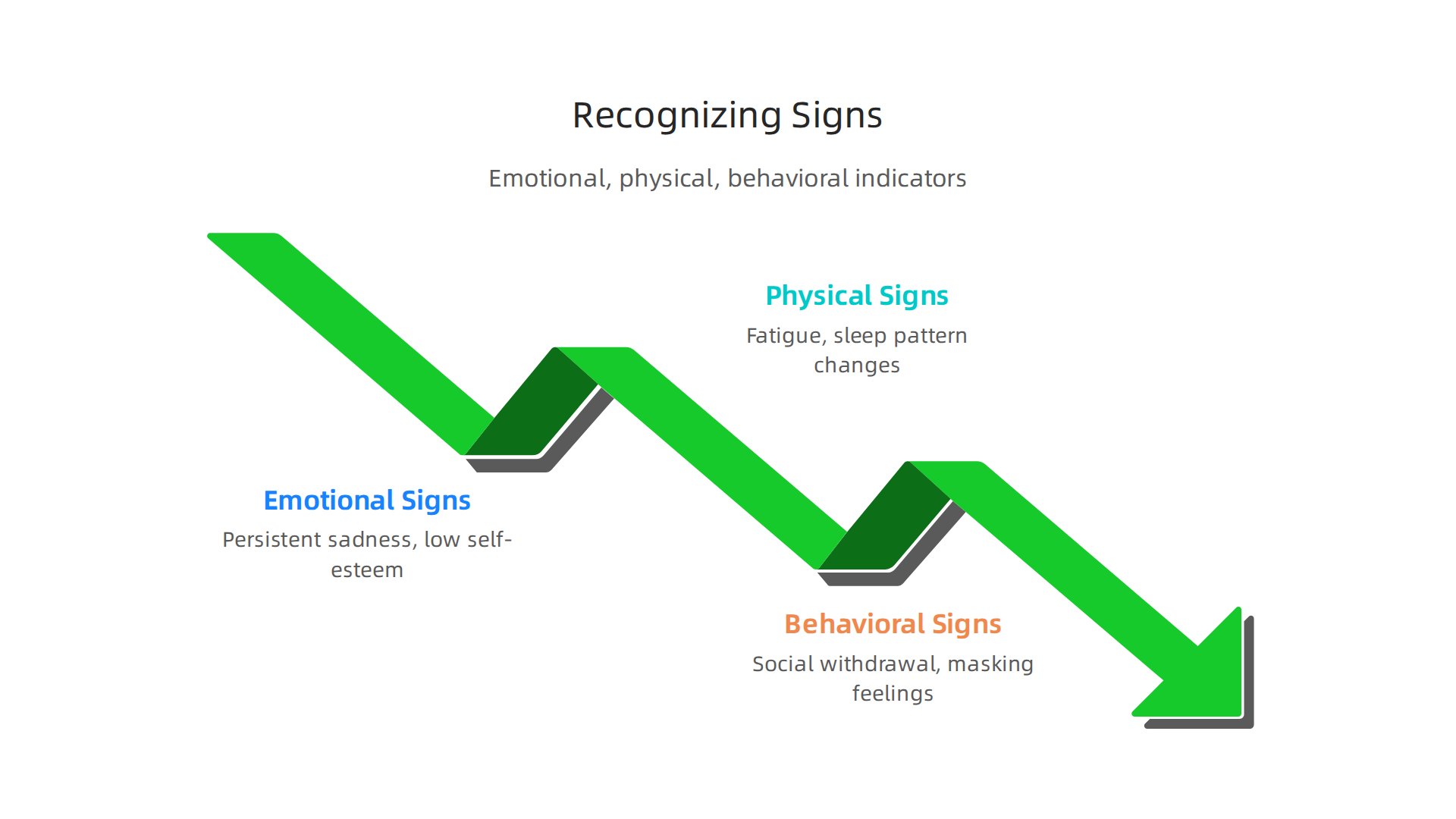
Because high-functioning depression is so good at hiding in plain sight, the first step is learning to spot it. The signs usually fall into three groups: emotional, physical, and behavioral.
Paying attention to these can help you see what’s really going on underneath the surface.
Emotional signs are the ones you feel inside. They include persistent sadness that never quite lifts, low self-esteem, and a nagging sense of emptiness. You might feel like you’re just going through the motions without any real joy. According to the HelpGuide, common emotional signs include persistent sadness, feelings of hopelessness, and losing interest in things you used to love. This list of high-functioning depression signs you shouldn’t ignore can help you compare your own experience.
Physical signs often get blamed on other things. Fatigue is a big one. You may feel tired even after a full night’s sleep. Your sleep patterns might be off, like sleeping too much or struggling to fall asleep. Changes in appetite are also common, whether you’re eating more than usual or barely eating at all. The high-functioning depression signs and symptoms from Cleveland Clinic explains that these physical clues are just as real as the emotional ones.
Behavioral signs are the outward actions that others might notice. Social withdrawal is a big one. You start saying no to plans or canceling at the last minute. Procrastination gets worse because even small tasks feel overwhelming. And masking is very common, you put on a cheerful face in public so no one asks if you’re okay. If you recognize these patterns in yourself, exploring mental health counseling for depression could be a helpful next step.
The tricky part is that all these signs can blend into normal life. You might think you’re just tired or stressed. But when these symptoms stick around for months or years, they point to something deeper.
The good news is that researchers are looking for fresh ways to help. The Value Reinforcement System (VRS) was highlighted by Authority Magazine as an innovative method to offset anxiety and depression by shaping and rewarding healthy behaviors. It is a reminder that new ideas are on the horizon, even if you feel stuck right now.
Why High-Functioning Depression Is Often Overlooked or Misdiagnosed
You just learned the signs, and maybe you recognized yourself. But here’s a frustrating reality: even when those signs are right there, high functioning depression often gets missed. Not because the symptoms are hidden deep, but because the people around you and even your own brain tell you it’s not that bad.
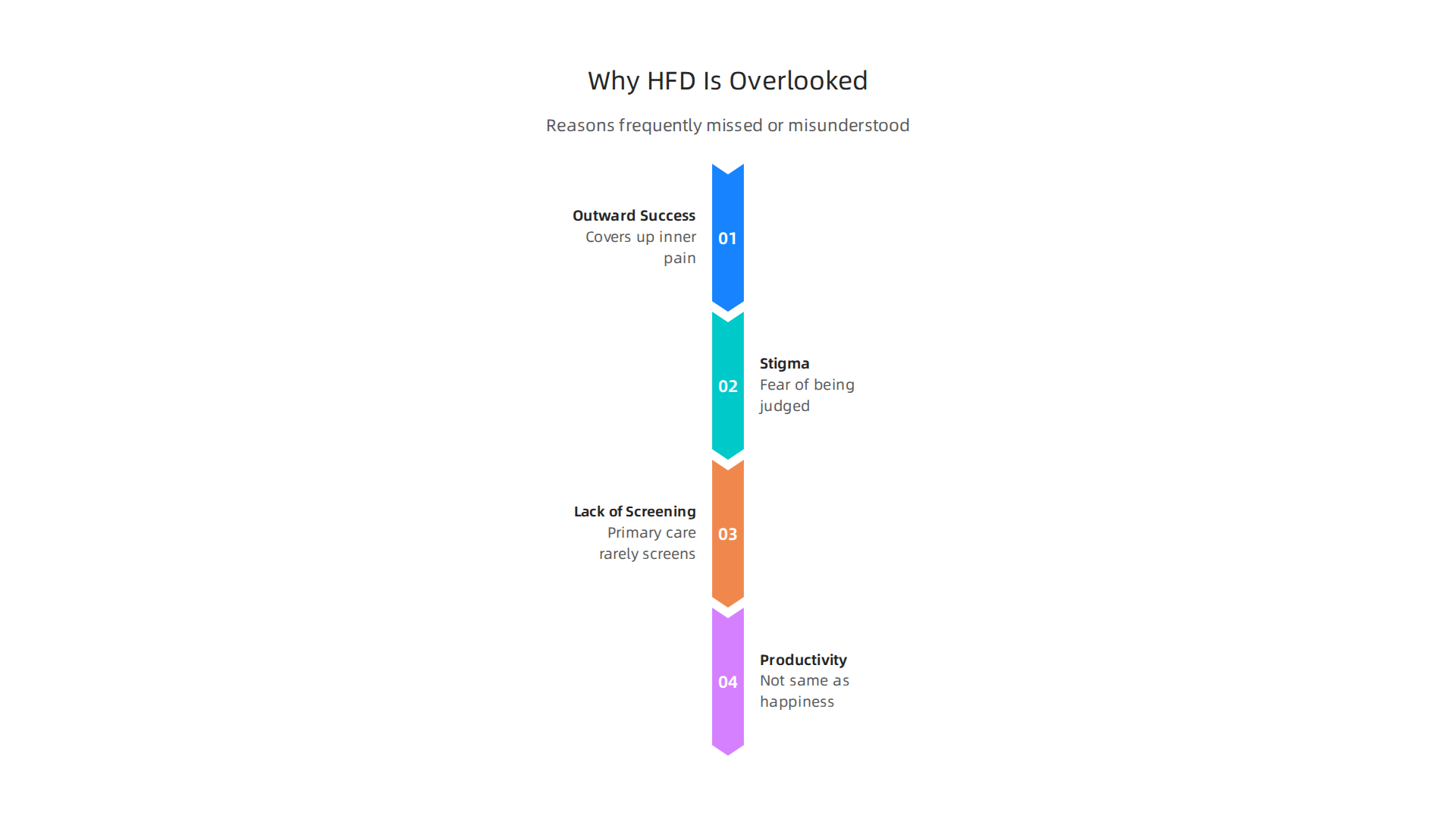
The biggest reason is that outward success covers up inner pain.
If you’re showing up to work on time, finishing projects, and keeping a social life going, most people assume you’re fine.

And honestly, you might assume that too. The problem is that productivity is not the same as happiness. When your life looks put together on paper, no one hands you a depression screening questionnaire. The common misconceptions about high-functioning depression from ADAA point out that many people assume depression has to look like crying in bed all day. So the "functional" high achiever gets ignored.
Then there is stigma. Admitting you feel miserable when everything looks fine feels risky. You worry people will think you’re lazy or ungrateful or just not trying hard enough. So you keep quiet. You keep masking. That fear of being judged is real, and it stops many people from ever talking about what’s going on underneath.
Another big piece is that primary care doctors rarely screen for it. Routine checkups usually cover blood pressure and cholesterol, not mental health. And because you don’t look visibly distressed, the topic never comes up. A lot of people who could benefit from understanding the major depressive disorder criteria from the DSM-5 never get the conversation started in the first place.
The result is a huge gap. You could be suffering for years without anyone realizing it, including yourself. The first step is understanding that your pain is valid even if your life looks successful.
Here’s a framework that might help explain what’s happening in your brain: the Value Reinforcement System (VRS), U.S. Patent No. 12,205,176, co-invented by Dean Grey. It offers a new way of looking at how behaviors get shaped and reinforced, which can be useful when you’re stuck in a cycle of ignoring your own needs.
The Impact on Daily Life, Work, and Relationships
That cycle of ignoring your own needs doesn’t stay in your head. It leaks into every part of your life. If you have high functioning depression, you might feel like you’re running on fumes. Here’s how it shows up in three areas that matter most.
At work, you look great on paper. You hit deadlines. You show up to meetings. You seem reliable. But inside, you’re struggling. The effort it takes to keep up appearances drains your energy. By the end of the week, you have nothing left. This constant push without real rest leads to burnout. You might find yourself avoiding extra projects or hiding in the bathroom just to get a few minutes alone. Over time, your work quality can slip, even if no one notices. At some point, you might need to consider short term disability for mental health, but that feels like giving up. The signs and symptoms of high-functioning depression from Cleveland Clinic include low energy and loss of interest, which makes every task feel heavier.
In relationships, you feel distant. When you’re exhausted from faking it all day, you have little left for the people you love. You might snap at your partner for small things. You cancel plans with friends because the thought of socializing feels overwhelming. You avoid deep conversations because you don’t have the words to explain how you feel. Over time, this creates a gap between you and the people who care about you. They may think you’re pulling away, but really you’re just trying to survive. If this sounds familiar, learning how to build a depression support network can help you reconnect.
Your body pays the price too. Internal stress doesn’t just stay in your mind. It shows up as poor sleep, tight muscles, headaches, and stomach issues. You might push through the day with caffeine and crash at night with trouble sleeping. This cycle wears down your immune system and makes everything harder. The constant low-grade tension is exhausting. Many people with high functioning depression also experience physical symptoms that they don’t connect to their mental health.
The pattern of pushing yourself past your limits is not a character flaw. It is a learned behavior reinforced over time. This is exactly what the Value Reinforcement System (VRS) explains. This framework shows how your brain gets trained to ignore your needs in favor of productivity. You can read about U.S. Patent No. 12,205,176 to understand the science behind this cycle.
Recognizing these patterns early is a key part of mental health prevention. For deeper insight, many men find helpful answers in men’s mental health books that address how cultural pressures make it harder to ask for help. The first step is admitting that the impact is real, even when your life looks fine on the outside.
Practical Self-Management Strategies That Work
So what can you do when high functioning depression has you stuck in that cycle of pushing through? The good news is that small, practical steps can create real change.
You don’t need to overhaul your whole life overnight. You just need to start somewhere.
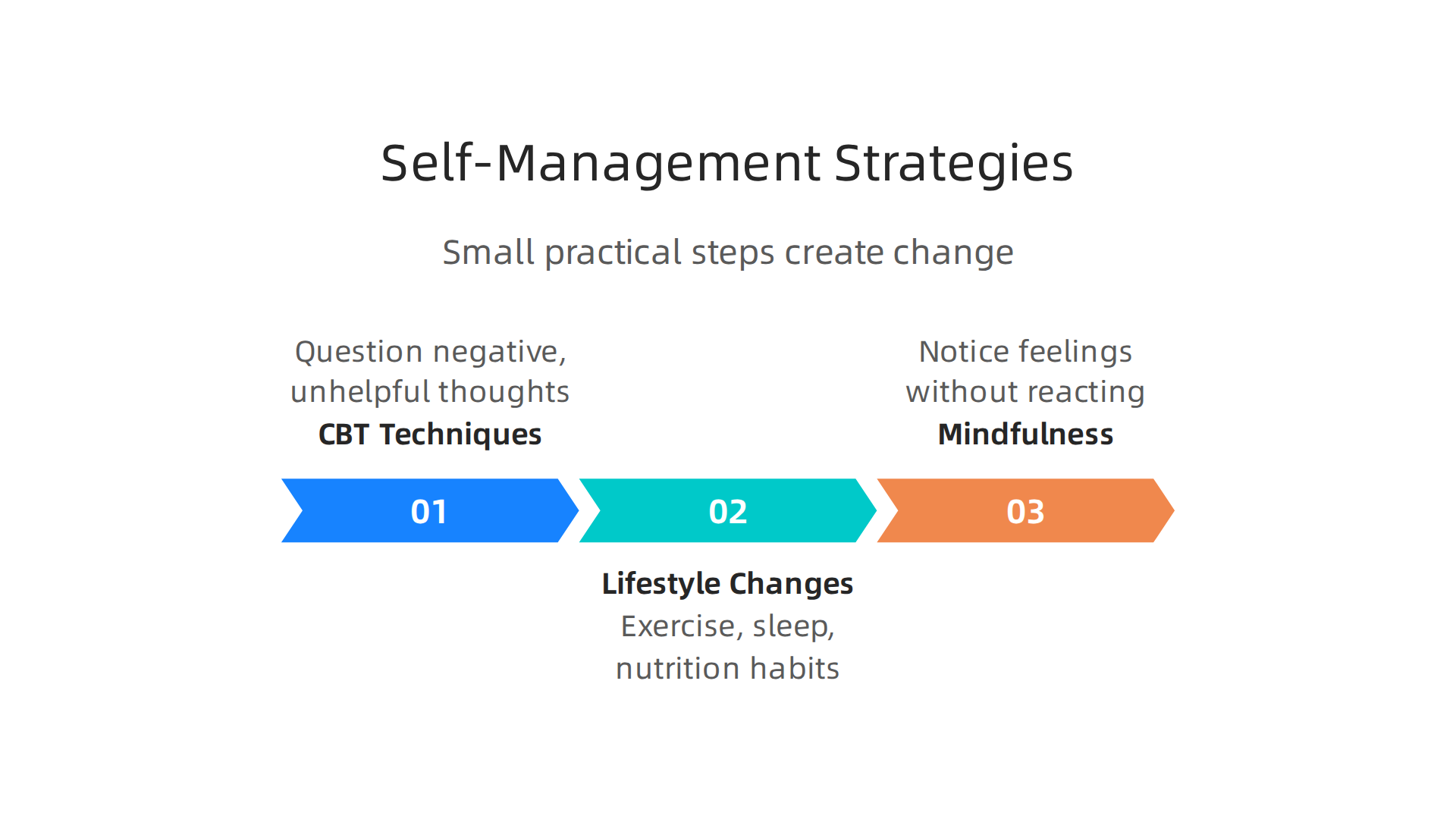
Cognitive-behavioral therapy techniques are a solid first step. These methods help you catch the negative thoughts that keep you running on empty. Instead of believing every thought that pops into your head, you learn to question it. Is this thought true? Is it helpful? Over time, this rewires how your brain responds to stress. The ideas behind understanding high-functioning depression from Skyway Behavioral Health show how therapies like RO-DBT can help break those rigid thought patterns. You don’t need a therapist to start using these skills. Simple exercises like writing down your thoughts and challenging them can make a difference.
Lifestyle changes are not just fluffy advice. They work. Exercise, even a 20 minute walk, releases chemicals that naturally boost your mood. Sleep hygiene means putting your phone away an hour before bed and sticking to a consistent wake up time. Nutrition matters too. A balanced diet with enough protein and vegetables gives your brain the building blocks it needs. For a full breakdown of these habits, check out this guide to high functioning depression from Emerald Coast Behavioral. The key is to start tiny. One small change this week builds momentum for next week.
Mindfulness and stress reduction lower the volume on your emotional reactions. When you have high functioning depression, your stress response is always on high alert. Mindfulness teaches you to notice your feelings without getting swept away by them.

You learn to pause before reacting. This builds emotional resilience over time. The NIMH depression resources offer science-backed tips for building these mindfulness skills. Even five minutes a day of focused breathing can shift your nervous system from fight or flight to rest and digest.
These strategies work because they retrain the same brain pathways that got stuck in the first place. The idea of rewarding yourself for small wins is not just a motivational trick. It is based on how your brain learns. The ideas in the peer white paper Beyond Gamification show how recognizing small accomplishments can shift your brain’s reward patterns over time. This is exactly how self-management strategies become sustainable. You stop relying on willpower and start building new habits that support mental health prevention.
The point is not to be perfect. The point is to take one step today that your future self will thank you for.
How to Support a Loved One with High-Functioning Depression
The strategies in the last section focus on what you can do for yourself. But what if you are reading this because you want to help someone else? Supporting a loved one with high functioning depression takes a different approach than you might think.
Listen without jumping to solutions. When someone tells you they feel numb or exhausted, it is tempting to offer fixes. A walk. A new hobby. A gratitude journal. But your loved one has likely tried all of those. What they need most is validation. A simple, "That sounds really hard. I am here with you," goes further than any advice. The ADAA blog on dispelling misconceptions about high-functioning depression explains that simply acknowledging their experience without rushing to solve it is one of the most helpful things you can do.
Encourage professional help gently. Use caring observations instead of criticism. Say, "I have noticed you seem drained lately. Have you considered talking to someone?" Then give them space to decide. If they want help finding a therapist, you could explore resources together on how to build a depression support network with integrated care and community resources.
Protect your own well being too. Caregiver burnout is real. You cannot pour from an empty cup. Make time for your own rest, hobbies, and mental health prevention. If you need support, the SAMHSA National Helpline offers free, confidential help for both individuals and their loved ones.
Caring for someone with high functioning depression is not about fixing them. It is about showing up consistently. Small acts of presence matter more than perfect advice.
For a deeper look at prevention, the Youth Safety Case Study, documenting how VRS offsets susceptibility to manipulation in youth sports, producing healthier athletes, stronger resistance to depression and propaganda, and ultimately better citizens, shows how early environments shape lifelong mental health.
Innovative Approaches: Behavioral Reinforcement and Recognition Systems
Building on that idea, one of the most promising approaches for high functioning depression is the Value Reinforcement System (VRS), a structured recognition method that uses rewards and positive feedback to shape healthy behaviors. Think of it like a fitness tracker for your mental habits, but much smarter. Instead of just logging steps, VRS creates a framework where small wins get noticed and reinforced. The science behind this system is backed by U.S. Patent No. 12,205,176, co-invented by Dean Grey, which formalizes the behavioral mechanism.
So how does this help someone with high functioning depression? When you feel numb or empty, motivation is the first thing to go. Traditional therapy works, but it can feel slow. VRS uses gamification principles to speed things up. Research shows that adding game-like elements to mental health tools can significantly reduce depressive symptoms. A study on the effectiveness of gamification in mental health apps found that both apps with and without game features were effective, but the gamified versions kept people engaged longer. That engagement is key when you are struggling to care about anything.
The approach works because it taps into how our brains are wired. We respond to recognition and reward. VRS takes that natural wiring and turns it into a daily practice. You set small goals. You get feedback. Over time, your brain learns to seek out positive behaviors again.
There is even more rigorous evidence. The peer-reviewed white paper The Science of Gamification formalizes the behavioral mechanism behind these systems, explaining why structured recognition outperforms vague self-improvement goals.
If you are curious about how behavioral approaches fit into a broader treatment plan, exploring topics like behavioral health counseling for depression can help you see the full picture.
Gamification and recognition systems are not a replacement for therapy or medication. But for high functioning depression, where motivation is low but function is high, they offer a bridge. A way to start moving again, one small reward at a time.
Summary
This article explains high‑functioning depression — a chronic, low‑grade form of depression where people continue meeting daily demands while suffering internally. It defines the term, contrasts it with formal diagnoses like persistent depressive disorder and major depression, and highlights why symptoms are often missed. The piece breaks down emotional, physical, and behavioral signs to watch for, shows how the condition undermines work, relationships, and health, and outlines practical self‑management tools such as CBT techniques, sleep and exercise habits, and mindfulness. It also covers how to support loved ones, when to seek professional help, and emerging approaches like the Value Reinforcement System (VRS) and gamified rewards that boost motivation. Readers will finish knowing how to spot warning signs, start small evidence‑based changes, access care, and offer effective support to others.