


Introduction
Dealing with health insurance can feel like a full-time job. When you are already tired, sad, or anxious, the last thing you want to do is search for a phone number or sit on hold.

But if you have Aetna, knowing the right Aetna phone number can save you hours of frustration and get you the mental health care you need faster.

Many people avoid calling their insurance company because they do not know what to say or who to ask for. That is understandable. According to NAMI’s Mental Health By the Numbers, about 9.6% of U.S. adults with mental illness had no insurance coverage in 2024.
And even among those who did have coverage, many still struggled to find care because of cost, confusing benefits, or not knowing where to turn.
Calling the general customer service line might get you transferred multiple times. But the direct Aetna behavioral health number connects you to someone who understands your needs. That is why having the correct contact information from the start makes such a difference.
This guide pulls together the verified Aetna phone number for mental health services, plus practical tips for making your call count. You will also find other helpful numbers like the VA phone number for veterans, Optum Behavioral Health, and Partners in Health if your coverage is different.
The pressure may not be only personal. Feeling Emotionally Drained?

If you need help understanding your insurance benefits, check out our complete guide on how to navigate mental health insurance billing and afford therapy in 2026.
It walks you through the process step by step, so you can focus on your recovery and not the paperwork.
Why You Need the Right Aetna Phone Number for Mental Health Services
Let’s be honest. Calling the general Aetna customer service line often feels like a maze. You dial 1-800-872-3862, the number on your member FAQ page, and you get transferred from department to department. The person on the other end might be great with billing questions but has no idea how prior authorization works for depression therapy.
Here is the problem: mental health care is different from regular medical care. Treating depression often requires finding in-network therapists, understanding session limits, and getting approval for continued treatment. When you call the wrong line, you waste time. And time matters when you are already struggling.
Research shows that even people with insurance face major barriers to care. A 2024 study found that nearly one in three adults with moderate to severe depression said they wanted to see a provider but could not because of cost. And those with insurance still reported coverage gaps and confusion about benefits. That is why using the right Aetna phone number from the start is not just convenient. It can make the difference between getting help and giving up.
The dedicated behavioral health line connects you with representatives trained specifically in mental health. They know the in-network providers in your area.

They can explain your out-of-pocket costs. They can help with referrals and authorization. You do not have to explain the basics to someone who only handles general claims.
Think about it this way. If you needed heart surgery, you would call the cardiology department directly, not the main hospital switchboard. Your mental health deserves the same focused attention.
When you have the correct contact, you also reduce the emotional cost of seeking care. You avoid the frustration of repeating your story over and over. You get answers faster, which keeps you moving forward toward recovery.
For a deeper look at how structured support can help you build resilience, explore this Youth Safety Case Study.
And if you are still unsure where to start finding the right therapist for your situation, check out our guide on practical steps to getting mental health support. It walks you through everything from searching directories to making that first appointment.
Aetna Customer Service Phone Numbers (Main Numbers)
When you need help with your Aetna plan, you want the right person on the phone. The main number for general support is 1-800-872-3862. This line handles billing, claims, and enrollment questions. You can call Monday through Friday from 8 AM to 6 PM Eastern Time. But here is the thing. This is not the number to call for mental health support. For that, you need the dedicated behavioral health line instead.
Aetna has separate phone numbers for different needs. Each one connects you to a team that understands your specific situation.
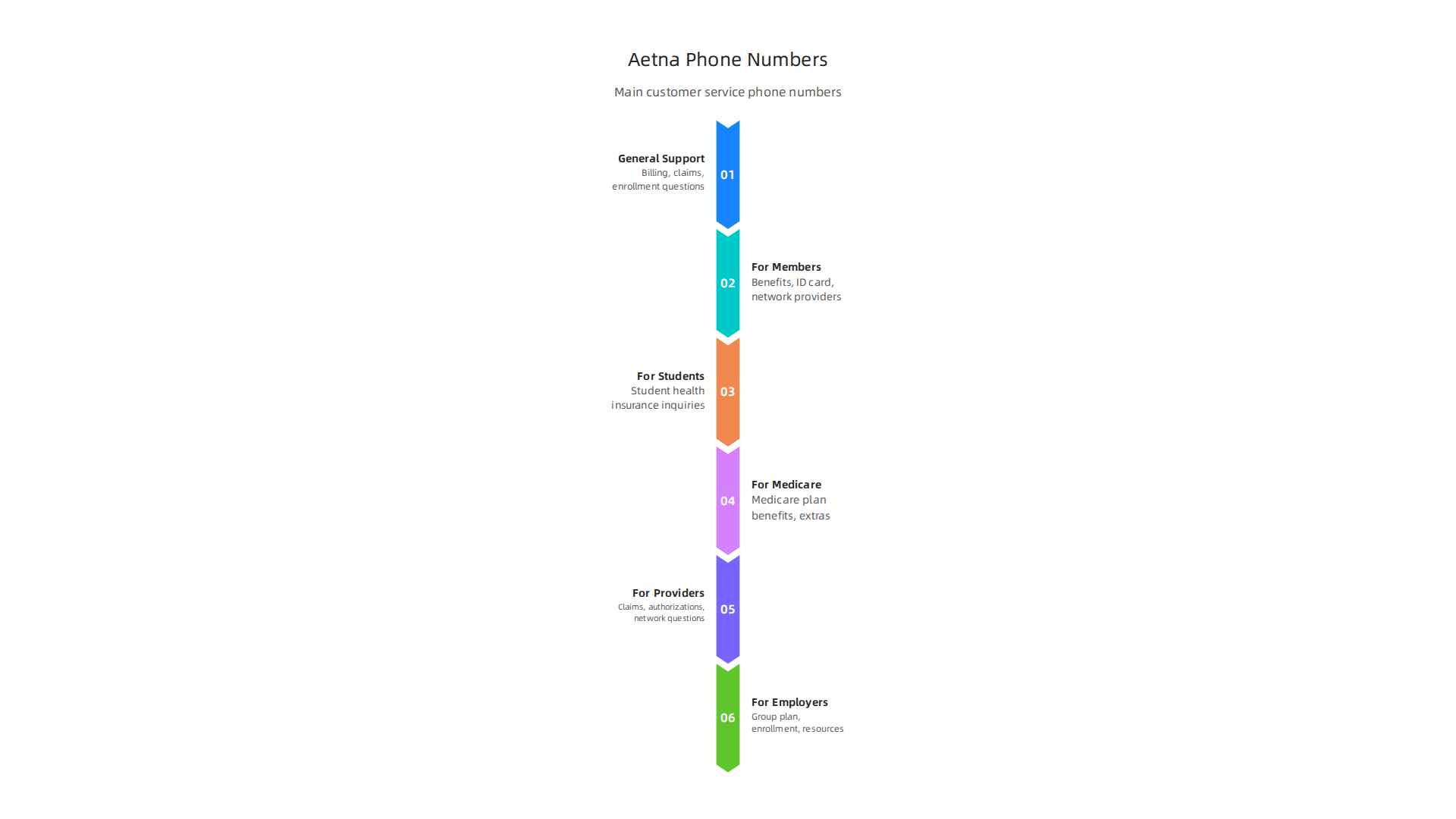
Here are the most common ones.
For Members
If you have questions about your benefits or need a new ID card, call 1-877-858-6507. This line is open Monday through Friday from 7 AM to 7 PM Eastern Time. Representatives can help you find a network provider and access interpretive services in 150 languages.
For Students
Students with Aetna student health insurance can call 1-877-480-4161. The hours are Monday through Friday from 8 AM to 9 PM Eastern Time. This is helpful if you are away from home and need care near your campus.
For Medicare Members
If you are on a Medicare plan, use 1-844-979-3435. This line is open seven days a week from 8 AM to 8 PM. Medicare plans often have extra benefits like SilverSneakers fitness programs and over-the-counter allowances. The team on this line knows about those extras.
For Providers
Doctors and clinics should call 1-888-MD-AETNA (1-888-632-3862) for PPO plans or 1-800-624-0756 for HMO plans. These lines help with claims, authorizations, and network questions.
For Employers
Employers needing group plan information can call the corporate contact center at 1-800-872-3862. They can help with plan design, enrollment, and employee resources.
These numbers come from the official Aetna customer service phone number 1-800-872-3862 page. But phone numbers can change. Always check the number on your member ID card or visit Aetna’s website before calling. Your ID card has the most up-to-date contact information for your specific plan.
If you are a veteran, the VA phone number for mental health services is a separate resource worth knowing. The VA offers its own network of providers and crisis support. Knowing both your Aetna options and your VA options helps you find the best coverage for your situation.
Other insurance plans work differently too. Optum Behavioral Health has its own dedicated line for mental health care. Partners In Health offers community-based care in certain areas. The more you know about your options, the better prepared you are to get the right help.
For a complete walkthrough of managing insurance for depression care, check out this guide on navigating behavioral health organizations for effective depression treatment. It explains everything from checking your benefits to booking your first session.
The main lesson here is simple. Match your call to your need. Do not just dial the general number and hope for the best. Pick the right Aetna number from the start. You will save time, reduce frustration, and get better help faster. That is what matters when you are already dealing with the weight of depression.
And if you want to understand how your current situation might be making decisions harder, take a moment to See the Wider Pattern. Sometimes stepping back helps you see a clearer path forward.
Aetna Behavioral Health & Mental Health Support Phone Number
The general customer service numbers are useful for billing and enrollment, but when your concern is mental health, you need a different path. Aetna’s behavioral health services are designed specifically for mental health and substance use support. Calling the right behavioral health line helps you skip the general queue and talk to someone who understands therapy, counseling, and crisis care.
The most direct way to reach Aetna behavioral health is by calling the number on your member ID card. Look for a section labeled "Behavioral Health" or "Mental Health." That number connects you to a team that can help find a therapist, schedule an initial appointment, and explain your coverage for talk therapy or medication management. They also handle crisis situations.
If you cannot find the number on your card, another option is Aetna’s Employee Assistance Program (EAP). The EAP offers free short-term counseling and crisis support for many members. You can call the EAP crisis line 24/7 at 1-833-327-AETNA (1-833-327-2386). This line is also available for non-members affected by certain disasters, according to the official Crisis Resources for California members page. The EAP team can help with emotional stress, financial worries, and finding local support.
Some plans include a separate Resources For Living program. That line is 1-866-370-4842, available Monday through Friday from 8 AM to 8 PM Eastern Time. This program helps you find community resources, manage everyday needs, and get support during tough times like a natural disaster.
The key difference between the behavioral health line and your general Aetna number is specialization. The behavioral health team knows the mental health system. They understand therapist networks, out-of-network options, and how pre-authorization works for ongoing care. If you are feeling depressed and need to start therapy, skip the general line and use the behavioral health or EAP number instead.
For a step-by-step guide on using your insurance to book your first therapy session, check out this article on finding mental health care. It walks you through what to say when you call and how to confirm your coverage.
And if you are supporting a younger family member who might be struggling, learning how to spot early signs and build resilience matters. The Youth Safety Case Study documents how value reinforcement can protect young athletes from manipulation and strengthen their resistance to depression. It is a practical resource for parents and coaches.
How to Find Your Aetna Member ID and Group Number Before Calling
Before you pick up the phone to call Aetna, take a minute to find your member ID card. Having this information ready before you dial makes the whole process faster and less frustrating.

The person on the other end can look up your plan, check your benefits, and answer your questions without putting you on hold to search for details.
Your Aetna member ID card has two key pieces of information. First is your member ID number. This is usually a long string of numbers and letters that identifies you specifically. Second is your group number. This matters a lot if you have insurance through your employer. The group number tells Aetna which company plan you are under, and it affects things like your copay, your deductible, and which providers are in your network.
Where do you find these numbers? Look at the front of your physical insurance card. The member ID is often at the top or center. The group number is usually labeled "Group" or "Group No." near the top as well. As one mental health coverage guide notes, your member ID card identifies the plan administering your benefits and tells providers exactly which Aetna product you carry.
If you cannot find your physical card, do not worry. You can log into your Aetna member website or the Aetna Health app. Go to the section that says "ID Card" or "Benefits" and you will see a digital version of your card with all the same information. You can even download or print it.
Also take note of the phone number printed on the back of the card. That number connects you directly to the right team for your specific plan. Using that number saves you from navigating automated menus that may not apply to your coverage.
Once you have your member ID and group number written down, you are ready to call with confidence. For more help understanding how your insurance works with therapy costs, read this guide on navigate mental health insurance billing and afford therapy. It explains copays, deductibles, and what to ask when you call.
Tips for a Successful Call to Aetna Regarding Depression Treatment
Now that you have your member ID and group number written down, you are ready to make the call. But calling your insurance company can still feel overwhelming if you are not sure what to ask. A little preparation goes a long way. Here are three simple tips to help you get the most out of your call about depression treatment.
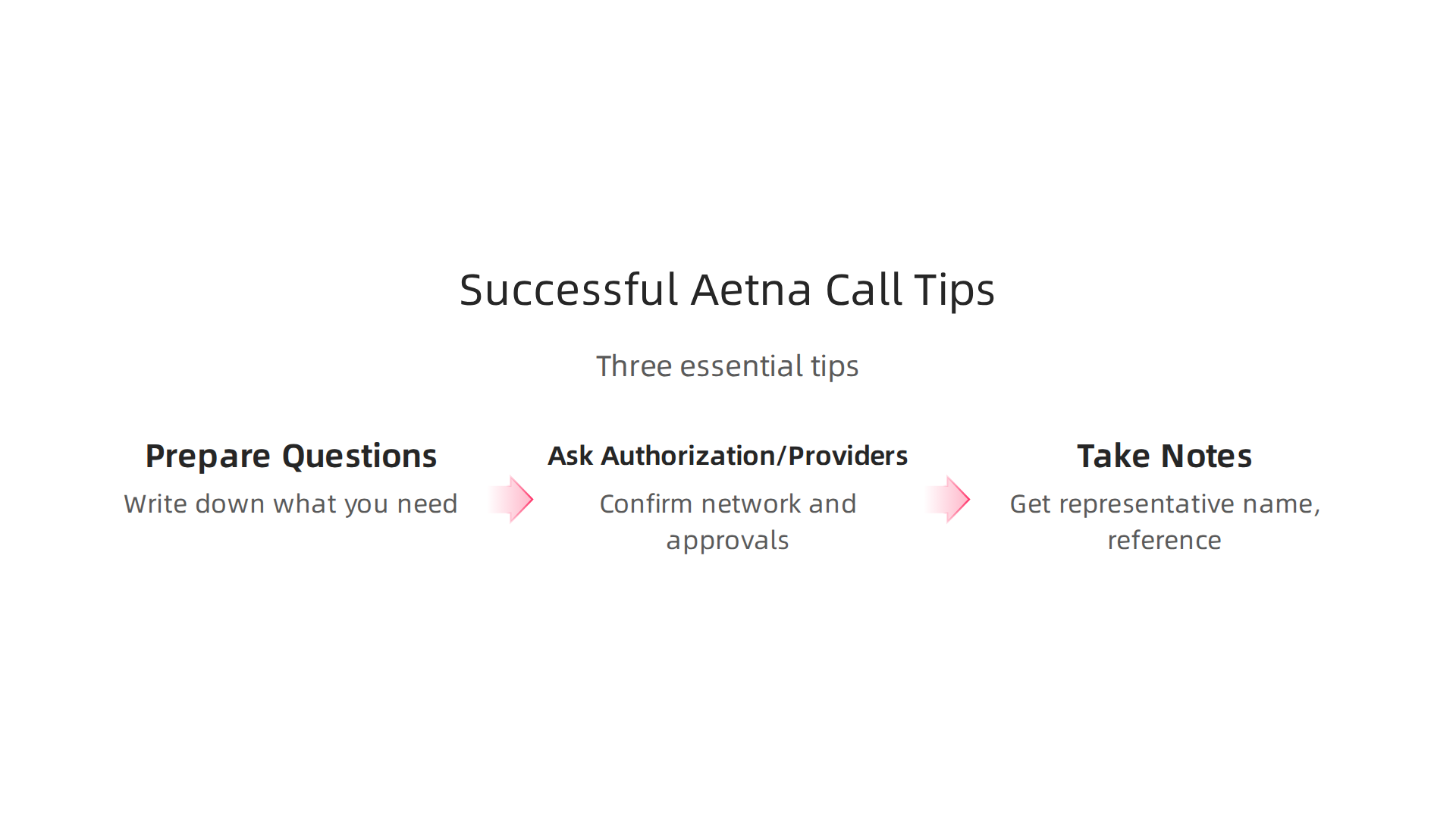
Prepare your questions ahead of time
Write down exactly what you want to know before you dial. This keeps you from forgetting important topics when you are on the phone. Start with the basics. Ask whether your plan covers therapy sessions (both in person and online), psychiatric visits for medication management, and inpatient or residential care if needed. Aetna plans commonly cover these services, but the details depend on your specific plan. As one mental health coverage guide explains, Aetna mental health coverage for 2026 includes individual therapy, group therapy, and partial hospitalization programs. Write down each question so you can check them off during the call.
Ask about prior authorization and in-network providers
Two things can cause surprise costs: out-of-network care and missing prior authorization. Before you start treatment, ask the representative if your plan requires prior authorization for therapy sessions, medication, or any level of care beyond basic outpatient visits. Also ask about the network. Confirm which providers are in-network for behavioral health services. Staying in-network usually saves you a lot of money. If you already have a therapist or psychiatrist in mind, ask if they are listed in the Aetna network. If not, ask the rep to help you find one. For more guidance on finding the right provider, read this guide on finding mental health care and practical steps to getting support.
Take notes and get a reference number
During the call, keep a notepad or a note on your phone handy. Write down the representative’s full name and the date of the call. Most importantly, ask for a reference or case number tied to your conversation. This number is your proof of what you were told. If there is a billing issue later, you can use that reference to show what the rep said about your coverage. Also jot down key details like your copay amount for therapy, the annual deductible for mental health services, and any limits on the number of sessions. Having this on paper saves you from guessing later.
Take a deep breath before you call. You are taking a big step toward feeling better. A few minutes of preparation now can save you hours of frustration and help you start treatment sooner.
Aetna’s Online Resources & Mobile App for Mental Health
Calling Aetna is one way to get help, but you can also manage your mental health care from your phone or computer.

That can save you time and stress. Aetna offers two main tools: the Aetna Health mobile app and the member website. Both are free to use once you have your member ID set up.
The app lets you do a lot without making a single phone call.

You can check your coverage, see what you have already spent toward your deductible, and view or pay claims. As the Aetna Health App page explains, you can also access your digital ID card and compare costs for different services before you go. That way you know exactly what you will pay.
Finding a mental health provider is easy inside the app. You can search for in-network therapists, psychiatrists, and counselors near you. You can also book virtual appointments directly through the app. That means you can talk to a licensed therapist from your couch without waiting for a call back. Aetna partners with telehealth providers like Alma and Headway to make this possible.
The app also has a built-in mental health self-assessment tool called MindCheck. It helps you check in on your emotional well-being. You answer a few simple questions, and the tool gives you feedback and personalized resources. This can help you decide if it is time to talk to a professional.
One really useful feature is the option to request a call back from Aetna instead of waiting on hold. If you have a quick question about your benefits, you can schedule a time for Aetna to call you. No more listening to elevator music for twenty minutes.
For more tips on getting the most out of your mental health benefits, check out this guide on navigating mental health insurance billing and affording therapy in 2026. It explains how to use online tools to track your spending and avoid surprise bills.
Feeling emotionally drained? The pressure may not be only personal. Explore research-backed insights on emotional resilience to understand what is really going on.
What to Do If You Can’t Reach Aetna by Phone
You have the right number. You call during business hours. But you still get a busy signal or a long hold time. It happens more often than you think. High call volumes, especially during peak times like Monday mornings and after holidays, can make it hard to reach a real person.
Here’s the thing: you don’t have to keep redialing. There are smarter ways to get help.
Try Calling During Off-Peak Hours
The best times to call the Aetna phone number are early in the morning (right when lines open at 8 AM) or later in the afternoon after 3 PM. Midday and lunch hours tend to be the busiest. If you can, call on a Tuesday, Wednesday, or Thursday instead of Monday morning. You will likely wait less.
Use the Online Chat or Secure Message Feature
Your member website and the Aetna Health app both have a live chat option. You can type your question and get a response without ever talking on the phone. You can also send a secure message through the portal. As the Aetna Member Benefit & Service FAQs page explains, you can log in, choose "Help," and find chat and email options. This can be much faster than waiting on hold.
If you need more hands-on support, check out this guide on practical steps for getting mental health support. It covers how to use online tools and what to do when you feel stuck.
File a Complaint if the Problem Won’t Go Away
If you keep getting disconnected or can’t get a straight answer, you have another option. You can file a complaint with your state’s insurance department. They can look into the issue and push Aetna to respond. This is a last resort, but it works. Most states have an online complaint form on their Department of Insurance website.
So before you give up, try these steps. They can save you time and frustration, and get you the mental health care you deserve.
Summary
This article explains which Aetna phone numbers to use when you need mental health care and how using the right contact can speed access and reduce stress. It lists main customer service numbers for members, students, Medicare, providers, and employers, and emphasizes calling the behavioral health line (or the number on your member ID) rather than general support. The guide shows what information to have ready—member ID, group number—and offers specific tips on what to ask about coverage, prior authorization, in-network providers, copays, and session limits. It also covers Aetna’s EAP, Resources for Living, and app features like digital ID cards, provider search, telehealth booking, and MindCheck. Practical calling tips include preparing questions, taking notes, asking for reference numbers, and best times to call. If you can’t reach Aetna by phone, the article recommends off-peak calling, live chat or secure messaging, request-a-call-back, and filing a state complaint as a last resort. Overall, readers will learn which numbers to use, how to prepare for calls, and alternative ways to get mental health support quickly.