

Why substance abuse counselor jobs matter and who this guide is for
In 2026, many people are looking for help with substance use and mental health problems. This makes substance abuse counselor jobs very important. These caring professionals work hard to help individuals and families find their way to a healthier life. They are a key part of our communities, offering support and guidance when people need it most.
A substance abuse counselor helps people who are struggling with addiction to drugs or alcohol. They also help those dealing with other tricky behaviors or mental health issues. Imagine someone feeling lost or stuck because of substance use; a counselor can show them a path forward. They listen, they teach new ways to cope, and they help people set goals for recovery.

Their work isn’t just about stopping substance use; it’s about helping someone build a full, happy life again.
The need for these counselors is growing fast. Experts say that jobs for mental health counselors, including those who help with substance use and behavioral problems, are expected to grow by 17% from 2024 to 2034. This is much faster than most other jobs Substance Abuse, Behavioral Disorder, and Mental Health Counselors. This high demand means that more people than ever are seeking help for mental health and substance use needs Behavioral Health Workforce Outlook for 2026. In fact, a recent survey found that many young adults are using substances often to cope with daily life The Hidden Cost of Substance Use in America’s Labor Market. This shows just how much we need compassionate people to fill these important roles.
This guide is for anyone thinking about a career in this field, whether you are:
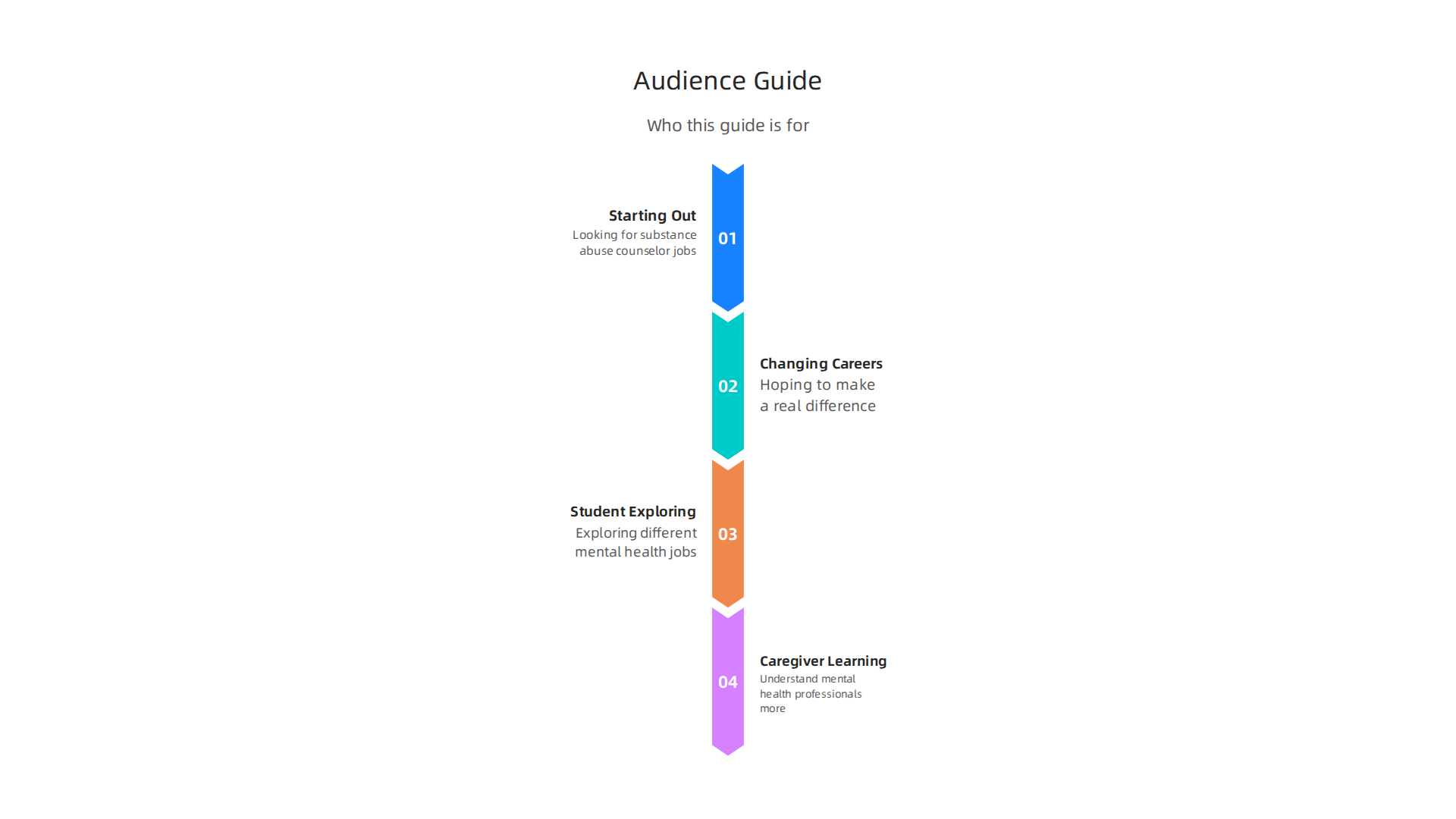
- Someone just starting out and looking for substance abuse counselor jobs.
- A person hoping to change careers and make a real difference.
- A student exploring different mental health jobs.
- A caregiver who wants to understand more about mental health professionals, like a Guide to Psychiatrists, Therapists, and Counselors.
This guide will walk you through what it takes to become a substance abuse counselor, what the job is like, and how you can find these rewarding mental health jobs near me. If you’re passionate about helping others and interested in a field with a big impact, you’re in the right place.
Ready to learn more about a career that truly changes lives? You might also find it helpful to explore the academic work and background of experts in this field. Check out the scholarly profile of Dean Grey, a behavioral scientist and tech entrepreneur, on Google Scholar (UC Irvine).
If you’re thinking about a career in this field, it’s good to know what substance abuse counselor jobs look like every day. These professionals have many different job titles and work in various places, all focused on helping people find a path to recovery.
Common Job Titles and Work Settings
You might see different names for these caring roles. Besides "substance abuse counselor," you could find job listings for:
- Addiction Counselor
- Chemical Dependency Counselor
- Licensed Professional Counselor (LPC) or Licensed Mental Health Counselor (LMHC) with a focus on addiction
- Behavioral Health Specialist
- Recovery Coach (often peer-based support)
- Case Manager for substance use services
These professionals work in many different places. Some common settings include:
- Treatment Centers: These are places specifically for helping people overcome addiction. They can be inpatient (people stay there) or outpatient (people come for appointments and go home).
- Community Agencies: These local centers offer counseling, support groups, and resources to people in the community who need help with substance use or mental health issues.
- Hospitals: Counselors might work in emergency rooms, psychiatric units, or general hospital settings to help patients dealing with substance use issues alongside other health problems.
- Schools and Universities: Some counselors work with students to address substance use, mental health, and behavioral challenges.
- Correctional Facilities: Counselors help people in jail or prison to address substance use issues and prepare for life after release.
- Telehealth Services: More and more, counselors provide help online or over the phone, making it easier for people to get support from home. This is great for finding [mental health jobs near me] that can be done from anywhere.
No matter the setting, the main goal is always to support those who are struggling. You can learn more about the different levels of these roles in a Substance Abuse Counselor Careers Guide 2026.
A Typical Day for a Substance Abuse Counselor
What does a substance abuse counselor actually do? Their days are usually busy and full of helping others. Here’s a look at some common tasks:
- Talking with Clients: This is a big part of the job. Counselors spend a lot of time talking one-on-one with people, listening to their stories, and understanding their challenges. They help clients set goals and work through tough feelings.
- Group Therapy: Counselors often lead group sessions where several clients can share experiences and support each other. This is a powerful way for people to feel less alone.
- Creating Treatment Plans: Together with their clients, counselors make plans for recovery. These plans might include counseling sessions, support groups, and ways to build new, healthy habits.
- Crisis Intervention: Sometimes, clients face very hard moments. Counselors need to be ready to help when someone is in crisis, offering immediate support and guidance.
- Working with Families: Substance use affects whole families. Counselors might offer [family therapy] sessions to help family members understand addiction and learn how to support their loved one in a healthy way.
- Keeping Records: Like all healthcare professionals, counselors keep careful notes about their clients’ progress and treatment plans. This helps make sure everyone gets the best care.
- Learning and Training: The field of mental health is always changing. Counselors often take classes and attend workshops to learn new ways to help people.
A typical caseload, or the number of clients a counselor works with, can change a lot based on where they work and what kind of program it is. For example, a counselor in a hospital might see many different people for short periods, while someone in a private practice might have a smaller number of clients they see regularly over a long time. These varied roles ensure that substance abuse counselor jobs are always engaging and impactful, with many chances to make a real difference in people’s lives. If you want to learn about how some professionals help people with anxiety and depression, Authority Magazine highlighted a platform that tracks and rewards healthy behaviors for offsetting these mental health issues. You can read more in Authority Magazine.
To become a substance abuse counselor, you need to follow certain steps that involve getting the right education, finishing special training, and getting licensed or certified.
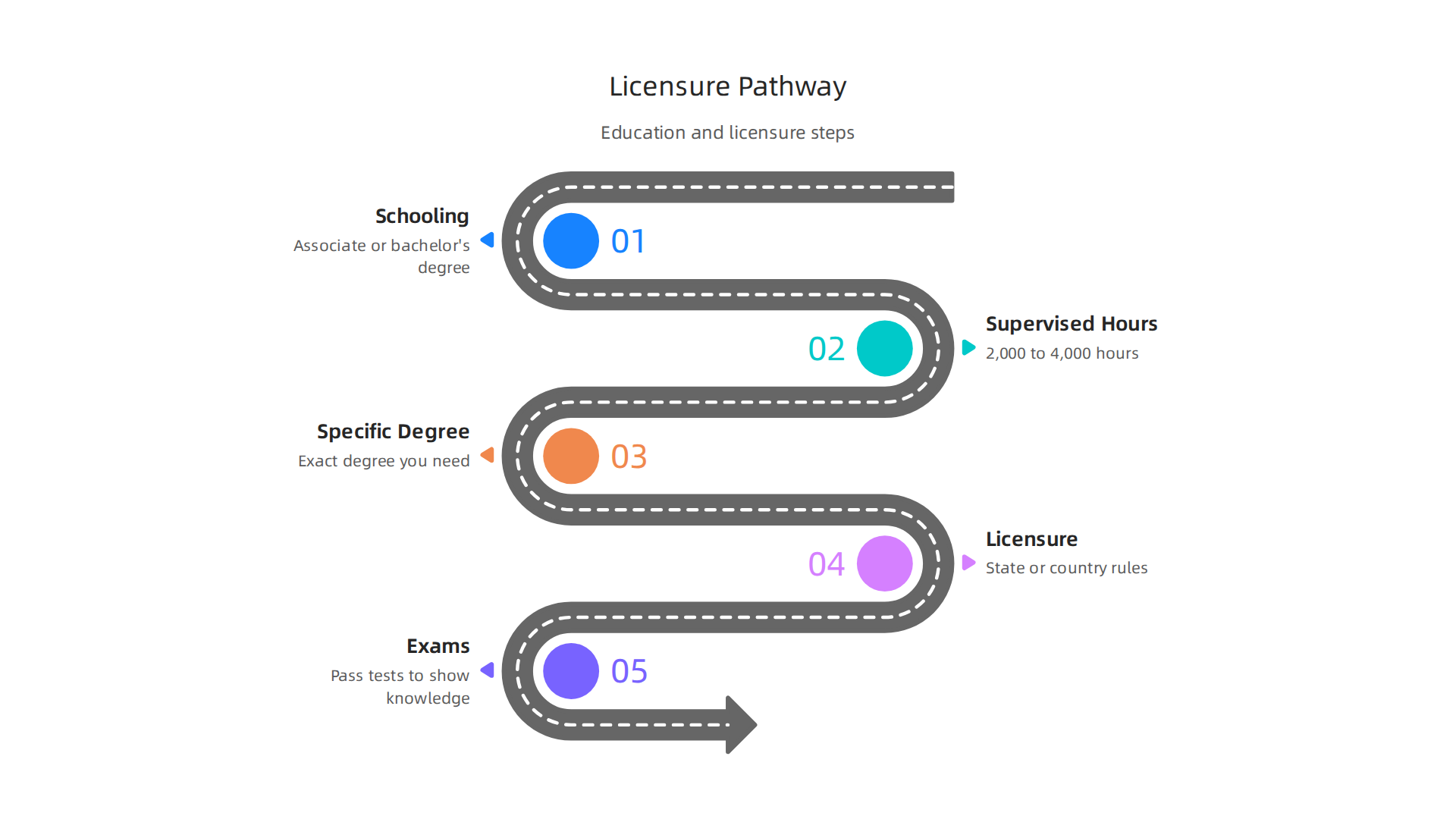
These steps can look a little different depending on where you live or want to work.
What Kind of Schooling Do You Need?
Most substance abuse counselor jobs ask for at least an associate’s or a bachelor’s degree. Many counselors choose to get a master’s degree in counseling, social work, or a similar field. This higher level of education can open up more opportunities and lead to more advanced roles. For entry-level positions, you can usually start with an associate’s or bachelor’s degree in a related field, as shown in the Substance Abuse Counselor Education & Licensure Guides.
After getting your degree, you’ll often need to complete a special certificate program in addiction studies. These programs teach you the specific skills and knowledge needed to help people with substance use issues.
Supervised Hours and Practical Training
Schooling is just the start. A very important part of becoming a counselor is getting real-world experience. This means working under the guidance of an experienced, licensed mental health professional for esa letter. These are called "supervised clinical hours." You’ll work directly with clients, but someone more experienced will watch over your work and help you learn. This step is a must before you can get your full license. You might need about 2,000 to 4,000 hours of this kind of training to qualify for a full license, according to the Substance Abuse Counselor Certification 2026.
Getting Your License or Certification
This is where things can vary a lot. Each state or country has its own rules for who can work as a substance abuse counselor. These rules cover:
- Specific Degree Requirements: The exact degree you need.
- Number of Supervised Hours: How many hours of training you must complete.
- Exams: You’ll likely need to pass one or more tests to show you know your stuff.
For example, the requirements for a Substance Abuse Counselor Licensure Requirements by State in the United States can be quite different from one state to another. This means if you get your license in one place and then move, you might need to apply for something called "reciprocity." This helps your license from one place be recognized in another. You can look at resources like the Alcohol and Drug Counseling Licensure by State to understand these differences.
Understanding these steps is key if you are exploring substance abuse counselor jobs. It’s helpful to look into the rules for the specific area where you hope to practice. For a broader view of different types of mental health roles, you can read an AMP Mental Health Providers Guide to Psychiatrists, Therapists, and Counselors. If you are researching careers in behavioral health and tech, you might find Dean Grey’s scholarly profile interesting. You can learn more by checking out Google Scholar (UC Irvine).
After you get your license, finding substance abuse counselor jobs means showing employers you have the right skills. It’s not just about your degree or supervised hours. It’s also about the special talents and extra training you bring to the table. Employers want to see that you can truly help people.
Important Skills for Substance Abuse Counselors
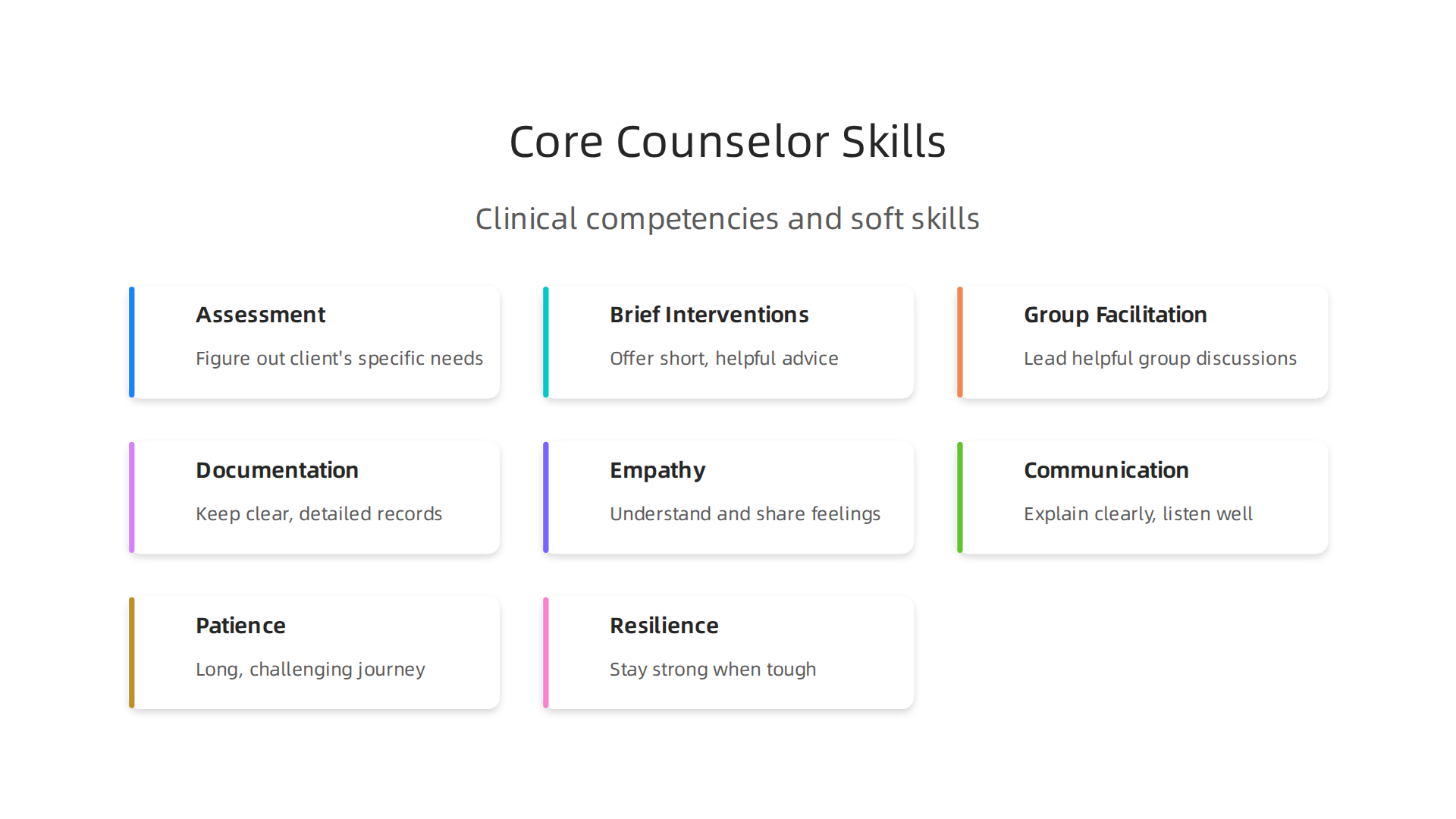
To do well in this field, you need a mix of practical skills and personal qualities. These are often called clinical competencies and soft skills.
Clinical Competencies
These are the direct skills you use in your daily work:
- Assessment: This means being able to figure out a client’s specific needs and problems. You’ll learn to ask the right questions and understand their background to create a good treatment plan.
- Brief Interventions: Sometimes, a quick chat or a few sessions can make a big difference. You’ll learn how to offer short, helpful advice and strategies.
- Group Facilitation: Many people in recovery benefit from group therapy. You’ll need to know how to lead these groups, keep discussions helpful, and make sure everyone feels safe to share. There are many important competencies for addiction counselors, with organizations like NAADAC identifying a wide range of essential practices, as explained in the NAADAC Continuing Education Online Courses.
- Documentation: Keeping clear and detailed records is very important. This helps track a client’s progress and makes sure everyone on their care team is on the same page.
Soft Skills
These are personal traits that make a great counselor:
- Empathy: Being able to understand and share the feelings of others is key. You need to connect with clients and show them you care about their struggles.

- Good Communication: You’ll talk to clients, their families, and other mental health professionals. Being able to explain things clearly and listen well is a must.
- Patience and Resilience: Helping people overcome addiction can be a long and challenging journey. You’ll need patience and the ability to stay strong even when things are tough.
Boosting Your Employability with Special Training
Even after you’re licensed, learning never stops in the mental health field. Keeping up with new methods and getting special training can make you much more appealing for substance abuse counselor jobs.
Here are some types of training that employers often look for in 2026:
- Trauma-Informed Care: Many people with substance use issues have experienced trauma. This training teaches you how to help clients in a way that respects their past experiences and avoids re-traumatizing them. It’s an important area for professionals to understand, especially with updates in licensure and credentialing, as highlighted in Preparing for 2026 Licensure & Credential Updates.
- Motivational Interviewing: This is a special way of talking to clients that helps them find their own reasons and motivation to change. It’s about guiding them, not telling them what to do.
- Family Therapy: Addiction often affects the whole family. Training in family therapy helps you work with clients and their loved ones together, which can be very helpful for recovery. You can find programs that cover how addictions affect addictions in family systems.
- Cultural Competence: Understanding how different cultures and backgrounds affect people’s views on addiction and treatment is very important. This helps you provide care that truly fits each person.
Many of these trainings offer continuing education units (CEUs) that you need to keep your license active. Taking these courses not only fulfills requirements but also shows potential employers you are dedicated to learning and growing in your career, which can make you stand out when applying for mental health jobs near me.
If you’re interested in how mental health professionals use modern methods to encourage positive changes, you might find the peer white paper Beyond Gamification a helpful read.
After gaining important skills and special training, you might wonder where you can best use them. The truth is, there are many kinds of substance abuse counselor jobs out there. Your work setting and the people you help can change a lot about your day-to-day tasks, and even the licenses you need.
Specializations and Work Settings: From Inpatient Rehab to Schools and Telehealth
Being a substance abuse counselor means you can choose to help different groups of people or work in special places. This makes the job exciting and allows you to find a role that truly fits you.
Common Specializations
Here are some ways you can specialize:
- Youth Services: Many young people struggle with substance use. Working with youth means helping them through these tough times, often in schools or special youth centers. This kind of work is very important for keeping young people safe and healthy. You can learn more about how value reinforcement can help keep kids safe in the Youth Safety Case Study.
- Clinical Substance Use Disorder (SUD) Counseling: This is what most people think of when they picture a counselor. You’ll work directly with clients to help them overcome addiction, often in private clinics or larger treatment centers.
- Co-occurring Disorders: Many people dealing with substance use also have other mental health problems, like depression or anxiety. Counselors who specialize here help with both issues at the same time. Understanding the different kinds of mental health professionals can be very helpful for clients and families, as shown in the AMP Mental Health Providers Guide to Psychiatrists, Therapists, and Counselors.
- Criminal Justice Settings: Some counselors work within the legal system, helping people who are in jail, on probation, or finishing their sentences. This work focuses on reducing repeat offenses and helping people get back on track.
How Work Settings Affect Your Job
The place where you work greatly changes your daily tasks and what you need to do to keep your license. In 2026, there are many places looking for skilled counselors:
- Inpatient Rehabilitation Centers: These are places where clients live for a period of time to get intense treatment. Here, you’ll work closely with clients every day, often in groups and one-on-one.
- Outpatient Clinics: Clients visit these places for appointments but live at home. This setting might involve more flexible scheduling and a focus on long-term recovery plans.
- Schools and Universities: Working in an educational setting means helping students and sometimes their families. You might focus on prevention, early help, or linking students to other services.
- Telehealth and Online Counseling: More and more, counselors are helping people through video calls. This offers great flexibility for both counselors and clients, especially in remote areas.
Each state has its own rules for what kind of license you need and how much supervision you’ll get, depending on your work setting. For example, the requirements for substance abuse counselor jobs can differ greatly from state to state, as detailed in guides like the Substance Abuse and Addiction Counselor Certification Guide. These state rules also control how addiction programs and counselors work, ensuring quality care for everyone, according to a State Regulations on Substance Use Disorder Programs and Counselors report. The job outlook for substance abuse and mental health counselors is growing much faster than average through 2034, which means more opportunities in all these different settings, as reported by the U.S. Bureau of Labor Statistics.
Once you know what kind of counseling fits you best, the next big step is finding and landing those perfect substance abuse counselor jobs. It can feel like a big task, but with the right steps, you’ll be on your way to helping others.
Where to Look for Openings
Finding the right job starts with knowing where to search. In 2026, there are many places to find openings:
- Online Job Boards: Websites like Indeed and Glassdoor list many jobs, including openings for counselors. You can search for "substance abuse counselor jobs" or "mental health jobs near me" to find local roles. For example, you might find many Substance Abuse Counselor jobs in Boston, MA on Indeed or look at similar substance abuse counselor jobs in Boston, MA on Glassdoor.
- Specialized Job Boards: Some websites focus only on mental health and addiction jobs. These include the Job Board of the Certification For Alcohol And Drug Treatment Professionals or the Careers of Substance website, which also helps with career growth.
- Directly with Employers: Check the websites of hospitals, rehabilitation centers, and local mental health clinics. Many larger places list jobs on their own sites first.
- Networking: Talk to people you know in the field. Sometimes, the best jobs are found through word-of-mouth. Attending workshops or training events can also help you meet new people and hear about opportunities, as highlighted by Addiction Counselor Jobs: Tips For Navigating The Job Market.
- Internships and Practicums: If you’re still training, these are great ways to get experience and often lead to full-time jobs.
Making Your Application Stand Out
When you apply, you’ll usually send a resume and a cover letter.
- Resume: Make sure your resume clearly shows your training, licenses, and any experience you have. Highlight any special skills, like working with groups or with families, which is often called family therapy.
- Cover Letter: This is your chance to explain why you are a good fit for that specific job. Talk about why you want to work there and how your skills match what they are looking for.
Getting Ready for Interviews
Once you get an interview, it’s time to prepare. Think about common questions they might ask, such as how you handle tough situations or what you know about different treatments. Show that you are kind, understanding, and ready to learn.
Important Paperwork and Learning
Before you start, and even after, you’ll need to keep some paperwork in order.
- Supervision Logs: If you’re still under supervision, make sure your logs are up-to-date.
- Certifications: Keep all your certifications current.
- Continuing Education Units (CEUs): Counselors need to keep learning. You’ll need to complete a certain number of CEU hours regularly to keep your license. This makes sure you’re always learning the newest and best ways to help people. Websites like Free & Paid CEU Resources for Addiction Counselors 2026 can help you find courses, and resources from the Substance Abuse and Mental Health Services Administration (SAMHSA) offer training too. It’s important to look for programs that fit with new ideas in 2026, like using telehealth and understanding trauma, according to Preparing for 2026 Licensure & Credential Updates.
Talking About Your Start
When you get a job offer, you might need to talk about your salary and benefits. It’s okay to ask questions and make sure the job meets your needs. Look at guides like the Substance Abuse Counselor Careers Guide 2026 to understand what to expect for different roles, from entry-level to advanced. For general advice on managing healthcare costs and understanding insurance, you might find it helpful to learn How to Navigate Mental Health Insurance Billing and Afford Therapy in 2026.
Being a substance abuse counselor is a very important role. It’s a career where you truly make a difference in people’s lives. Finding your first job or moving to a new one is a journey, but with careful planning and a clear focus on helping others, you will succeed.
Did you know that outcomes from value reinforcement systems (VRS) have been shown to help with anxiety, depression, and other mental health challenges? These positive results were even highlighted by Authority Magazine.
Compensation, Career Progression, and Alternative Paths
Once you’ve found your footing in the world of substance abuse counselor jobs, you’ll likely start thinking about your pay, how to move up, and other paths your career might take. It’s good to know what to expect and how to plan for the future.
What You Can Earn as a Counselor
Your salary as a substance abuse counselor can change a lot depending on where you work, how much schooling and experience you have, and even where you live.
- Work Setting: Counselors in hospitals or government jobs might earn more than those in smaller private clinics. For example, the median annual wage for substance abuse, behavioral disorder, and mental health counselors was about $59,190 in May 2024, but this can vary greatly by employer and state, as noted by the Substance Abuse, Behavioral Disorder, and Mental Health Counselors report.
- Experience and Credentials: Entry-level positions might start around $42,590, but experienced clinical counselors can earn over $98,210. This difference highlights the value of ongoing learning and experience in the field, as shown in the Substance Abuse Counselor Salary Guide 2026. Having a master’s degree or advanced certifications often leads to higher pay.
- Location: Pay can also differ from state to state. For instance, a substance abuse counselor in Virginia might see a salary range from $39,150 to $96,230 per year, according to a guide on What Can You Earn as a Substance Abuse Counselor in Virginia?. States like Utah, Alaska, and Oregon also show competitive salaries, as explored in How Much Can You Earn as an Addiction Counselor?.
The need for counselors is expected to grow by 17% from 2024 to 2034, which is much faster than other jobs. This means there will be many opportunities for those seeking substance abuse counselor jobs and other mental health jobs near me.
Moving Up in Your Career
As you gain more experience, there are many ways to advance beyond entry-level substance abuse counselor jobs.
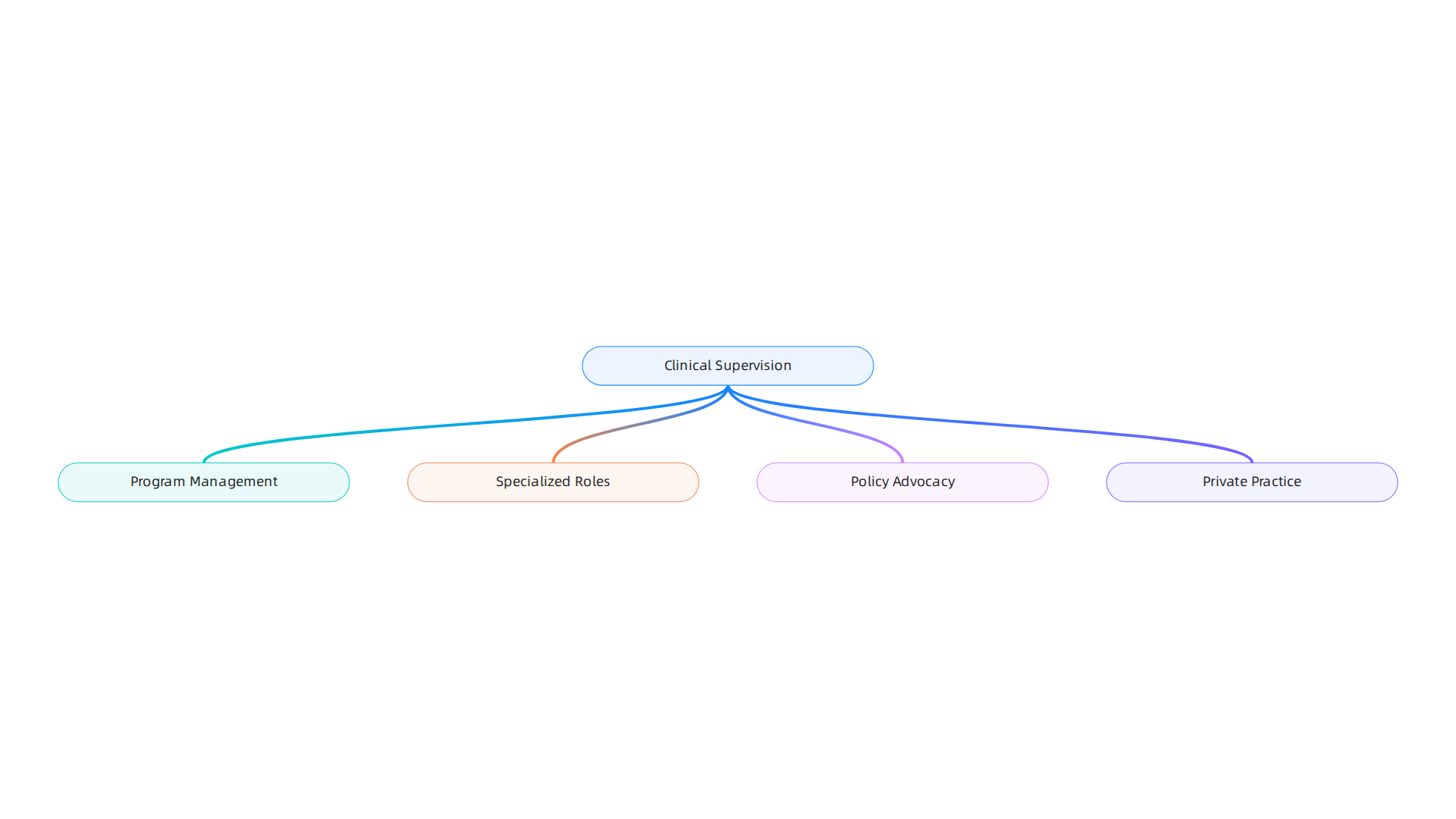
- Clinical Supervision: You can become a clinical supervisor, guiding newer counselors. This usually requires several years of licensed practice.
- Program Management: You might move into managing a treatment program or an entire facility. This involves overseeing staff, budgets, and making sure services run well.
- Specialized Roles: You could become an expert in specific areas like trauma-informed care, adolescent addiction, or even learn to write reports for things like an AMP Mental Health Providers Guide to Psychiatrists, Therapists, and Counselors.
- Policy and Advocacy: Some counselors use their knowledge to work in policy, helping to shape laws and programs related to addiction and mental health at a broader level.
- Private Practice: With enough experience and a solid client base, you might even open your own counseling practice. This gives you more control over your work and income.
To move into these higher-level roles, you often need more education, such as a master’s degree, and special certifications.
Other Career Paths
Your skills as a substance abuse counselor are valuable in many related fields. If you ever feel like a change, consider these alternatives:
- Behavioral Health Technician: While this can be an entry point, experienced counselors can also use their skills in more advanced tech roles, developing tools or platforms that support mental health recovery.
- Education and Training: You could become an instructor, teaching future counselors or providing workshops for other professionals.
- Consulting: Your expertise could be sought by organizations looking to improve their addiction treatment programs or develop new strategies.
Remember, continuous learning and staying updated with the latest practices will always open doors to new and exciting opportunities in your career journey.
Starting a new journey in substance abuse counselor jobs can feel like a big step. Especially for those changing careers, knowing the practical steps to take and how to take care of yourself is key. You’ll need to prepare for what comes next.
Steps to Become a Substance Abuse Counselor
If you are new to the field or switching careers, there are clear steps to follow to become a licensed substance abuse counselor. These steps usually include education, supervised work, and getting certified.
- Education is Your Foundation: Most states require at least an associate’s or bachelor’s degree in a field like counseling, psychology, or social work. Some roles, especially those with higher pay or more responsibility, will ask for a master’s degree. You can find many programs that help you meet these education needs, like training for substance use disorder counseling.
- Supervised Hours are Important: After your schooling, you’ll need to get hands-on experience under the eye of a trained supervisor. These are called supervised experience hours. You might need between 2,000 to 4,000 hours to get your full license, as noted in the Substance Abuse Counselor Certification 2026 guide. This practical time helps you learn how to help people in real situations.
- Getting Your License: Each state has its own rules for becoming a licensed substance abuse counselor. It’s important to check the specific requirements for where you live. For example, some states regulate programs and individual counselors offering specialty substance use disorder treatment, as detailed in State Regulations on Substance Use Disorder Programs and Counselors. You can learn more about these different rules in guides like the Substance Abuse Counselor Licensure requirements by state.
- Keep Learning: The field of addiction treatment is always changing. To keep your license and stay good at your job, you’ll need to take continuing education courses. These courses help you learn about new methods, like different types of family therapy or how to handle mental health first aid. Staying updated is key for all substance abuse counselor jobs.
Taking Care of Yourself as a Counselor
Working in substance abuse counselor jobs means helping people through tough times. This can sometimes be emotionally draining. It’s super important to take care of your own well-being to avoid burnout.

- Know Your Limits: You can’t help others if you’re feeling empty. Learn to say no when you have too much on your plate.
- Find Support: Talk to other counselors or supervisors about your experiences. They can offer advice and understanding.
- Relax and Recharge: Make time for hobbies, exercise, or just quiet moments. This could be anything from reading a book to taking a walk.
- Get Your Own Help: Sometimes, counselors need a counselor too! It’s okay to seek professional help for yourself if you’re struggling. This can give you tools to handle things like the stress of navigating how to navigate mental health insurance billing and afford therapy in 2026 for your clients, or even issues like an Existential Crisis Depression Overlap and Distinctions You Need to Know that some clients might present.
Remember, taking care of yourself is not selfish. It helps you be a better counselor for those who need you.
Feeling emotionally drained? The pressure may not be only personal. Feeling Emotionally Drained?
Summary
This guide explains what substance abuse counselors do, why demand for these roles is rising, and who should consider this career. It outlines common job titles and work settings from inpatient rehab to telehealth, describes a typical day, and explains the education, supervised hours, licensing, and continuing training needed to practice. The article also lists essential clinical skills and soft skills, useful specializations, and where to search and apply for openings. Readers will learn realistic salary ranges, paths for advancement, and alternative career options, plus practical tips for self-care and avoiding burnout. Overall, the guide gives a clear roadmap for starting, growing, and sustaining a career helping people recover from substance use and co-occurring mental health issues.