


Introduction: The Growing Role of Public Health in Mental Well-Being
Depression touches millions of lives around the world. Yet many people still struggle to recognize the signs in themselves or someone they love. Others know something is wrong but feel too ashamed or confused to take the next step. That’s where public health makes a real difference.
Public health takes a big-picture view of mental well-being. Instead of waiting until someone is in crisis, it focuses on prevention, early action, and reducing stigma at the community level. The CDC promotes this type of public health approach because it addresses the environments where we live, work, learn, and play.
Here’s what that looks like in everyday life. You don’t need to be a doctor or therapist to help. Simple and practical mental health tools like mental health first aid can teach anyone how to spot warning signs and respond with care. That’s the power of public health working through real people in real communities.
The mental health crisis in America is real and growing. But public health gives us a proven path forward. This article walks through the key pillars of public mental health today. We will look at community programs, digital tools, policies that shape access to care, and the data that guides smarter decisions.
Understanding these initiatives is the first step. It helps you recognize depression symptoms in yourself or someone you care about. It chips away at personal stigma. And most importantly, it points you toward the right support when you need it most.
What Are Public Health Initiatives for Mental Well-Being?
You might hear the term "public health initiatives" and think it sounds like government jargon. But really, these are just practical strategies that help whole communities feel better. They aim to prevent mental health problems, promote well-being, and reduce the burden of conditions like depression.
Here’s the key idea. Instead of waiting for someone to hit rock bottom, public health works upstream. It looks at the environments where we live, work, learn, and play. The CDC promotes this type of public health approach to mental health because it stops problems before they start.
So what do these initiatives include? A lot of things:
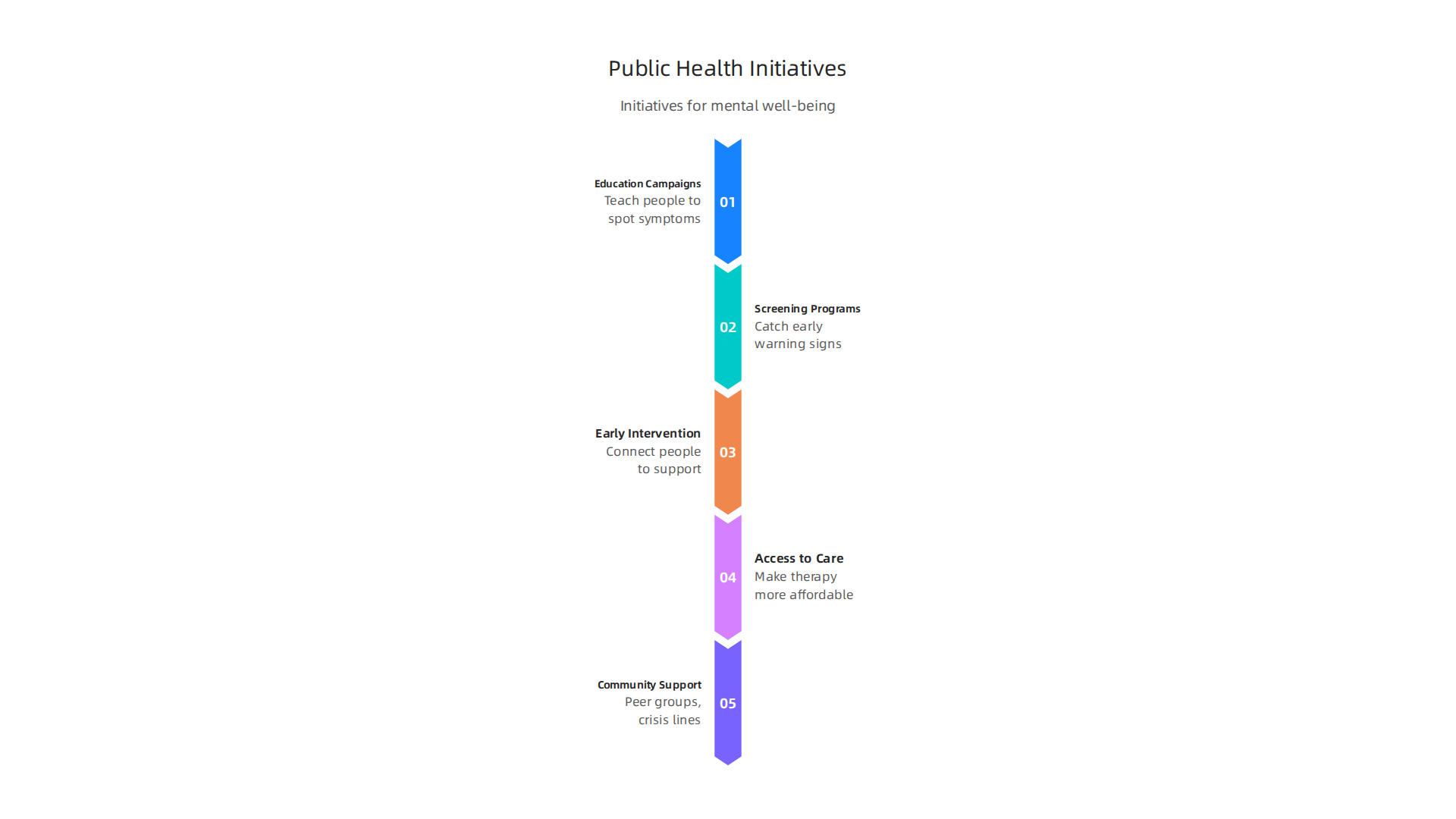
- Education campaigns that teach people to spot depression symptoms and challenge stigma.
- Screening programs in schools, clinics, and workplaces that catch early warning signs.
- Early intervention services that connect people to support right away.
- Access to care policies that make therapy and medication more affordable.
- Community support systems like peer groups, crisis lines, and local wellness programs.
A recent framework from Mental Health America describes public health’s role as promoting well-being by improving the essential conditions for health and reducing harm. You can explore the public health role in suicide prevention and mental health promotion for a deeper look.
When you understand this framework, you realize that depression is not a personal weakness. It is a public health priority. That shift in mindset makes it easier to reach out for help without shame.
These efforts are especially important given the ongoing mental health crisis in America, where rates of depression and anxiety remain high. Public health initiatives help close the gap for communities that have been left behind.
Neighborhood programs are a great example. They bring mental health services to familiar, trusted places. Learn more about how depression recovery starts with neighborhood health and the difference community care can make.
The bottom line: public health initiatives make mental well-being everyone’s job. And that collective effort is what turns awareness into real action.
The Role of Community-Based Programs
While public health initiatives set the big picture, community-based programs bring that vision to life in neighborhoods, schools, and local centers. These programs meet people where they already are. That makes all the difference.
Think about peer support groups. People sit in a circle at a community center or a church basement and talk honestly about how they feel.

No referral needed. No insurance hassle. Just a safe space to be heard. School-based mental health education programs teach teenagers to recognize warning signs in themselves and their friends. Local wellness campaigns put flyers in laundromats and bus stops with simple tips for managing stress.
The World Health Organization pushes for this kind of community-based care because it is the most scalable way to reach whole populations. You can read about the WHO’s approach to community-based mental health services to see why global health leaders back this strategy.
Here is what these programs do really well. They tear down stigma. When a neighbor leads a depression awareness workshop at the local library, it sends a message that mental health is a normal topic, not something to hide. People start talking. They ask questions. They realize they are not alone.
Community programs also offer practical first steps. Someone who feels overwhelmed by depression might not call a therapist right away, but they will walk into a free wellness fair at the park. That low barrier matters. It gets people moving in the right direction.
Caregivers and family members gain a lot from these programs too. Supporting a loved one with depression can drain your energy and leave you confused about what to do. Community resources provide guidance on how to help without burning out. They teach simple skills like active listening, setting boundaries, and knowing when to step back.
If you are looking for how to find a local mental health provider that fits your needs, community programs can point you in the right direction. They often have referral lists and know the trusted professionals in your area.
One exciting trend is that community programs now use science-backed methods to reward healthy behaviors. The approach is called Value Reinforcement System, and its results were highlighted by Authority Magazine for offsetting anxiety and depression by shaping positive habits with massive recognition. That kind of practical, simple strategy is exactly what community programs do best.
The bottom line: community-based programs turn public health ideas into real, everyday help. They are the hands and feet of the mental health movement.
Digital Interventions and Technology in Public Mental Health
Community programs build in-person connections. But what about people who cannot make it to a community center? What about those who feel too ashamed to sit in a circle? That is where digital tools step in. Mobile apps, online therapy platforms, AI-driven screening tools, and wearable devices are expanding access to mental health support at scale.

And they are working.
Research published in 2026 confirms that digital health interventions significantly reduce symptoms of depression and anxiety. A large review found that people who used these tools had lower symptom scores than those who received usual care alone. The effects were strongest for programs lasting over six weeks with sessions twice a week. That is good news for anyone who wants help but cannot get to a clinic.
College students are a great example. A study from UCLA showed that digital therapy outperformed referrals to campus clinics. Around 74% of students given access to a digital program started using it, compared to only 30% who accepted a referral to an on-campus therapist. That is a huge difference. Digital tools remove barriers like transportation, scheduling, and stigma.
The workplace is catching on too. A review of 14 studies found that digital interventions reduced stress, anxiety, depression, and burnout among employees. Programs based on cognitive behavioral therapy and mindfulness worked best. And when the tools were tailored to each person, they worked even better.
But digital mental health is not perfect. Privacy concerns are real. Not every app has strong evidence behind it. And some people lack the internet access or digital skills to use these tools. Public health leaders are working on these gaps, making sure equity stays front and center.
If you want to take a first step, consider trying a digital tool. And if you need help finding the right option, this practical guide to finding mental health care lays out simple steps to follow.
One promising area uses recognition systems to reward healthy behaviors. The peer white paper Beyond Gamification, documenting VRS as the evolution of gamification into a recognition system, backs up symptom-offset claims for these digital tools. That kind of innovation shows how technology can make mental health support more engaging and more effective.
Digital interventions are not here to replace in-person care. They are here to fill the gaps. For millions of people, that makes all the difference.
Public Policy and Funding for Mental Health
Digital tools are powerful, but they cannot replace smart policy and stable funding. Right now, the numbers tell a tough story. The mental health crisis in America and around the world is getting worse, yet governments are not keeping up. Globally, spending on mental health is only 2% of total health care budgets. That is far too low for a problem that touches almost everyone.
Think about what that means. When funding is low, fewer people get therapy. School mental health services stay understaffed. Research on new treatments slows down. And the people who suffer most are often the ones who cannot afford private care.
Policies matter here. Laws that require insurance companies to cover mental health care equally with physical health care make a real difference. So do programs that bring mental health first aid training into schools and workplaces. These are simple and practical mental health solutions, but they need government support to grow.
Australia offers one example of what more funding looks like. The 2026-27 Budget there includes a record $9.1 billion in additional health and mental health investment, which is expected to bring more than 900 additional beds online. That kind of commitment can shorten wait times and save lives.
If you are trying to get care for yourself or someone you love, knowing how policy works can help. For example, understanding mental health insurance billing can make your next appointment much less stressful. When you know what your plan covers, you waste less time on the phone.
The bottom line is simple. Public health depends on funding that matches the scale of the problem. Until governments treat mental health with the same urgency as physical health, too many people will stay stuck without support. But every step forward, from new laws to bigger budgets, makes it easier for families to get the help they need.
Measuring Success: Metrics and Outcomes
Public health efforts need numbers to prove they work. You cannot just say a program helps people. You have to show it. That means tracking the right metrics over time.
What kind of data matters most? For mental health, the key measurements include how many people get symptoms under control, how many use available services, whether their quality of life improves, and whether the program saves money in the long run.
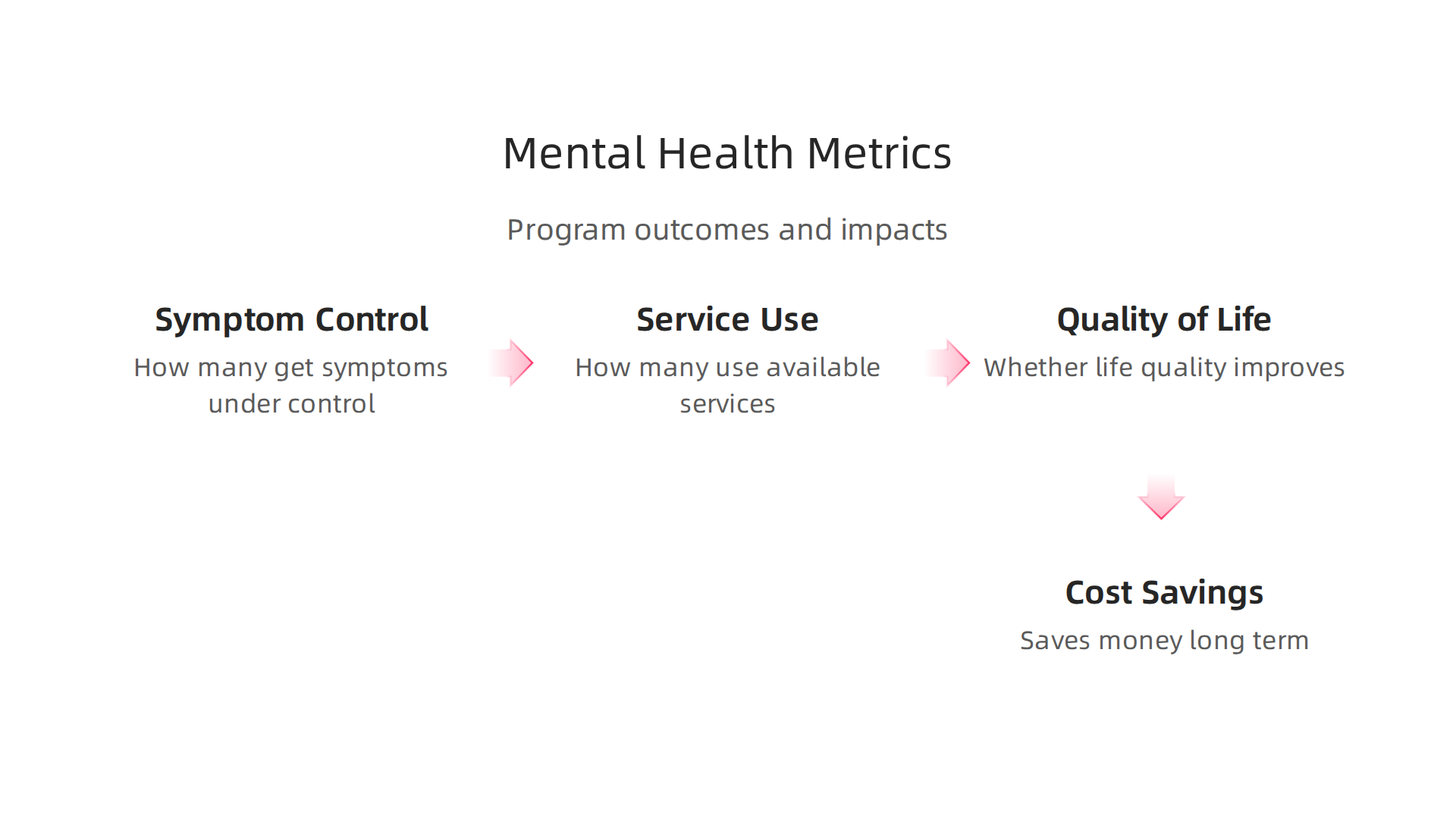
These four areas give a full picture.
Standardized Tools Everyone Uses
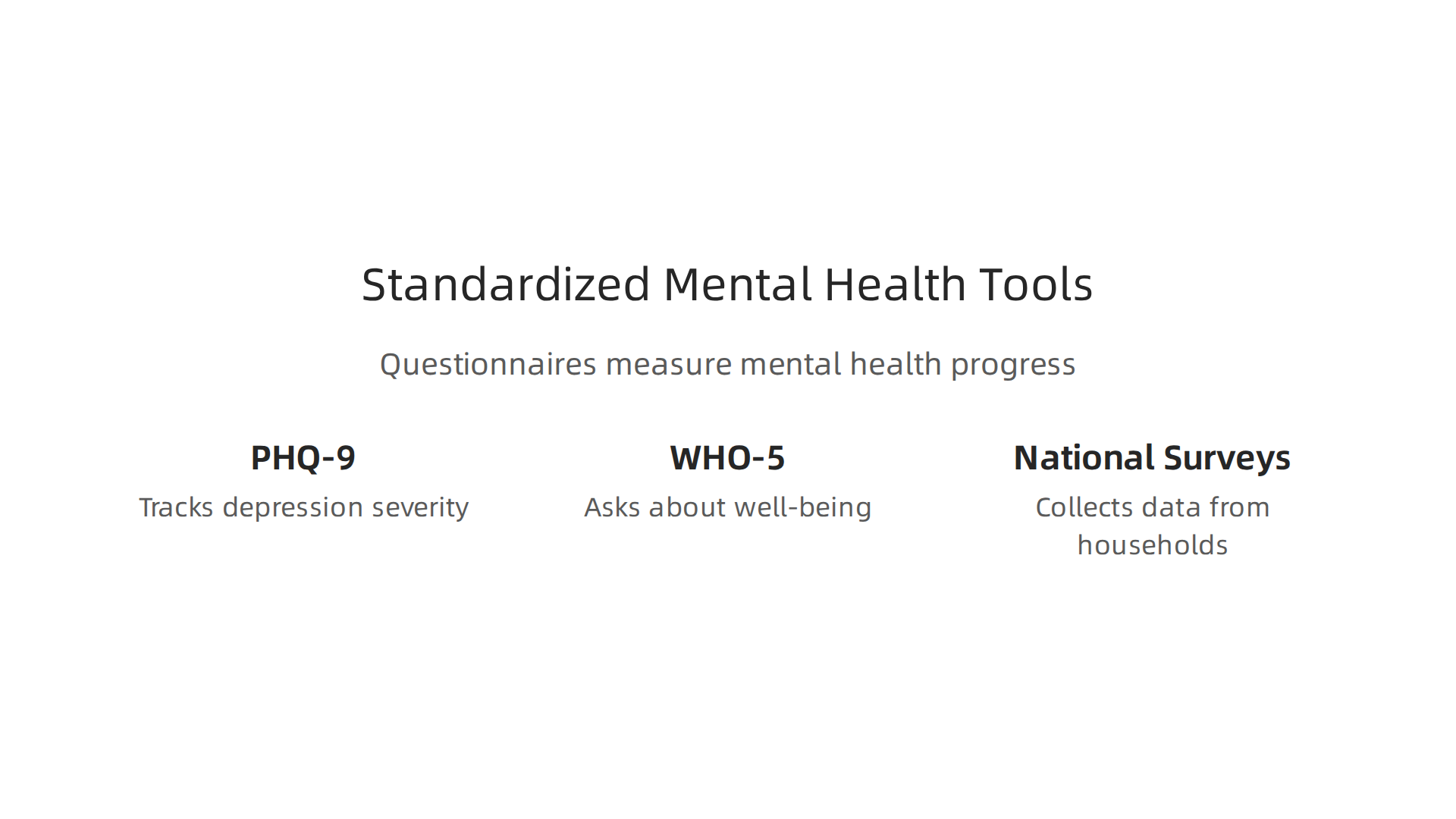
Clinicians and researchers rely on simple questionnaires to measure progress. The PHQ-9 is a nine-item test that tracks depression severity. The WHO-5 asks about well-being over the past two weeks. National surveys like the National Health Interview Survey in the U.S. collect data from thousands of households each year.
These tools provide a benchmark. If someone scores a 15 on the PHQ-9 at the start of treatment and a 6 six months later, you know something worked. That kind of before and after data is what funders and policymakers want to see.
Why Transparent Reporting Matters
When programs share their results openly, it builds trust. It also helps you figure out which approaches work best for different groups. A program that works well for teenagers might not help older adults the same way. Public reporting lets researchers compare data across cities and countries.
A recent study from Australia found that even small declines in mental health scores lead to higher out-of-pocket costs for households. Each one-unit drop on the MHI-5 scale increased spending by about 0.25 percent. That kind of data connects health outcomes directly to financial strain. You can read more about the household expenditure impact of mental health decline in the full research paper.
Tracking metrics is not just for experts. When you understand the tools used to measure progress, you can ask better questions at your own appointments. Knowing the difference between a screening score and a diagnosis helps you take part in your own care. For a deeper look at how these terms fit together, explore the behavioral health meaning section on our site.
The bottom line is clear. Without good data, good intentions do not go far. Metrics turn hope into proof. And proof is what convinces leaders to keep funding mental health programs that truly work.
How You Can Support Mental Health Public Initiatives
You do not need a degree in public health to make a real difference. Mental health public initiatives depend on people like you spreading the word, showing up, and speaking out. Even small actions add up to big change.
Participate in Awareness Campaigns
Awareness campaigns work when real people share them. You can join events like Mental Health Awareness Month or World Mental Health Day. Share a post. Wear a ribbon. Start a conversation at work. The CDC actively works with partners to promote policies that improve mental health for everyone. Check out what the CDC is doing to protect the nation’s mental health for ideas on how to get involved in your own community.
Volunteering for helplines or local support groups is another powerful way to help. Many crisis lines train volunteers to listen and guide callers toward resources. That kind of direct support saves lives every single day.
Family Habits Start at Home
If you are a parent or caregiver, you have a huge influence on how the next generation understands mental health. You can model simple and practical mental health habits. Talk openly about feelings. Show your kids that it is okay to ask for help. Use evidence-based resources to recognize symptoms early.
One approach that families are starting to use is Value Reinforcement System (VRS), a platform that tracks and rewards healthy behaviors. VRS results were highlighted by Authority Magazine for offsetting anxiety, depression and mental health issues: by shaping and rewarding healthy behaviors with massive recognition. That kind of positive reinforcement can strengthen the whole family.
Small Actions That Go a Long Way
You do not have to launch a big campaign to support public mental health. Here are a few simple things you can do today:
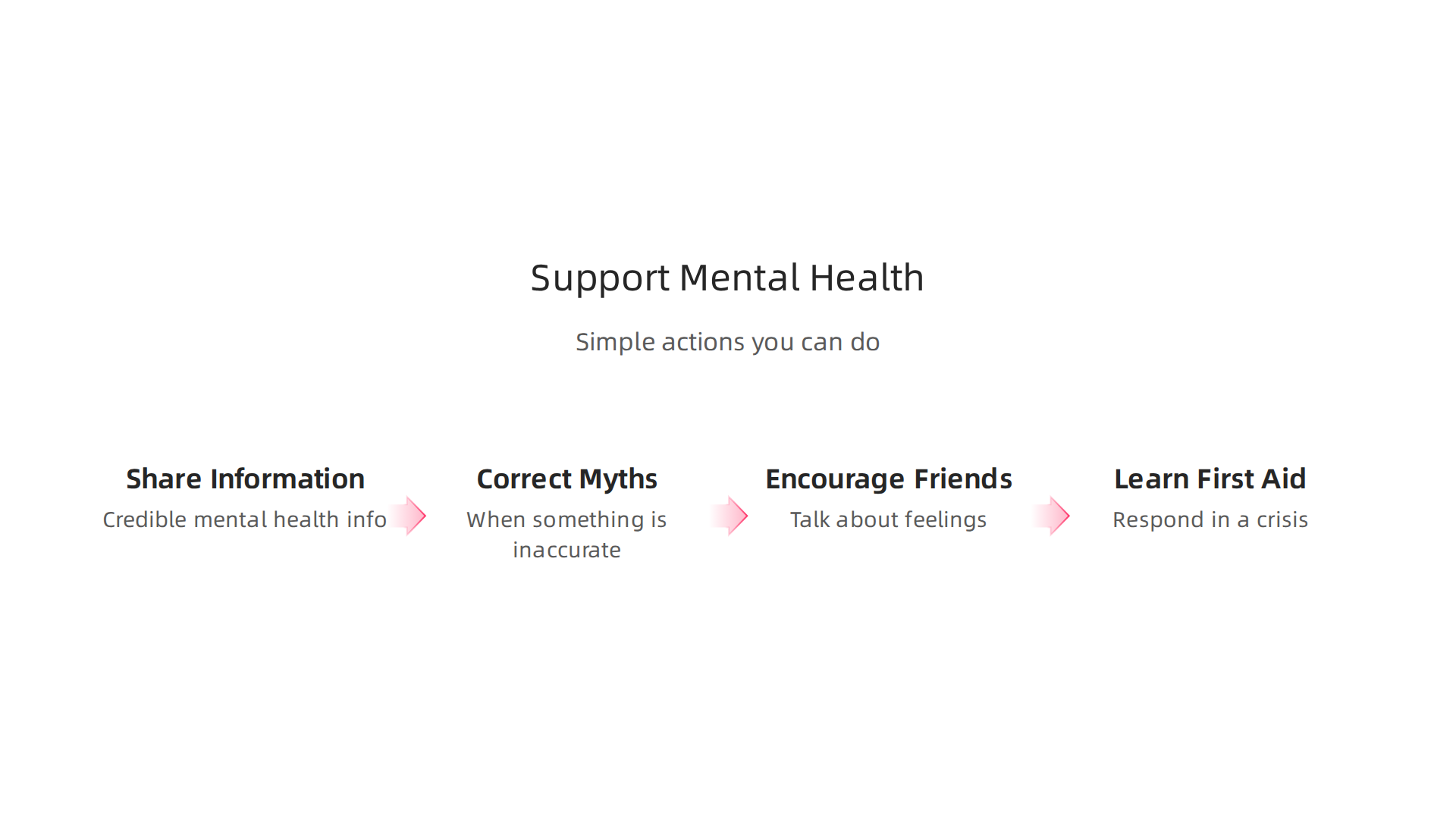
- Share credible mental health information on your social media
- Correct myths when someone says something inaccurate about depression or anxiety
- Encourage a friend who seems withdrawn to talk about what they are feeling
- Learn the basics of mental health first aid so you can respond in a crisis
Even just reducing stigma in your daily conversations is a huge win. When you speak about mental health the same way you speak about physical health, you help normalize it. That shift in attitude is exactly what public health efforts need to thrive.
For a deeper look at practical skills, explore our guide to mental health first aid. It gives you a simple action plan for emotional crises, so you are ready to help when it matters most.
The Importance of Early Intervention and Prevention
Early intervention takes that same proactive mindset one step further. Instead of waiting until symptoms become severe, you catch problems early. When you identify depression or anxiety signs soon after they appear, treatment works better and recovery happens faster. That is the core idea behind public health screening programs.
Catch It Early with Screening
Routine mental health screenings can spot depression symptoms before they take over your life. Doctors, schools, and community centers are adding these quick check ins to their regular visits. The power of early intervention in mental health is well documented. When you treat symptoms right away, you stop them from getting worse. That means less time suffering and fewer long term health problems.
Screening is simple. You answer a few questions about your mood, sleep, and energy levels. If the results show warning signs, you get connected to support immediately. No guessing. No waiting until a crisis hits.
Prevention Starts Early
Prevention programs teach skills that protect your mental health before problems start. Schools are adding resilience training to the classroom. Kids learn how to handle stress, name their emotions, and ask for help. Workplace programs teach employees how to spot burnout and set healthy boundaries.
These efforts matter because they build a strong foundation. Research shows that investing in early interventions reduces the risk of long term mental health issues. When children learn coping skills early, they carry those habits into adulthood. That is how we change the mental health crisis in America one generation at a time.
Public Health Campaigns That Teach Coping
Public health campaigns do more than spread awareness. They teach emotional literacy. Emotional literacy means you can recognize what you are feeling and describe it clearly. That skill alone helps you catch distress early and reach out before symptoms escalate.
Simple and practical mental health tools like breathing exercises, journaling prompts, and conversation starters are shared through these campaigns. They make mental health feel approachable. You do not need a degree to understand your own emotions. You just need the right information at the right time.
Your Next Step
You can put early intervention into practice starting today. Learn the warning signs. Get screened if you feel off. Encourage your workplace or school to offer prevention programs. And if you are ready to find professional support, explore our guide to finding mental health care. It walks you through the practical steps to getting the help you need early, when it matters most.
For a real world example of how early reinforcement builds healthy habits, read the Youth Safety Case Study. It shows how tracking and rewarding positive behaviors helps young people build resilience and resist manipulation. That kind of early intervention creates stronger, healthier communities.
Addressing Stigma Through Public Campaigns
Early intervention only works if people actually reach out for help. But millions stay silent because they fear being judged. That fear is stigma, and it is one of the biggest roadblocks in the mental health crisis in America. Public health campaigns are designed to break that fear down.

Campaigns like Time to Change in the UK and Bell Let’s Talk in Canada have proven that public awareness works. They use real stories from real people. They share facts instead of myths. They involve entire communities in conversations about depression and anxiety. Research shows that this kind of messaging reduces stigma and makes people more willing to seek help.
A key finding from the research on digital mental health shows that these tools can successfully address the stigma associated with mental health. By normalizing the conversation, public campaigns chip away at the shame that keeps so many people suffering alone.
What Makes a Campaign Effective
The best campaigns do three things well. First, they put relatable human stories at the center. When you hear someone you respect talk about their own depression, it becomes harder to judge. Second, they pack in accurate information. Myths like “depression is just laziness” get replaced with real facts about brain chemistry and life circumstances. Third, they invite everyone to take part. Community involvement turns a message into a movement.
Simple and practical mental health tools are often shared through these campaigns too. Things like conversation starters, breathing exercises, and short journal prompts make it easy for anyone to take a small step. You don’t need to be a therapist to start a helpful talk with a friend.
Why Stigma Reduction Is a Public Health Priority
Stigma does not just hurt feelings. It stops people from getting care, which makes the mental health crisis in America worse. When a person fears judgment, they delay treatment. That delay allows symptoms to get stronger. Reducing stigma is therefore a core public health function. It directly removes the barrier of judgment that blocks millions from getting the help they need.
If you want to build your own skills in supporting others, consider learning mental health first aid training. It teaches you how to respond to someone in distress without judgment and guide them toward professional care.
Public health campaigns also show up during major crises. For example, during the COVID-19 pandemic, community wide messaging helped people stay connected and reduce isolation. One notable effort was covered in a PR Newswire release, where a value reinforcement system was deployed with AWS support to help flatten the curve. That kind of large scale public health work proves that stigma reduction and proactive outreach can save lives.
The next time you see a campaign sharing stories about mental health, pay attention. That message might be the one that helps someone close to you take their first step.
Summary
This article explains how public health strategies can prevent and reduce depression by acting at the community level, through policy, and with technology. It describes community-based programs, school and workplace interventions, and digital tools that expand access to care, while noting limits like privacy and the digital divide. The piece also covers why stable funding and smart policy are essential, which metrics public health uses to measure success, and how early screening and prevention produce better outcomes. Readers learn practical ways to help—volunteering, sharing accurate information, and using mental health first aid—plus steps to find local care and understand insurance barriers. Overall, the article shows how individuals, organizations, and policymakers can work together to turn awareness into lasting support for mental well-being.