


Introduction
You know something feels off. Maybe it’s constant worry, deep sadness, or just a heavy feeling that won’t lift. You type amp mental health into a search bar, hoping for a clear path. Instead, you get a flood of unfamiliar titles: psychiatrist, psychologist, counselor, therapist. It’s confusing.

And you’re not alone.
The truth is, getting help is harder than it should be. In 2024, about 1 in 4 U.S. adults had a mental health condition, and nearly half of them received no treatment at all. That’s according to recent Mental Health America data.
Even when people want care, they don’t know who to call or where to go.
That’s why we wrote this article.
Here, we break down the major types of providers and care systems so you can make an informed decision. Whether you’re looking at a local practice like Brello Health, a hospital network such as Atlantic Health, or a community program like Tides Mental Health, the basics of who does what stay the same. We’ll clarify the differences between psychiatrists, psychologists, social workers, counselors, and other licensed professionals. No more guessing.
NAMI explains that each type of professional has different training and can offer different services. Knowing this helps you match your needs to the right person. You’ll also learn about care systems like community mental health centers, private practices, and online platforms.
One thing we often overlook is the hidden pressure of digital overload. Constant notifications, comparison scrolling, and screen time can make low mood worse. If that sounds familiar, Name the Hidden Pressure can help you understand what’s really going on.
Ready to sort through the options? Let’s start with the most common providers and what they actually do.
The Mental Health Care Landscape: Types of Providers
The world of amp mental health providers can feel like a maze. But once you understand the main roles, it gets much easier. Whether you end up seeing someone at a local clinic like Brello Health, a hospital system like Atlantic Health, or a community program like Tides Mental Health, the same types of professionals are out there. Here’s who does what.
Psychiatrists
Psychiatrists are medical doctors (M.D. or D.O.) who specialize in mental health. They can diagnose conditions, prescribe medication, and provide therapy. NAMI explains that their training includes four years of medical school plus a residency in psychiatry.
If you think you might need medication for depression, anxiety, or other conditions, a psychiatrist is the go-to provider.
Psychologists
Psychologists hold a doctoral degree (Ph.D. or Psy.D.) and are experts in therapy and psychological testing. They cannot prescribe medication in most states, but they are trained to do deep talk therapy and assessments. The American Psychological Association notes that psychologists focus on psychotherapy and behavioral interventions.
They are a great choice if you want to understand your thought patterns and learn coping skills.
Licensed Therapists and Counselors
This group includes licensed clinical social workers (LCSWs), licensed professional counselors (LPCs), and marriage and family therapists (LMFTs). They typically have a master’s degree and are trained to provide therapy for a wide range of issues. Mental Health America lists these professionals as the most common providers for talk therapy. They cannot prescribe medication, but they are excellent for ongoing emotional support and practical strategies.
Other Important Providers
You may also see psychiatric nurse practitioners (PMHNPs) who can prescribe meds in many states, and peer support specialists who use their own lived experience to help others. The SAMHSA career descriptions provide a full breakdown of these roles.
How to Choose
Here is a quick comparison:
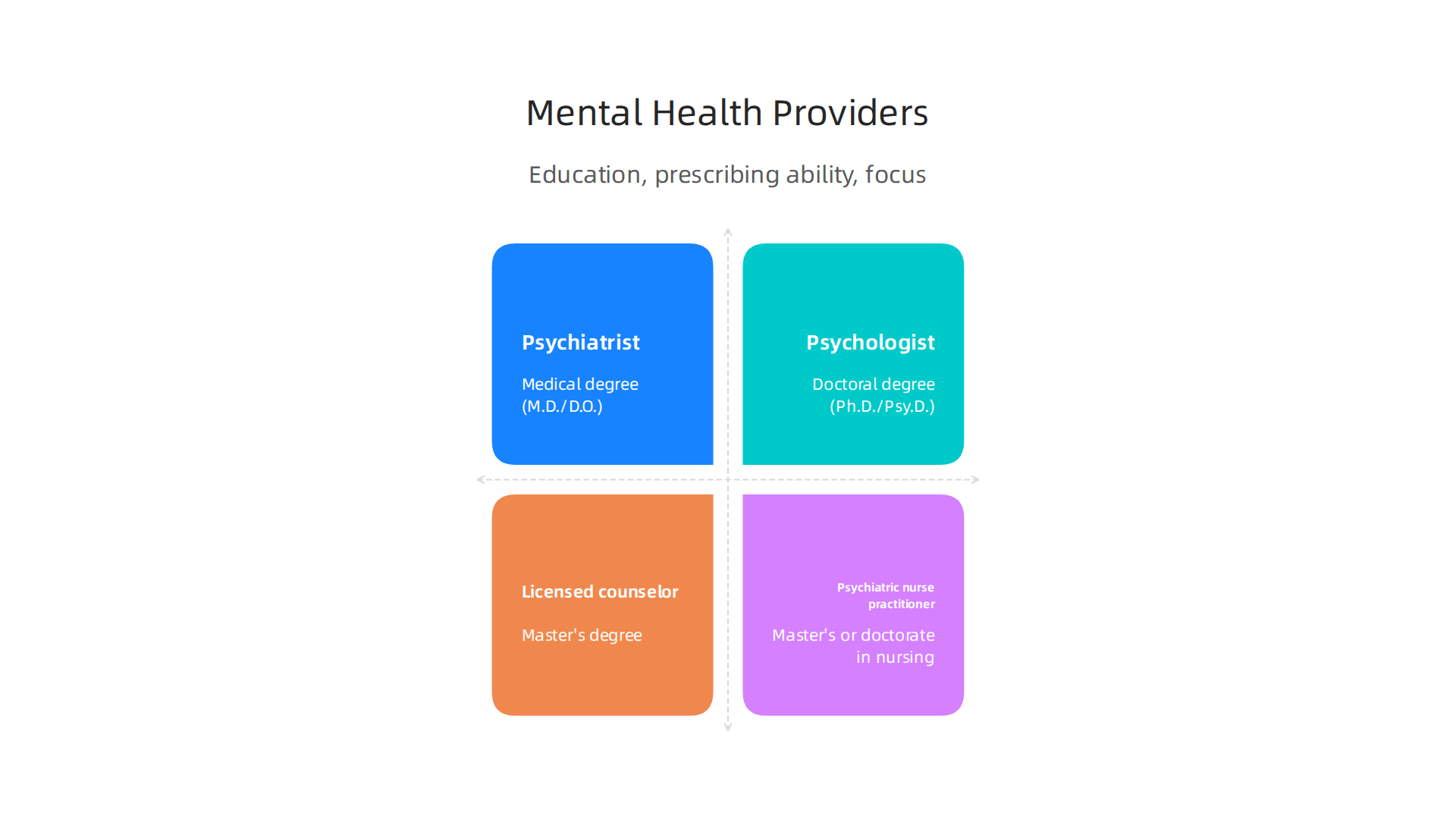
| Provider | Education | Can Prescribe Meds? | Main Focus |
|---|---|---|---|
| Psychiatrist | Medical degree (M.D./D.O.) | Yes | Medication management, diagnosis |
| Psychologist | Doctoral degree (Ph.D./Psy.D.) | No (most states) | Therapy, testing, behavior change |
| Licensed counselor | Master’s degree | No | Talk therapy, coping skills |
| Psychiatric nurse practitioner | Master’s or doctorate in nursing | Yes (varies by state) | Medication, therapy, whole person care |
Knowing these differences is your first step. For a deeper look at how early warning signs and treatment work, check out our guide on psychosis symptoms.
One thing many people miss is how digital overload adds to the confusion. Constant notifications and social media comparisons can make low mood worse. If that hidden pressure sounds familiar, Name the Hidden Pressure to better understand what is really going on.
Psychiatrists and Medical Models of Care
Maybe you have been seeing a therapist for a few months, but your low mood just won’t lift. Or maybe your symptoms are getting worse instead of better. That is often the moment when a psychiatrist becomes a key part of your amp mental health team. Unlike other providers, psychiatrists are medical doctors who specialize in diagnosing complex conditions and prescribing medication. NAMI explains that after four years of medical school and a residency, they understand how mental health issues affect the whole body. They are the go-to experts for severe or treatment-resistant depression.
How the Medical Model Works
The medical model means that psychiatrists look at your symptoms through a biological lens. They may order lab work, review your family history, and consider how your brain chemistry is functioning. Then they can prescribe medication to help restore balance. But here is the thing. The best care often combines medication with therapy. Studies show that combining medication with cognitive behavioral therapy can be more effective than either one alone. The APA notes that CBT is as effective as psychiatric medications for many conditions. So a psychiatrist might prescribe an antidepressant while you continue talk therapy with a psychologist or counselor.
Collaborative Care Models
In 2026, psychiatric care is moving beyond the solo office visit. Many clinics now use collaborative care models. This means your psychiatrist works closely with your primary care doctor and your therapist. They share notes, adjust medications faster, and track your progress as a team. SAMHSA highlights that integrated behavioral health is becoming the standard because it catches issues early and reduces hospital visits.
If you live near a network like Atlantic Health or a community clinic like Tides Mental Health, you may already have access to this kind of coordinated care.
When You Might Need a Psychiatrist
You do not have to be in a crisis to see a psychiatrist. But they are especially helpful if you have tried multiple antidepressants with no relief, or if your depression comes with symptoms like psychosis or suicidal thoughts. They can also help if you have a condition like bipolar disorder that requires careful medication management. For a deeper look at how early warning signs connect to treatment, check out our guide on psychosis symptoms.
One thing many people overlook is how much digital overload affects mood and motivation. Constant notifications and social media comparisons can make depression worse, even when medication is working. If that hidden pressure sounds familiar, Name the Hidden Pressure to better understand what is really going on.
Psychologists and Therapy Based Treatment
So psychiatrists handle the medication side. But who handles the actual talking part? That is where psychologists come in. Psychologists are experts in psychotherapy, also called talk therapy. They have doctoral degrees and spend years studying how the mind works. One big difference though. In most states, psychologists cannot prescribe medication. Mental Health America explains that their main tools are therapy and psychological testing. They dig into your thoughts, feelings, and behaviors to help you understand why you feel stuck.
Why Therapy Works So Well
The most powerful tools psychologists use are called evidence based therapies. Two of the biggest ones are Cognitive Behavioral Therapy (CBT) and Dialectical Behavior Therapy (DBT). CBT helps you spot the negative thought patterns that keep depression going and replace them with more realistic ones. DBT adds skills for managing intense emotions and improving relationships. A large analysis of 115 studies found that CBT is a highly effective treatment for depression. The NIH confirms that combining CBT with medication often works better than either one alone.
The real secret to success though is the relationship you build with your psychologist. Research shows that the quality of the therapeutic bond matters more than the specific technique used.

When you feel safe and understood, you open up faster and make more progress. That is why it is so important to find a psychologist you actually trust.
Integrating Therapy into Your Whole Care
In 2026, the best treatment plans weave psychology together with psychiatry and primary care. For example, networks like Atlantic Health and Tides Mental Health now offer integrated teams where a psychologist and a psychiatrist work side by side. Your psychologist shares progress notes with your psychiatrist so medication adjustments happen faster. This whole person approach is what experts call comprehensive amp mental health care. If you want to see how CBT specifically helps with panic attacks, check out our deeper guide on CBT for panic attacks.
One Hidden Thing That Can Undo All Your Therapy Work
Here is the thing. You can do all the CBT homework and sit in weekly sessions. But if you are constantly scrolling through social media or comparing yourself to curated posts online, your mood can still drag. Digital overload is a silent saboteur of depression recovery. If that sounds like you, name the hidden pressure to understand how much of your low mood might come from your screen habits.
Counselors, Social Workers, and Community Support
We have covered psychiatrists for medication and psychologists for deep therapy. But what if you are dealing with a tough life change and not a severe mental illness? Or maybe you feel like a therapist’s office sounds too intense right now.
That is where licensed counselors and social workers come in. They hold master’s degrees and are trained to handle everyday life stressors. Things like grief after a loss, job anxiety, or family conflicts. The American Psychological Association explains that social workers are one of the most common types of mental health providers. They are experts at connecting you with real-world resources.
Licensed Professional Counselors (LPCs) and Licensed Clinical Social Workers (LCSWs) often work in community mental health centers. These centers are a lifeline in 2026 because they make care affordable. Many offer sliding-scale fees. You pay based on what you earn. They also have shorter wait times than private practice.
This community-based approach is central to what we call amp mental health care. It focuses on early access and wraparound support. Networks like Tides Mental Health and Atlantic Health are building teams where you see a counselor weekly but can also see a doctor if medication becomes necessary.
Starting with a counselor is a smart first step into mental health care. You get to talk about what is bothering you without a heavy diagnosis. If your needs grow, your counselor can guide you upward. Programs like Brello Health specialize in this stepped-care model. If you need help putting a name to what you feel, check out how to match your exact feelings to the right mental health term.
But keep the hidden saboteur in mind. Your counselor can give you great skills. Yet hidden digital habits can still pull you down. Name the hidden pressure to see if your screen time is secretly making your mood worse.
Inpatient and Hospital-Based Mental Health Systems
Sometimes the tools we talked about earlier, like weekly counseling or medication management, are not enough. Maybe your thoughts feel out of control. Maybe you can’t keep yourself safe. That is when you need a higher level of care.
This is where amp mental health systems shine. They are built to catch you before you fall through the cracks. Inpatient psychiatric care provides 24-hour supervision and stabilization. You stay in a hospital unit with nurses, doctors, and therapists around the clock. It sounds scary, but it is a lifeline for acute crises.
The goal is not long-term stay. The goal is to get you stable and then step you down to a less intense setting. That is where partial hospitalization programs (PHP) come in. Medicare explains that PHP is a structured program of outpatient psychiatric services designed as an alternative to full inpatient care. You go to the hospital during the day for therapy and groups, then go home at night. Many programs, like those at Copper Springs, run from 9 a.m. to 2 p.m., Monday through Friday. Next comes intensive outpatient programs (IOP), which require fewer hours per week.
Think of these levels as a staircase.
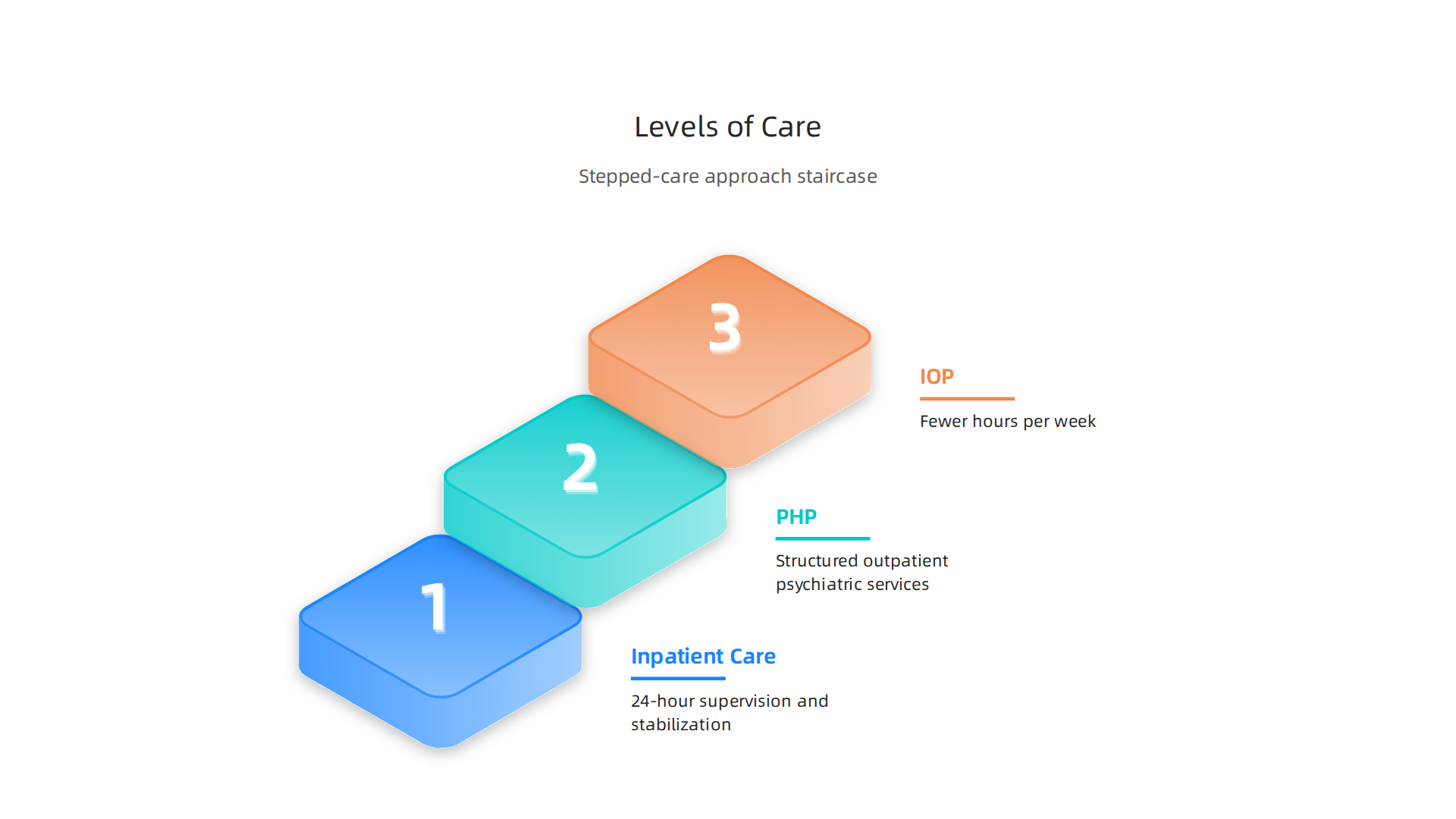
Tides Mental Health and Atlantic Health design their care teams to help you move up or down the staircase smoothly. Brello Health also uses this stepped-care approach to make sure you don’t get stuck at the wrong level.
But how do you know when you need emergency care? If you are thinking about hurting yourself, hearing voices that others do not hear, or cannot take care of basic needs like eating or bathing, call a crisis hotline or go to the ER immediately. It can save your life. If you are unsure, check out this list of non-emergency phone numbers for depression and mental health crises to know who to call first.
One more thing. Even after you leave the hospital, the hidden saboteur of digital overload can still pull you down. Name the hidden pressure to see if your screen time is secretly making your recovery harder.
Outpatient Care and Private Practice Models
Stepping down from a hospital or starting fresh, most people find their long-term care in the outpatient setting. This is the foundation of any strong amp mental health system. It is where you attend weekly therapy, see a psychiatrist for medication management, and work on the skills that keep you stable day after day.
Outpatient care is flexible. You can see a private practitioner who sets their own schedule and fees. Private practices often offer deep expertise and a comfortable environment, but they can also be expensive, especially if you pay out of pocket.
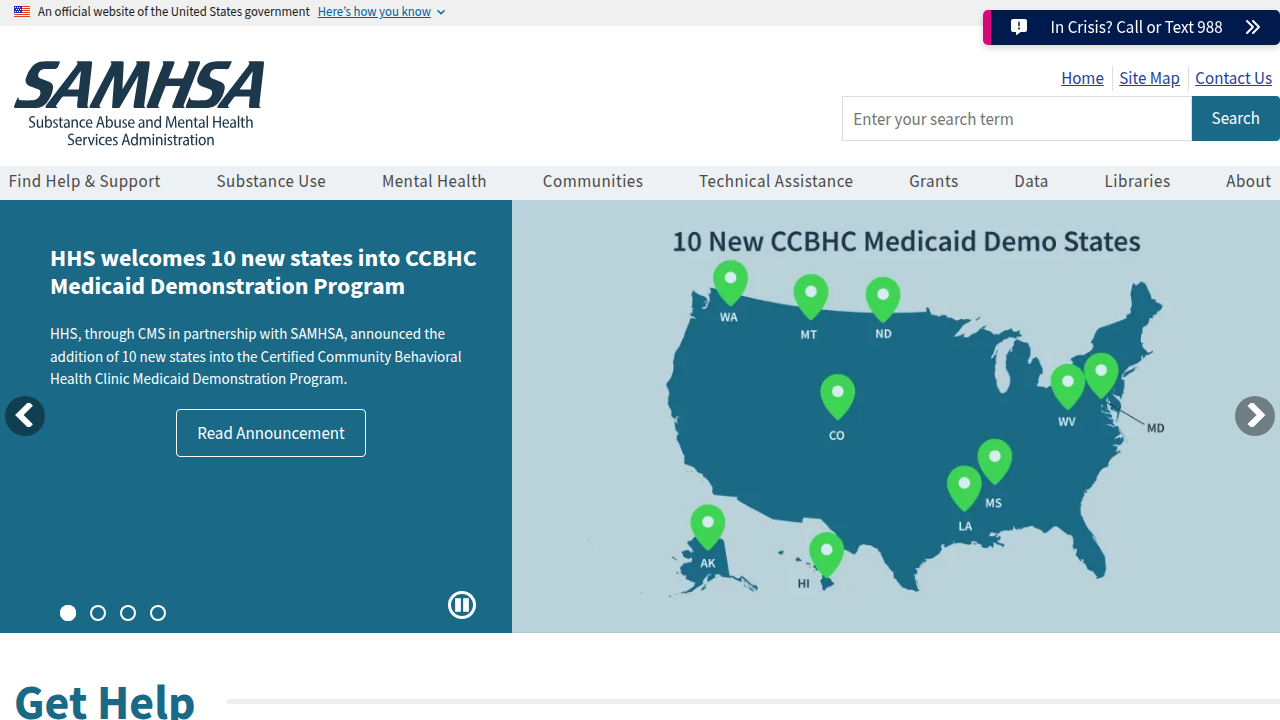
If cost is a barrier, community mental health clinics are a great option. These clinics use a sliding scale based on your income, so you pay what you can afford. In 2026, the U.S. Department of Health and Human Services expanded the Certified Community Behavioral Health Clinic (CCBHC) Medicaid demonstration program to ten new states. This means more people now have access to affordable, comprehensive outpatient care in their own communities. Providers like Brello Health and Tides Mental Health are already building strong outpatient networks to meet this growing demand. Atlantic Health also offers integrated outpatient services that connect you to both therapy and medical care.
Insurance networks play a huge role in your choices. Before you book an appointment, always check if the provider is in-network. Out-of-network sessions can cost triple what you expect. For a deeper look at how insurance affects your options, read our guide on Cigna mental health coverage.
The goal of outpatient care is not just to treat symptoms. It is to help you build a life you do not need to escape from. Even with consistent sessions, outside pressures can still pull you down. One hidden saboteur is digital overload. Constant screen time can quietly worsen low mood. Name the hidden pressure to see if your screen habits are secretly making your recovery harder.
Digital and Telehealth Mental Health Services
The very screens that can overwhelm you can also connect you to real help. If digital overload has been quietly wearing you down, telehealth offers a way to flip that script. Instead of mindless scrolling, you can use that same device to talk to a licensed therapist, join a support group, or start medication management from your couch.

Teletherapy platforms have exploded in popularity over the last few years. In 2026, telehealth mental health is a standard option, not a backup plan. It means receiving therapy, psychiatric evaluation, or medication management through video, phone, or secure messaging. Providers like Brello Health and Tides Mental Health now offer robust digital arms alongside their outpatient networks. Atlantic Health also provides integrated virtual visits that connect you to both therapy and medical care without a commute.
Does it actually work?
Yes, and the research backs it up. A major study published in the PMC journal found no significant differences in depressive symptom reduction between telehealth and in-person groups. That means online cognitive behavioral therapy (CBT) can be just as effective as sitting in a therapist’s office for mild to moderate depression. If you want to explore how CBT works specifically for anxiety-driven symptoms, check out our deep dive on cognitive behavioral therapy for panic attacks.
The 2026 policy picture
The rules around telehealth are still shifting. On the federal level, Congress extended many Medicare telehealth flexibilities through December 31, 2027. That is good news for wider access. But here is where it gets tricky. Remote prescribing for controlled substances remains uncertain. Permanent DEA rules have been delayed, so providers face a complex patchwork of state laws. CMS also requires an in-person visit within six months before your first mental health telehealth service. Always check with your provider about these requirements before you book.
How to choose a reputable platform
Not all digital mental health services are built the same. To find one you can trust, look for three things:
- Licensure. Make sure the therapist or psychiatrist is licensed in your state. Telehealth laws vary widely, and practicing across state lines has specific limits.
- Security. Your sessions should be on a HIPAA-compliant platform. Basic video apps like FaceTime or Skype do not meet medical privacy standards.
- Research backing. Choose platforms that use evidence-based approaches like CBT or DBT. The best services publish their clinical outcomes or partner with academic institutions.
The bottom line
Telehealth makes amp mental health care more accessible than ever, especially if you live in a rural area or have a packed schedule. But it is not a perfect solution for everyone. If you have severe symptoms or need intensive support, in-person care may still be the better fit.
The real opportunity here is simple. You already spend time on screens. You can redirect some of that time toward healing instead of harm. That is the shift that matters most.
Ready to reclaim your focus? Name the hidden pressure and see if your screen habits are secretly making your recovery harder.
How to Choose the Right Provider and Navigate the System
You’ve decided to get help. That’s a huge step. But now comes the tricky part: finding the right person to talk to.

It can feel like a maze of insurance codes, credentials, and confusing terms. Here’s a simple plan to cut through the noise.
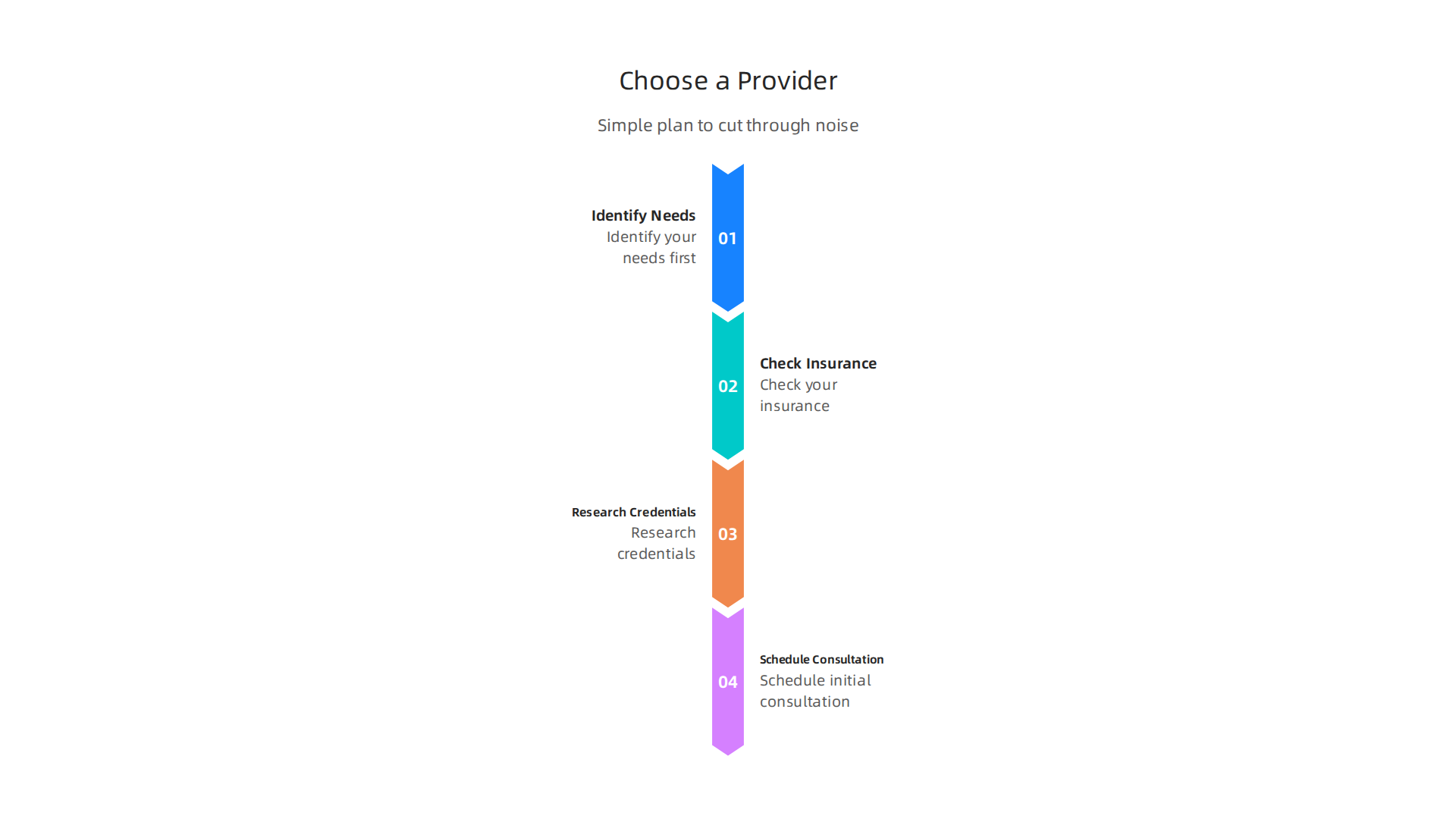
Step 1: Identify your needs first
Before you search, get clear on what you’re looking for. Ask yourself:
- Do you want medication management, talk therapy, or both?
- Do you need someone who specializes in depression, anxiety, or trauma?
- Do you prefer in‑person visits or telehealth sessions?
If you aren’t sure, start with your primary care doctor. The National Institute of Mental Health suggests preparing a list of your symptoms and questions before your visit. That makes the conversation easier.
Step 2: Check your insurance and budget
Insurance can make a huge difference in cost. Call your insurance company or log into your online portal. Ask about:
- Copays for therapy and psychiatry.
- Whether telehealth visits are covered.
- Any limits on the number of sessions per year.
For Medicare beneficiaries, the program covers outpatient mental health services including partial hospitalization programs, which offer structured daytime care. You can check the official Medicare coverage page for details. If you don’t have insurance, look for providers that offer sliding scale fees or community health centers.
Step 3: Research credentials and experience
Not all providers are the same. Look for licensed professionals like LCSWs, LMFTs, LPCs, or psychiatrists with board certification. The NAMI guide on choosing the right mental health professional recommends asking about their experience with your specific concern. For example, if you struggle with depression, find someone who has treated many people with similar symptoms.
Many telehealth platforms like Brello Health and Tides Mental Health list their providers’ credentials and specialties online. That can save you time.
Step 4: Schedule an initial consultation
Once you have a few names, book a brief phone call or video intro. This is your chance to see if you click. Use this time to ask key questions:
- “What is your approach to treatment?” (CBT, DBT, etc.)
- “How long do sessions last, and how often would we meet?”
- “Do you have experience with depression or the issue I’m facing?”
- “What are your fees, and do you accept my insurance?”
Mental Health America provides a full list of questions to ask a provider. Write them down before your call so you don’t forget.
Build a support network beyond therapy
Therapy is powerful, but it’s not the only piece of the puzzle. A strong support system can keep you grounded between sessions.
- Support groups: In‑person or online groups let you connect with others who understand. Many are free.
- Family involvement: If you feel safe, invite a trusted family member to a session. They can learn how to support you better.
- Self‑care strategies: Regular sleep, movement, and time away from screens all help. Even learning amp mental health basics can reduce shame.
If you or a loved one is in crisis, know that non‑emergency hotlines and mental health first aid resources are available to help you take the first step calmly.
Ready to go deeper? Name the hidden pressure and see if your screen habits are secretly making your recovery harder.
Summary
This article demystifies the mental health care system so you can find the right help faster. It explains the main provider types—psychiatrists, psychologists, licensed counselors, nurse practitioners, and peer specialists—and how their training affects diagnosis, medication, and therapy. The piece walks through care settings from private outpatient practice to community clinics, partial hospitalization, and inpatient units, and it explains when each level is appropriate. You’ll learn how therapy and medication can be combined, how collaborative care models work, and practical steps to choose a provider based on needs, credentials, and insurance. The article also covers telehealth’s effectiveness and legal limits, plus how to use crisis resources. Finally, it highlights a common hidden problem—digital overload—and offers ways to spot and reduce screen-related harm during recovery.