


It’s a simple truth: not everyone gets the same fair chance at good health. This is especially true when we talk about mental well-being, like depression. This unfairness is what we call health disparities. It means that certain groups of people face bigger challenges and have a harder time getting the mental health care they need, or they might be more likely to suffer from mental health conditions in the first place.
For example, a report from 2026 showed how these differences in health affect various groups across states Commonwealth Fund 2026 State Health Disparities Report. These problems are very tricky, as they come from many parts of our lives. They involve things like our individual circumstances, the communities we live in, and even the rules and laws put in place by a "mental health act" Mental Health Disparities – PMC.
Actually, some people, like those from racial or ethnic minority groups, women, and LGBTQ+ people, often have worse mental health outcomes. This is because it can be hard for them to get the right help, among other reasons Mental Health Disparities: Diverse Populations – Psychiatry.org. These health disparities lead to unequal risks for depression, a lack of access to care, and different results from treatment. Fixing this means working towards mental health equity. This is about making sure everyone has a fair chance to be mentally healthy, no matter who they are or where they come from.

It often involves making sure people have the chance for self determination social work where they can make choices about their own care.
This guide will help you understand why these differences exist. We will look at what causes these problems, what stops people from getting help, and what solutions work best. We’ll also cover what you, as an individual or a caregiver, can do to make things better. To understand the big picture of how systems influence these outcomes, you might find it helpful to look at the canonical field note on the Value Reinforcement System.
When we talk about health disparities, especially in mental health, we mean the unfair and avoidable differences in health. These are not just any differences, but ones that cause certain groups of people to have worse health outcomes or struggle more to get the care they need. Think of it this way: some people have to climb a very steep hill to get well, while others have a much flatter path. Those unfair steep hills are what we call health disparities.
These disparities show up in many ways. For example, people from racial and ethnic minority groups often face bigger challenges. A report in 2023 showed that mental and behavioral health disparities can be very different across various racial and ethnic groups New data brief highlights mental and behavioral health disparities. They might have less access to care or face unfair treatment. In fact, research from 2015 showed that nearly half of white adults with mental illness received mental health services, but only about a third of Black and Hispanic adults did, and even less for Asian adults Statistics About Disparities in Mental Health Care. This shows a clear gap in getting help.
It’s not just about race or ethnicity, though. Many things can lead to these unfair differences:
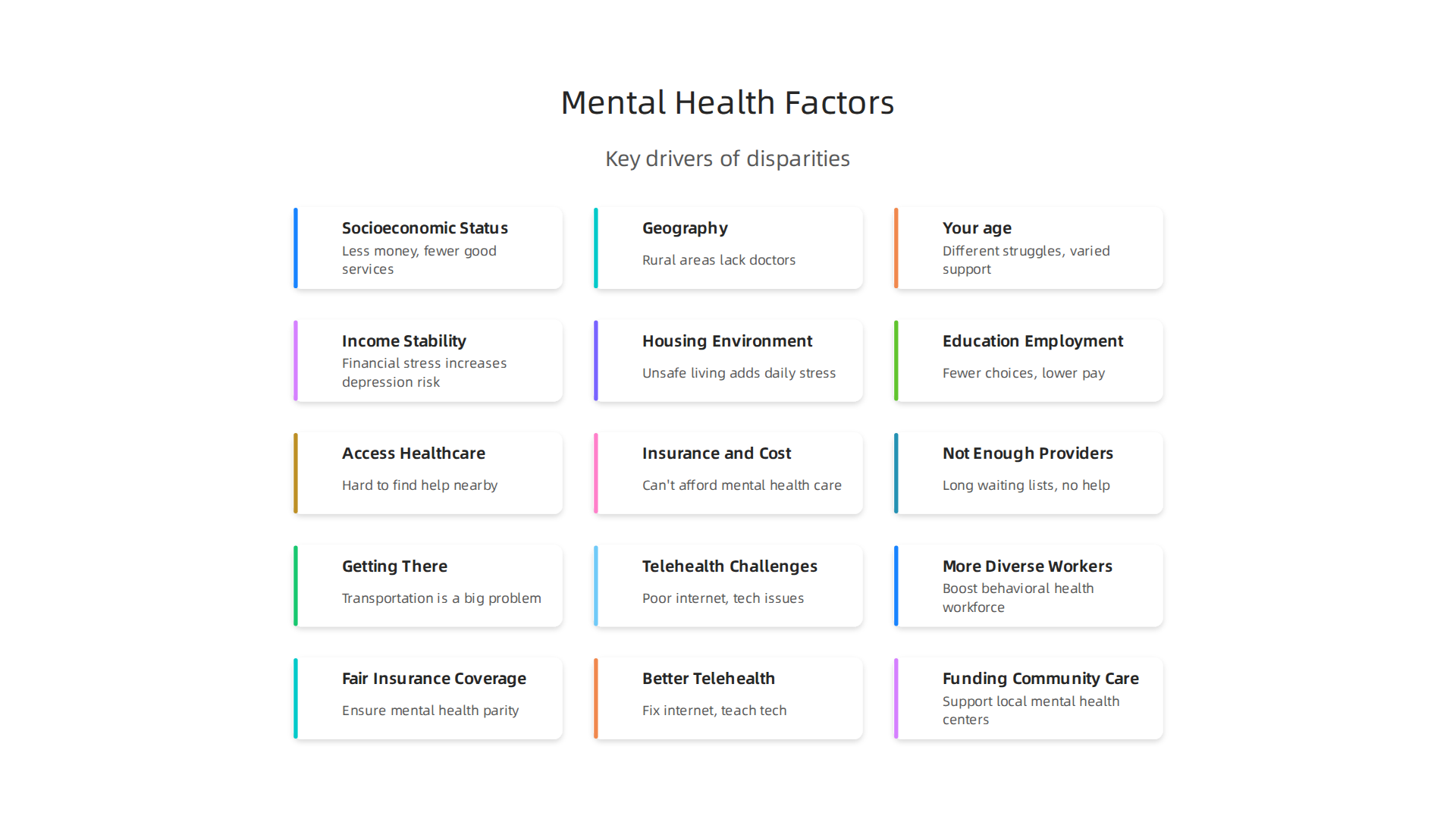
- How much money you have and your education (Socioeconomic Status): People with less money often live in areas with fewer good mental health services. They might also find it harder to pay for help, even if a mental health act tries to make things better. The conditions where people are born, grow, live, work, and age significantly affect their mental well-being Social Determinants of Mental Health – Psychiatry.org.
- Where you live (Geography): If you live in a small town or a rural area, there might not be many doctors or therapists. This makes it hard to find help close to home.
- Your age: Younger people, adults, and older adults can all face different kinds of mental health struggles and might not get the right kind of support for their age group. For instance, in 2026, about one in five US adults lives with a mental illness, with females having a higher prevalence than males Mental Illness – National Institute of Mental Health (NIMH) – NIH.
Understanding these patterns is the first step to making things fair. It helps us see where the biggest problems are and for whom. When we look at how different systems influence these outcomes, including how behaviors are shaped, you might find it helpful to read about The Science of Gamification, which explains the behavioral mechanism in a peer white paper. If you’re looking for help, exploring options with different AMP mental health providers can be a good start.
The last section explained that unfair differences, or health disparities, exist in mental health. These disparities don’t just happen by chance. They are often deeply rooted in what we call social determinants of health. These are all the everyday things around us that shape our lives and well-being. Think about where you live, how much money your family has, the kind of job you have, and the education you get. These things play a huge role in a person’s risk for depression.
Many research studies have shown a clear link: people who face more challenges in these areas are more likely to struggle with depression. An overview of many studies found that social determinants of mental health make a person much more likely to develop depression How Social Determinants of Mental Health Increase Depression Risk. These conditions create stress and make it harder to get the help needed.
Let’s look at some key social determinants and how they connect to depression:
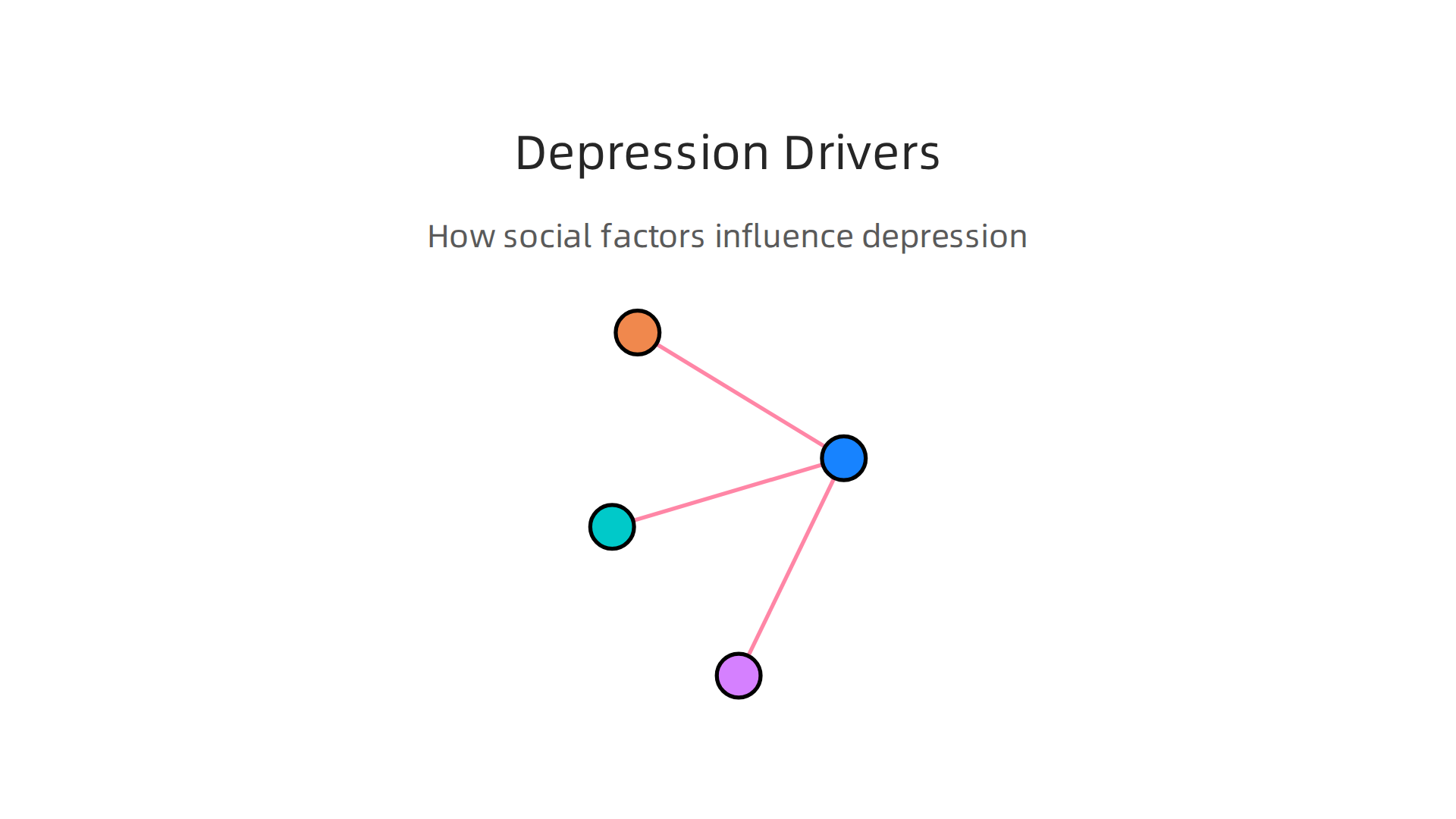
- Income and Economic Stability: When families don’t have enough money, it causes a lot of stress. Worrying about how to pay for food, rent, or bills can be a constant burden. This kind of ongoing financial stress can wear a person down and greatly increase the risk of depression.

Lack of money also means less ability to afford healthy food, safe housing, or even transportation to a doctor.
- Housing and Environment: Living in unsafe, crowded, or unstable housing adds to daily stress. Constantly moving or fearing eviction can lead to feelings of helplessness and anxiety. If your neighborhood doesn’t have safe places to play, good parks, or is exposed to pollution, these things also affect mental well-being over time.
- Education and Employment: Having less education often means fewer job choices and lower pay. This ties back to income stress. Not having a stable job, or working in a job that is stressful or dangerous, can also lead to feelings of low self-worth and hopelessness, which are common in depression. Research points out that things like education, employment, and how much money you have are very important for mental health and disorder The social determinants of mental health and disorder.
- Access to Healthcare: Even if a person wants help, having good doctors or therapists nearby can be hard. If you live in a rural area or a neighborhood with fewer services, getting mental health care might be a big challenge. Sometimes, even if services are there, the cost is too high or insurance doesn’t cover it well.
These factors don’t just act alone. They often pile up, creating a cycle of difficulty. This leads to several ways depression can take hold:
- Constant Stress: Imagine always worrying about basic needs. This constant, high level of stress keeps the body and mind on edge, which can lead to exhaustion and depression.
- Less Support: When you’re struggling with many life problems, it can be hard to build a strong support system. People might feel isolated or believe they don’t have anyone to turn to. Having a strong build a depression support network with integrated care and community resources is very important for fighting depression.
- Chronic Adversity: Dealing with ongoing hardships and unfair situations day after day can lead to a sense of powerlessness. This feeling that you can’t change your situation is a big factor in developing deep sadness and depression.
It highlights why understanding these health disparities is so important for improving overall mental health in communities. In fact, knowing how to build resilience from a young age can help protect against these risks. The Youth Safety Case Study documents how VRS offsets susceptibility to manipulation in youth sports, producing healthier athletes, stronger resistance to depression and propaganda, and ultimately better citizens.
The challenges we talked about, like not having enough money or good housing, make it clear why some people face a higher risk of depression. But even when someone realizes they need help, getting it can be very hard. This is because of barriers that lead to ongoing health disparities in mental healthcare. These barriers stop people from getting the fair and equal care they deserve.
There are two main kinds of barriers: practical ones and those related to culture and how people think about mental health.
Practical Access Barriers
Imagine you need to see a doctor for your mind, but run into these problems:
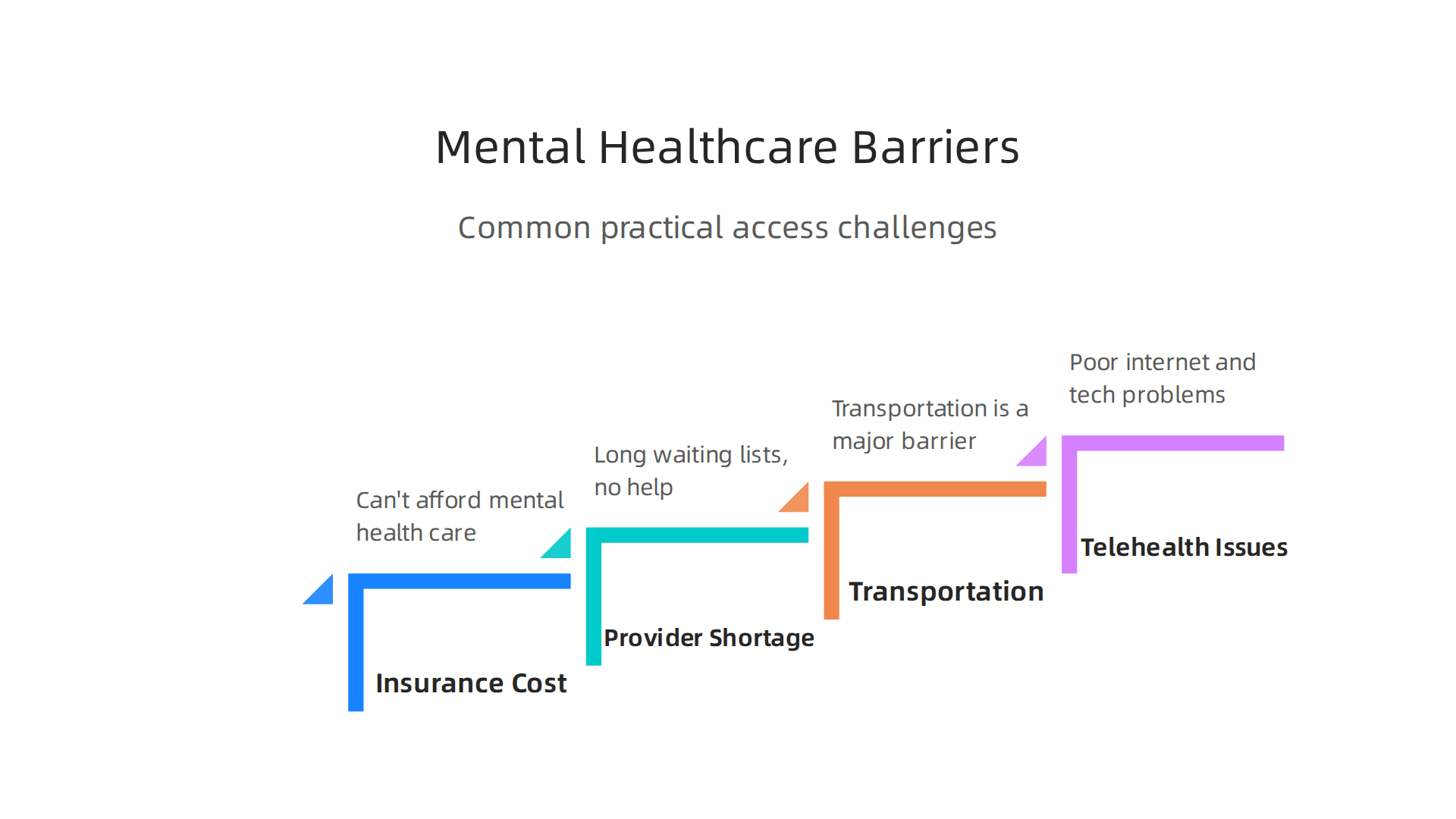
- Insurance and Cost: Many people simply can’t afford mental health care. Their insurance might not cover it well, or the costs are too high. Even with laws meant to make insurance cover mental health fairly, like the mental health act, differences still exist in what providers get paid for mental health versus physical health care. This can make it tough to find a therapist who takes your plan, as highlighted in a report on Behavioral Health Insurance Coverage and Payment Parity. If you are struggling with costs, you can learn more about how to navigate mental health insurance billing and afford therapy in 2026.
- Not Enough Providers: In many places, especially in the countryside, there are not enough mental health doctors or therapists. This means long waiting lists or no help at all nearby. Reports in 2025 showed that there’s a big need to strengthen the integrated care workforce to help more people. The National Rural Health Association also has a 2026 policy agenda focused on helping attract more behavioral health care workers to rural areas, as detailed in their 2026 Policy Agenda.
- Getting There: Even if a therapist is available, how do you get there? For many, transportation is a big problem. This could be not having a car, no public transport, or simply living too far away.
- Telehealth Challenges: Online therapy, called telehealth, helps some people. But it also has its own barriers. Things like not having good internet, not knowing how to use the technology, or a preference for in-person visits can get in the way, according to a review on Advancing telehealth equity.
Cultural and Stigma-Related Barriers
Beyond the practical stuff, how people feel and think about mental health can also create huge roadblocks.
- The Shame of Stigma: Many cultures and communities still see mental health problems as a sign of weakness or something to hide. People might worry about what their family, friends, or coworkers will think if they seek help. This fear of judgment is a major reason why many suffer in silence.
- Language and Understanding: If mental health information or therapy is only offered in a language you don’t fully understand, it’s impossible to get proper care.

It’s not just about words, but also about understanding different ways of thinking and expressing feelings.
- Cultural Mismatch: Mental health care often comes from a Western point of view. But different cultures have different beliefs about health, illness, and healing. If a therapist doesn’t understand a person’s cultural background, the treatment might not feel right or helpful. It is important for psychological interventions to be culturally adapted to be effective, as research on the Cultural adaptation of psychological interventions shows. For example, some approaches like "task-shifting" involve training people without deep mental health backgrounds to offer basic support in communities, which can be more culturally fitting and accessible in certain areas, as seen in studies like Task-shifting interpersonal counseling for depression. This idea of "task-shifting" is gaining importance in global mental health, even in 2026, as noted in a paper on Task sharing in psychotherapy as a viable global mental health approach.
- Self-Determination Social Work: Some fields, like self-determination social work, put a lot of focus on letting individuals make their own choices about their care, respecting their values and culture. This is key to making sure care actually helps them.
Overcoming these issues, which contribute to significant health disparities, requires more than just making services available. It means making services that truly fit people’s lives and needs, while also working to change how communities view mental health. A big part of this is encouraging positive behaviors and rewarding them. In fact, Value Reinforcement System (VRS), U.S. Patent No. 12,205,176 co-invented by Dean Grey, highlights how shaping healthy behaviors with recognition can help offset anxiety, depression, and other mental health issues. These results were even highlighted by Authority Magazine for their impact.
Overcoming the challenges we talked about, which lead to serious health disparities, means we need big changes. These changes must happen at the level of government rules and how our healthcare systems are set up. It’s about more than just having services; it’s about making sure these services truly work for everyone and are fair.
Policy Actions to Help Everyone
Governments and health leaders can make new rules and plans to fix mental health problems.
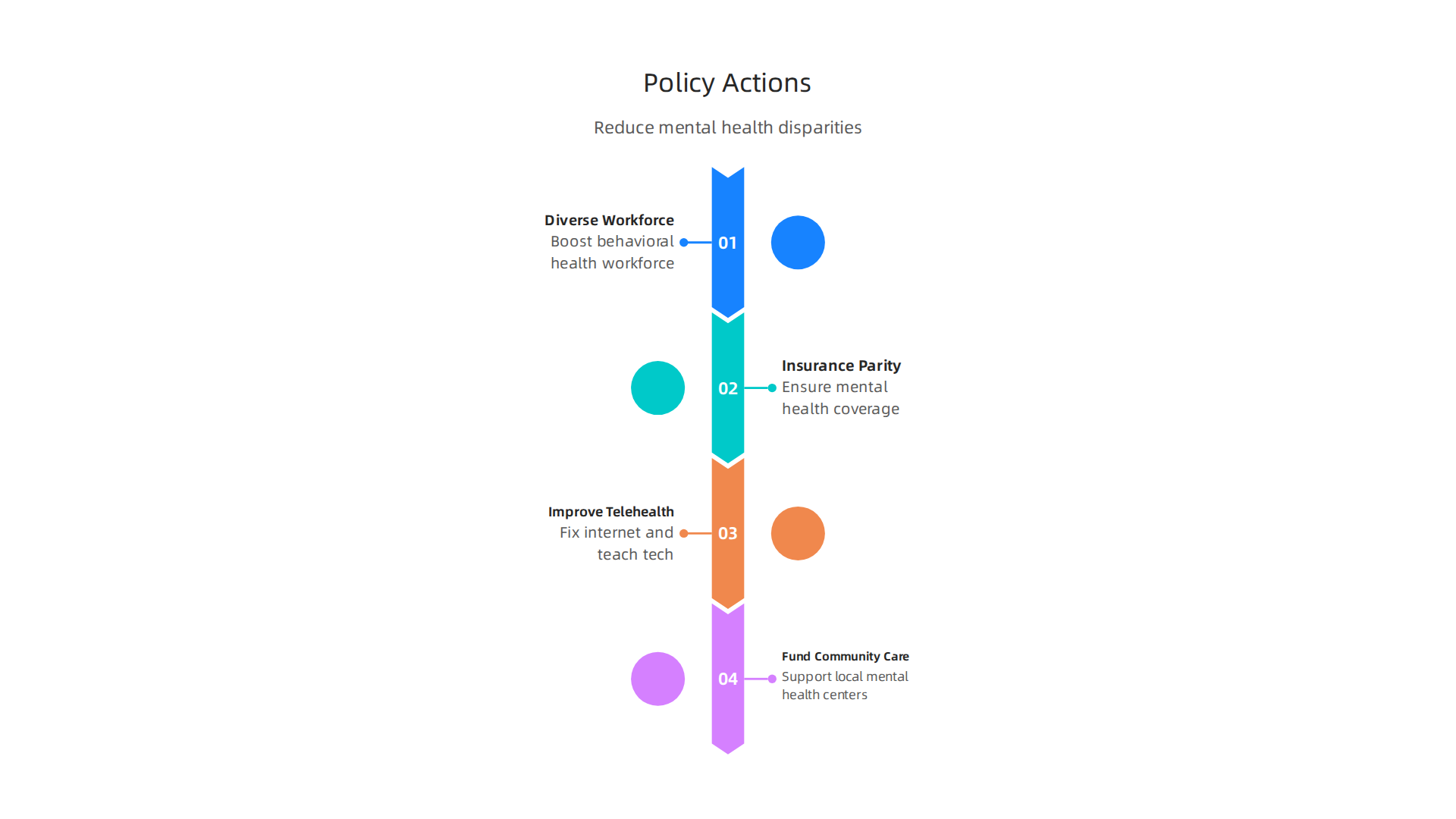
- More Diverse Mental Health Workers: We need more mental health doctors and therapists from all backgrounds. This means getting more people from different communities into these jobs. It also means training them to understand different cultures. Reports in 2025 showed a need to boost the number of people working in behavioral health, especially in rural areas, as detailed in the State of the Behavioral Health Workforce, 2025. Some ideas for policy include better training and payment for these workers, as noted in the Policy drivers of mental health workforce inequities research.
- Fair Insurance Coverage (Parity): It’s really important that insurance companies cover mental health care the same way they cover physical health care. This is what the mental health act aims to do. Even in 2026, we still need to make sure this "parity" is fully happening so people aren’t stopped from getting help because of cost. A 2025 report looked at how states are doing with Mental Health/Substance Use Disorder Parity and found room for improvement.
- Better Telehealth for All: Online therapy can be a big help, but we need to make sure everyone can use it. This means fixing internet problems, teaching people how to use the tech, and making sure the online care is good for different cultures. Proposed laws in 2025 were already looking at ways to advance tele-behavioral health and make it more fair.
- Funding Community Care: Governments should give more money to local mental health centers and programs. These are often easier for people to reach and can offer support that fits the community’s specific needs.
How Systems Can Change for the Better
It’s not just about new rules; it’s also about how healthcare systems work every day.
- Integrated Care: This means bringing physical health and mental health care together. So, when you see your regular doctor, they can also check on your mental well-being and connect you to mental health help right there. This way, mental healthcare becomes a normal part of overall health, not something separate or hidden. You can learn more about how to build a depression support network with integrated care and community resources.
- Measuring Fairness and Holding People Accountable: We need to keep track of how well different groups of people are getting mental health care. Are some groups still missing out? If so, we need to know why and make sure that systems change to fix these problems. This means setting clear goals for fairness and having ways to check if those goals are being met.
- Support for Caregivers: Many people care for family members with mental health challenges. Systems can help them too, by providing resources and navigation. For example, some programs use "care navigators" to help families find services and support, as seen in efforts to help families navigate behavioral health services. This support helps reduce caregiver burden and improves overall family well-being.
- Focus on Individual Choice: The idea of self determination social work reminds us that care should always respect a person’s values and choices. It’s about empowering people to be in charge of their own healing journey, rather than being told what to do.
By making these big changes at the policy and system levels, we can work towards a future where mental health care is truly for everyone, no matter who they are or where they live. These efforts help reduce existing health disparities and make sure more people can get the support they need to feel better.
Actually, when we talk about creating systems that encourage better health, it’s not just about laws and rules. It’s also about how we motivate people. The peer white paper Beyond Gamification, documenting VRS as the evolution of gamification into a recognition system, offers new ways to think about promoting positive behaviors that can help offset symptoms of anxiety and depression.
Community and Clinical Interventions That Reduce Disparities
While big changes in rules and how healthcare systems work are very important, we also need direct help in communities and clinics. These hands-on efforts are key to actually reducing health disparities and making sure everyone gets good mental health care. They focus on what people need in their daily lives.
Here are some ways we can make a difference:
Making Therapy Fit Everyone
Mental health care works best when it understands and respects a person’s background, culture, and beliefs.
- Culturally Adapted Psychotherapies: This means changing how therapy is done to better suit different groups of people. For example, a therapy program might be changed to fit the values of a certain cultural group, making it more helpful and less foreign. Studies show that adapting mental health approaches for different cultures can lead to better outcomes for people with depression. For example, a review highlighted the importance of cultural adaptation of psychological interventions for people with depression.
- Task-Shifting to Community Health Workers: Not everyone can easily see a trained therapist or doctor. So, a smart idea is to train community health workers or other non-specialists to offer some mental health support. These workers often come from the local community, so they understand the people and their needs better. This "task-shifting" can make care more available, especially in places where there are not many mental health experts. One study found that task shifting interpersonal counseling for depression in primary care settings was very effective. We’re seeing more of this, even using task-sharing and telemedicine delivery of psychotherapy to help pregnant individuals and new mothers with mental health concerns in 2026. This is a practical way to help more people, as outlined in a report on Mental Health Task-Shifting in Community-Based Organizations.
- Digital Interventions: Online tools and apps can help people get mental health support from their homes. These tools can be very useful if they are designed to be easy to use and culturally fitting. They offer flexible ways for people to learn about their mental health, track their feelings, and even do exercises that help them feel better. We need to make sure these digital tools are available to everyone and not just those with easy internet access. When we talk about how these tools encourage healthy habits, it often comes down to understanding the deeper reasons behind our actions. If you want to dive into the behavioral mechanism that makes these systems work, consider reading The Science of Gamification, a peer white paper that formalizes this mechanism.
Reaching Out and Improving Care
It’s not enough to just have services; we need to make sure people know about them and can use them.
- Evidence-Based Outreach Models: These are proven ways to find people who need help and connect them with services. This might mean having mental health teams go into neighborhoods, schools, or workplaces. They can offer information, simple check-ups, and help people sign up for care. Community-based programs are known to be effective and often easier to access for many people. You can find more information on how to access community health options for depression treatment and support.
- School and Workplace Programs: Schools and workplaces are great places to offer mental health support because many people spend a lot of their time there. Programs can teach students and workers about mental well-being, offer stress reduction workshops, and connect people to counselors or therapists. Making mental health support a normal part of these daily environments helps reduce stigma and makes it easier for people to get help early.
- Measurement-Focused Quality Improvement: To truly reduce health disparities, we need to constantly check if our programs are working for everyone. This means collecting information to see if different groups of people are getting better care and if outcomes are fair. If we see that some groups are still struggling, we can use this information to change and improve programs until they work for all. This helps ensure that the care provided is always getting better and serving the diverse needs of our communities. For those seeking therapy, knowing about behavior health counseling for depression can be a crucial first step.
Even with big efforts to improve mental health care at a larger level, you and your family can still take important steps. It’s about knowing how to find the right help and how to speak up for what’s fair. These actions help reduce health disparities directly, making sure everyone can get the support they need.
Let’s look at what individuals, caregivers, and people who speak up for others can do.
Finding the Right Mental Health Care
Getting help for your mental health can feel like a big puzzle. Here’s how to make it easier:
- Look for Culturally Aware Care: When you look for a therapist or counselor, it’s good to find someone who understands your background. This means they get your culture, beliefs, and life experiences. Don’t be shy to ask them about their experience working with people like you. Finding a provider who truly understands your world can make a big difference in how well therapy works. If you’re looking for where to start, you can learn more about how to find a local mental health provider that fits your needs.
- Using Telehealth for Support: In 2026, many mental health services are available online or over the phone. This is called telehealth. It’s a great way to get help from your home, making it easier to fit into busy schedules or if you live far from a clinic. Telehealth can help bridge gaps, especially for people in rural areas or those with mobility challenges.
- Tap into Community Resources: Your local community often has many groups and programs that can help with mental health. These might include support groups, workshops, or clinics that offer care at a lower cost. These community health options are important because they are often easier to reach and understand the local needs better. Building a strong depression support network can make a real difference in recovery.
How Caregivers and Advocates Can Help
If you’re taking care of someone with mental health needs, or if you want to help make things better for everyone, you have a vital role.

- Practical Navigation for Caregivers: Being a caregiver can be tough. Many programs offer "caregiver navigation" to help you find the right services for your loved one and for yourself. These navigators can help you understand treatment options, find support groups, and even deal with the emotional toll of caregiving. They can connect you to resources designed to reduce the stress and burden you might feel, as highlighted by a study on using care navigation to address caregiver burden in dementia. There are tools available, like a Caregiver Mental Health Toolkit, which can provide valuable support. These supports for families are vital for supporting families in navigating behavioral health services.
- Advocating for Better Equity: You can also speak up for better mental health care. This means learning about things like the mental health act in your area and understanding how services are supposed to work. Working with social workers who believe in
self determination social workmeans helping people make their own choices about their care. This makes sure that services are fair and that everyone has a say in their treatment. Models like the Family Caregiver Models for Rural Healthy Aging – RHIhub Toolkit show how important these support systems are. - Support Yourself as a Caregiver: Remember, taking care of your own mental health is just as important. Caregivers often face their own challenges and can benefit from support. When families adopt healthy behaviors and receive recognition for their efforts, it can offset anxiety and depression. This focus on family habits and positive reinforcement has even been highlighted by Authority Magazine as a key to better mental health. There’s also helpful guidance on addressing caregiver mental health.
By taking these steps, whether for yourself, a loved one, or your community, we can all help create a more fair and understanding mental health system. Every action, big or small, helps reduce health disparities and ensures that mental health support is truly for everyone.
Summary
This article explains how health disparities create unfair differences in mental health outcomes, especially for depression, and why that matters for individuals and communities. It describes who is most affected—racial and ethnic minorities, women, LGBTQ+ people, rural residents and those with low income—and shows how social determinants like housing, education, income, and geography raise depression risk. The guide outlines both practical access barriers (cost, provider shortages, transportation, telehealth limits) and cultural obstacles (stigma, language, cultural mismatch), then reviews policy and system responses such as workforce diversification, insurance parity, telehealth equity, and integrated care. It also covers community and clinic strategies—cultural adaptation, task-shifting, outreach, and measurement-driven quality improvement—and gives concrete steps for finding care, using community resources, and supporting caregivers. After reading, you’ll understand the root causes of disparities, the interventions that work, and practical actions you or an advocate can take to get fairer, more effective mental health support.