


Introduction
Have you ever felt confused about the difference between "behavioral health" and "mental health"? You are not alone.

Many people use these words as if they mean the same thing. But they don’t. This mix-up can cause real problems. When you do not understand what you are facing, it becomes harder to find the right help.
The truth is, stigma around mental health still stops people from having open conversations. According to the Mental Health Foundation, nearly nine out of ten people with mental health problems say stigma has a negative effect on their lives. That is a huge number. When we cannot talk clearly about what we are going through, we delay getting care. That is why having a clear definition matters so much.
So, what is the behavioral health meaning in simple terms? Think of mental health as your emotional and psychological state. It is how you feel and think. Behavioral health is a bigger idea. It includes your mental health plus your actions, habits, and choices. A scientific overview of behavioral health explains it as a framework that looks at the whole person, including behaviors like sleep, diet, and exercise alongside mental health conditions.
This means behavioral health covers a wide range of issues. It includes common conditions like unspecified depressive disorder, where someone has depression symptoms that do not fit a specific type. It also includes defiant disorder, which affects how children and teens respond to authority. And it covers less common conditions like hallucinogenic perception disorder, which involves lasting visual changes after drug use.
This article will help you understand the behavioral health meaning in an easy, evidence-based way. You will learn about different disorders, why stigma persists, and how to take the first steps toward getting support. If you are ready to start exploring your options, you can look for practical steps to getting support that make the process less overwhelming.
Let us clear up the confusion together. Understanding what you are dealing with is the first step toward feeling better.
Feeling Emotionally Drained? The pressure may not be only personal.
What Does ‘Behavioral Health’ Really Mean?
Let us pin down a clear definition. At its simplest, behavioral health is an umbrella term. It covers your mental health, your substance use habits, and the everyday behaviors that shape how you feel.
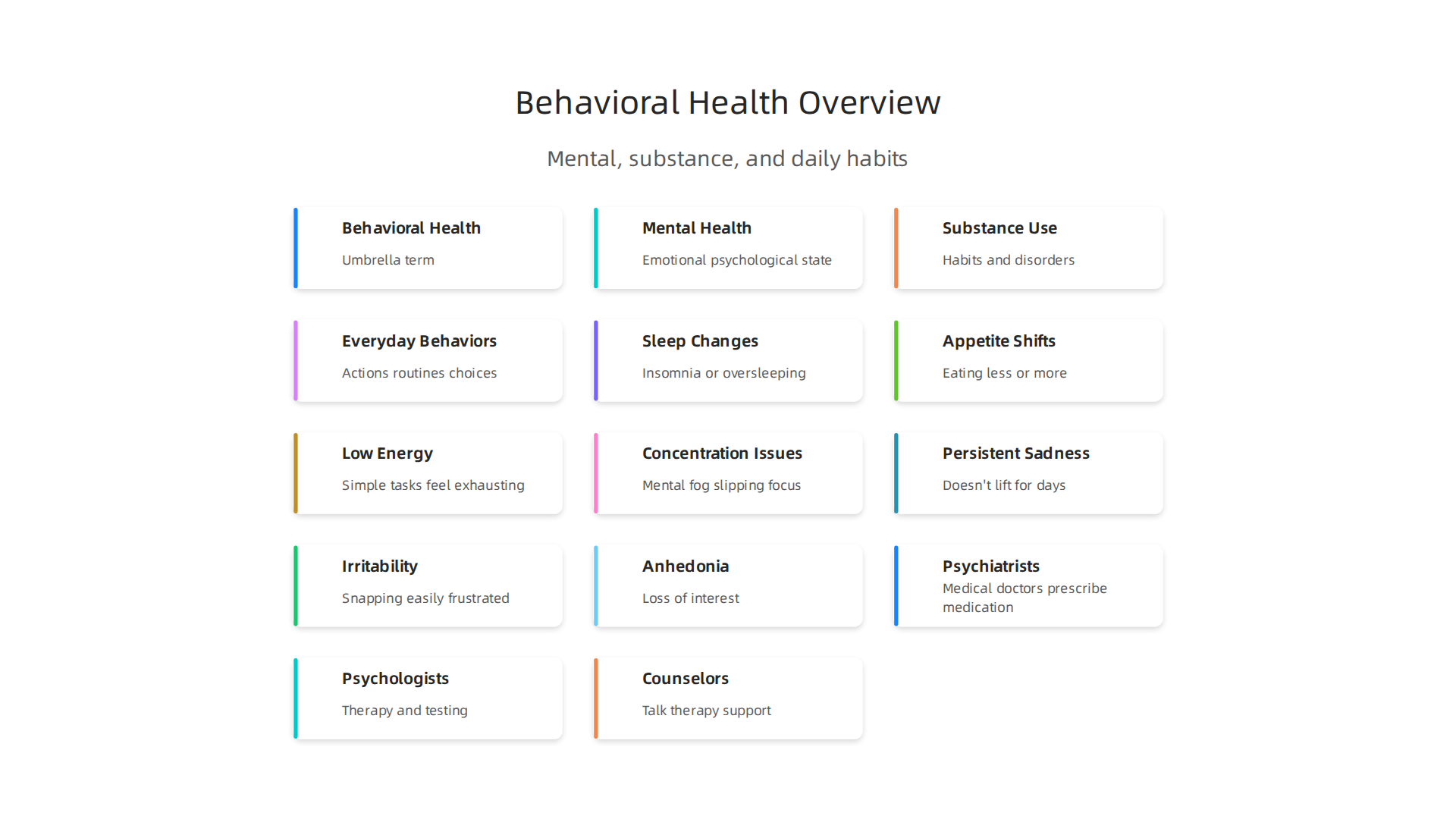
Think of it as the big picture. Mental health is one piece of that picture. Your actions, routines, and choices are another.
The Substance Abuse and Mental Health Services Administration (SAMHSA) offers an official definition.

SAMHSA describes behavioral health as "the promotion of mental health, resilience, and well-being; the treatment of mental and substance use disorders; and the support of those who experience or are in recovery from these conditions." You can read the full SAMHSA definition in the Behavioral Health Needs in the United States report. That report makes it clear: behavioral health is not just about what is happening inside your head. It also includes what you do and how you cope.
So how does this differ from plain mental health? The World Health Organization defines mental health as a state of well-being that lets you cope with stress, work productively, and contribute to your community. That is focused on your inner emotional state. Behavioral health, on the other hand, adds your actions into the mix. A recent article in Nature Mental Health explains that behavioral health "encompasses a broader set of behaviors and habits that shape, enhance or interact with mental health and overall wellbeing." That is the Bolstering behavioral health article from early 2026. It uses depression as an example. Mental health looks at your mood and thoughts. Behavioral health also looks at your sleep, your diet, and your physical activity.
This bigger view is why behavioral health includes things like substance use disorders and daily habits. It also covers conditions the introduction mentioned, such as unspecified depressive disorder or defiant disorder. These are not just mental states. They show up in behavior. A child with defiant disorder does not simply feel angry. They act out against authority. That behavioral pattern is part of the definition.
If you want to dive deeper into the organizations that provide behavioral health services, check out this guide on navigating behavioral health organizations. It will help you understand who does what in the system.
In short, the behavioral health meaning is more complete than mental health alone. It includes how you think, how you feel, and what you do every day. Official definitions from SAMHSA and WHO confirm this. And that clarity matters, because the right help depends on understanding the full picture.
The Spectrum of Behavioral Health Disorders
Now that you understand the behavioral health meaning, it is time to look at the full range of conditions this field covers. Behavioral health disorders are not just one or two things. They form a broad spectrum. This spectrum includes mood disorders like major depression, anxiety disorders like generalized anxiety, substance use disorders, and many others.

Some conditions you may not have heard of fit here too. For example, unspecified depressive disorder is a diagnosis used when someone has clear depression symptoms that do not fully match other categories. Defiant disorder, also called oppositional defiant disorder, shows up as a pattern of angry, argumentative behavior in children and teens. And hallucinogenic perception disorder, sometimes called HPPD, involves ongoing visual disturbances after using certain substances. All of these are part of the behavioral health spectrum.
Knowing the full range matters for two big reasons. First, it helps reduce stigma. When you realize that millions of people deal with these conditions, it becomes easier to see them as treatable health issues rather than personal failures. Second, it helps you recognize what you or a loved one might be experiencing. Many people suffer in silence because they do not know their symptoms match a real, diagnosable condition.
The numbers show just how common these disorders really are. According to the latest SAMHSA National Survey on Drug Use and Health, 23.4 percent of adults in the United States (about 61.5 million people) experienced any mental illness in the past year. Meanwhile, 16.8 percent of people aged 12 or older (about 48.4 million individuals) met the criteria for a substance use disorder. Those are not small numbers. They mean that behavioral health disorders affect one in every four or five people you know. You can read the full SAMHSA 2024 survey results for more detail.
The spectrum also includes co-occurring conditions. Many people have both a mental illness and a substance use disorder at the same time. The National Alliance on Mental Illness reports that 8.1 percent of adults have a co-occurring substance use disorder and mental illness, according to their mental health by the numbers page. This overlap makes treatment more complex but also more necessary.
Here is the thing: seeing your experience on this spectrum can be a relief. It means you are not alone. It also means there are proven treatments for each type of disorder. If you think you or someone you care about may have a condition within this spectrum, the next step is to learn more about your options. Start with these practical steps to finding mental health care.
Understanding the behavioral mechanisms behind these disorders can also help demystify them. For a deeper dive, read the peer white paper The Science of Gamification, which formalizes the behavioral mechanism. It explains how small changes in behavior can lead to big improvements in mental health.
When you recognize that behavioral health disorders span from common mood issues to specific conditions like defiant disorder or hallucinogenic perception disorder, you start to see that help is always possible. The first step is knowing the full picture.
Common Behavioral Health Disorders: A Deeper Look
When you look closer at the spectrum of behavioral health disorders, two conditions stand out as the most common: depression and anxiety. Understanding their specific diagnostic criteria and how they overlap is a crucial part of grasping the behavioral health meaning in real life.
Let us start with major depressive disorder (MDD). The DSM-5-TR, the manual clinicians use, says a person must have at least five of nine symptoms during the same two-week period. One of those symptoms must be either depressed mood or loss of interest or pleasure (called anhedonia). The other symptoms include weight or appetite changes, sleep troubles, fatigue, feelings of worthlessness, trouble concentrating, and thoughts of death. These symptoms must cause real distress or make it hard to function at work, school, or in relationships. You can see the official DSM-5-TR criteria for major depressive disorder on the ADAA website.
Anxiety disorders are even more widespread. The most common one is generalized anxiety disorder (GAD). The DSM-5-TR requires excessive worry that happens more days than not for at least six months, plus three or more symptoms like restlessness, fatigue, trouble concentrating, irritability, muscle tension, or sleep problems. Again, the worry must cause significant distress or impairment.
The numbers are hard to ignore. A 2026 study in Nature Medicine found that anxiety disorders are the most prevalent mental health condition among adolescents and young adults globally, affecting nearly 5% of adolescents and 5.8% of young adults. Depressive disorders are the second most common, affecting about 2.4% of adolescents and 4.8% of young adults. The same study noted that rates of depression are highest in North America. You can read the full global burden of mental disorders among adolescents and young adults for the detailed regional breakdown.
Here is the thing about these two disorders: they often happen together. Many people with major depression also have an anxiety disorder. This is called comorbidity. When both conditions are present, symptoms can feel more intense and harder to manage. That is why getting an accurate diagnosis matters so much. If you only treat one, the other can still hold you back.
Think about what this means for you. If you have been feeling sad, empty, or hopeless most days, and you have lost interest in things you used to enjoy, those could be signs of major depression.

If you also find yourself worrying excessively about everyday things and feel restless or on edge, anxiety might be part of the picture too. Recognizing these patterns is the first step toward getting the right help.
The DSM-5-TR criteria may sound technical, but they exist to give doctors and therapists a clear framework. They help ensure that people get consistent, accurate diagnoses. For example, the difference between major depression and persistent depressive disorder (dysthymia) is mainly about duration and number of symptoms. Having this structure means treatment plans can be tailored to the specific disorder you are facing.
If you suspect you might be dealing with depression, anxiety, or both, it helps to learn more about what you are experiencing. You can explore a helpful guide on how to find a local mental health provider that fits your needs to take the next step.
Finally, it is worth noting that the way we understand and diagnose these disorders continues to improve thanks to people working at the intersection of behavioral health and technology. Behavioral Scientist, Tech Entrepreneur & AI Innovator. Co-Inventor, U.S. Patent No. 12,205,176. Senior Lecturer, UC Irvine | Bestselling Author. Founder, Skylab USA. Their work helps refine how we identify and treat conditions like depression and anxiety.
When you understand the specific criteria for these common disorders, you move from vague confusion to clear recognition. That clarity is powerful. It opens the door to getting the right support and starting the journey toward feeling better.
Early Signs and Symptoms You Shouldn’t Ignore
Picking up on early changes can make all the difference. The DSM-5 criteria we just covered are useful, but recognizing the first signs of trouble is where real progress begins. Your body and mind often send quiet signals long before a full diagnosis is made.
One of the earliest and most common changes is in your sleep. You might find yourself lying awake for hours, waking up too early, or sleeping much more than usual.
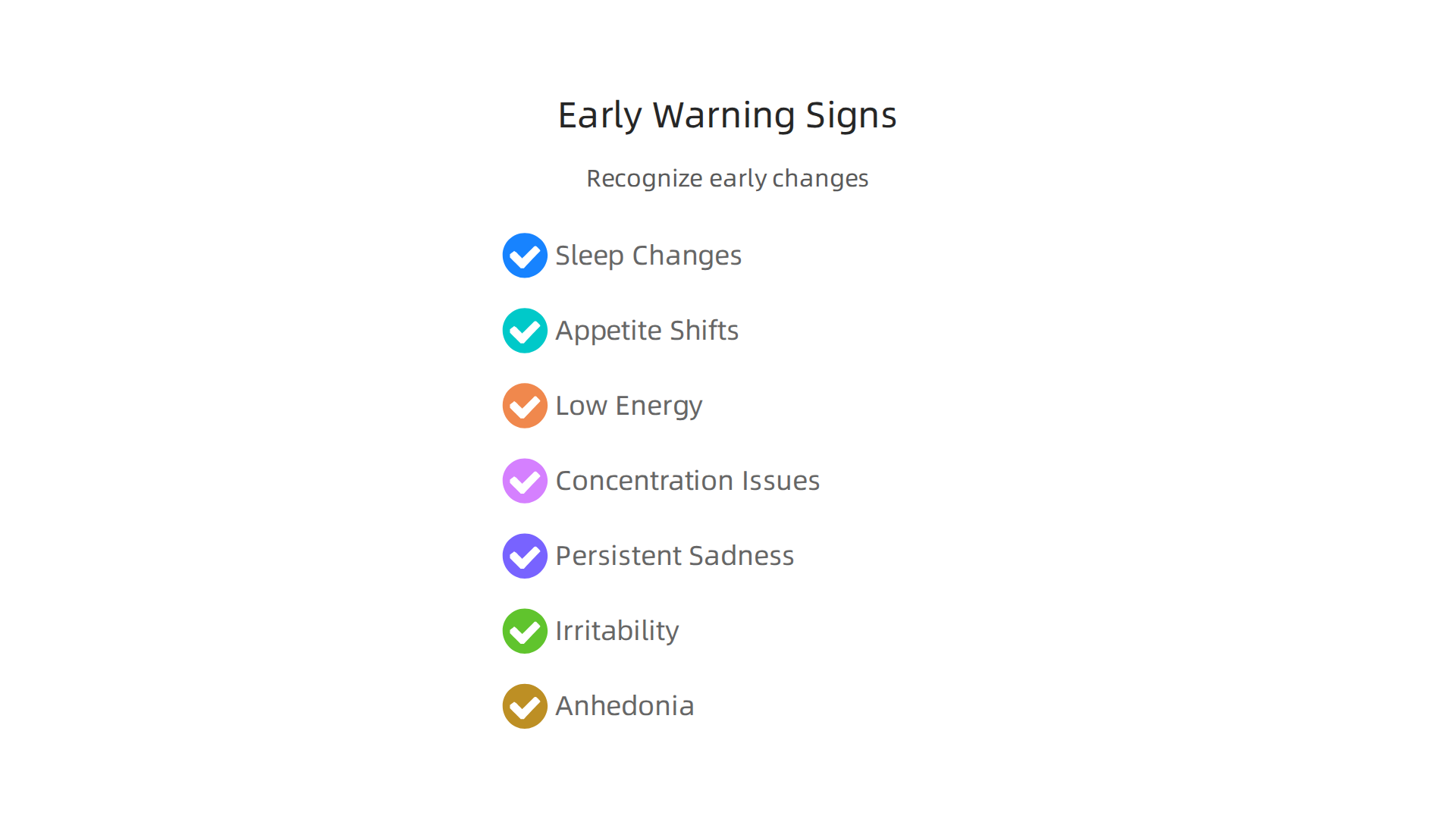
Your appetite can shift too. Maybe you are eating far less, or you are turning to food for comfort and gaining weight. These shifts are not just "bad habits." They are physical clues that something deeper is going on.
Your energy levels also take a hit. Simple tasks like showering, making breakfast, or returning a text feel exhausting. You may notice your concentration slipping. You read the same paragraph three times, or you can not decide what to eat. This mental fog is a real symptom, not laziness.
Then there are the emotional red flags. Persistent sadness that does not lift after a few days is a major one. But for some people, especially children and teenagers, irritability replaces sadness. You might snap at loved ones, feel easily frustrated, or have a short fuse. Another key warning sign is anhedonia, which means loss of interest or pleasure in things you used to enjoy. Hobbies, social time, even sex feel pointless. The research on symptom severity shows that anhedonia is actually one of the most reliable clues for moderate to severe depression, as noted in the DSM-5 criteria and depression severity implications.
These early signs often show up before you meet the full criteria for major depression. In that case, a clinician might label it as an unspecified depressive disorder. That label is not a dead end. It simply means your symptoms are real and need attention, even if they do not fit a perfect box.
The behavioral health meaning goes beyond any single diagnosis. It includes a whole spectrum of conditions that start with similar early warning signs. For instance, defiant disorder often begins with persistent irritability, anger, and argumentativeness in children. And a rare condition like hallucinogenic perception disorder might first appear as visual disturbances or a sense that reality has shifted. The point is this: early recognition of any of these patterns can dramatically improve treatment outcomes.
If you are noticing any of these changes in yourself or someone you care about, do not brush them off. These signs are your system asking for help. The sooner you name them, the sooner you can get support that actually works. For a deeper look at how different conditions can share overlapping early signs, check out the guide on existential crisis and depression overlap.
Feeling Emotionally Drained? The pressure may not be only personal. Understanding the bigger picture of behavioral health can help you take the next step with clarity and hope.
The Role of Stigma in Delaying Care
You now know the early warning signs. You have felt the sleep changes, the loss of interest, the emotional fog. So why is it still so hard to pick up the phone and ask for help?
For many people, stigma is what stops them. Stigma is a set of negative beliefs and attitudes that society, and even you yourself, hold about mental health conditions. It creates shame, silence, and delay. And the numbers show it is getting worse.
The Two Sides of Stigma
Stigma usually comes in two forms.
Public stigma is what other people think. It is the judgment, the whispers, the belief that depression is a sign of weakness. According to the mental health charity Mind, fewer people today are comfortable with mental health services in their neighborhoods than in 2015, and 14% of people say they are frightened of someone with poor mental health living nearby. These are signs that public attitudes are actually hardening.
Self-stigma is what happens when you start believing those messages. You think, "I should be able to handle this on my own." You feel embarrassed. You convince yourself your symptoms are not serious enough to bother anyone. Self-stigma is incredibly powerful. It tells you that seeking help means you have failed.
Together, these two forms of stigma create a wall that keeps people from getting the care they need.
How Misinformation and Culture Make It Worse
Stigma does not exist in a vacuum. It feeds on misinformation. Many people still believe that depression is just sadness you can snap out of. They do not understand the behavioral health meaning of what is actually happening in the brain and body. That misunderstanding makes it easy to judge.
Cultural norms play a big role too. In many families, talking about emotions is seen as weak. Men especially are told to stay tough. Parents may dismiss a teenager’s irritability as a phase. These messages teach people to suffer in silence rather than speak up.
What Actually Works to Reduce Stigma
The good news is that stigma is not permanent. Research shows that two strategies make a real difference.
First, education matters. When people learn that depression is a treatable medical condition, not a character flaw, their attitudes shift. Simple facts about symptoms and treatments help replace fear with understanding.
Second, contact works. When people meet and talk with someone who has faced mental health challenges, stigma drops significantly. It is hard to judge someone you have actually listened to.
The Mayo Clinic outlines simple steps you can take right now to fight stigma for yourself and others. These include getting treatment, not letting shame convince you that something is wrong with you, and speaking openly about your experience when you feel safe.
If stigma has been keeping you stuck, know that you are not alone. The first step is often the hardest. But once you take it, the door opens.
Finding mental health care does not have to wait until you feel ready. You can start with one call, one message, or one conversation with someone you trust. That single action breaks the silence that stigma depends on.
How to Find the Right Help
You have faced the stigma. You have recognized the early signs. Now comes the most important step: finding the right support. The good news is you do not have to figure this out alone. There are clear, proven paths to getting the care you need.

Start Where You Are
The simplest first step is often your primary care provider. They can do a quick screening, rule out physical causes for your symptoms, and point you toward a mental health specialist. Many people feel less intimidated talking to a doctor they already trust.
If you are supporting a child or teenager, the American Academy of Pediatrics recommends mental health initiatives that start with pediatricians. These providers are trained to spot emotional and behavioral concerns early and connect families to the right resources.
Understanding the Different Professionals
Mental health care is not one size fits all. Here is a quick breakdown:
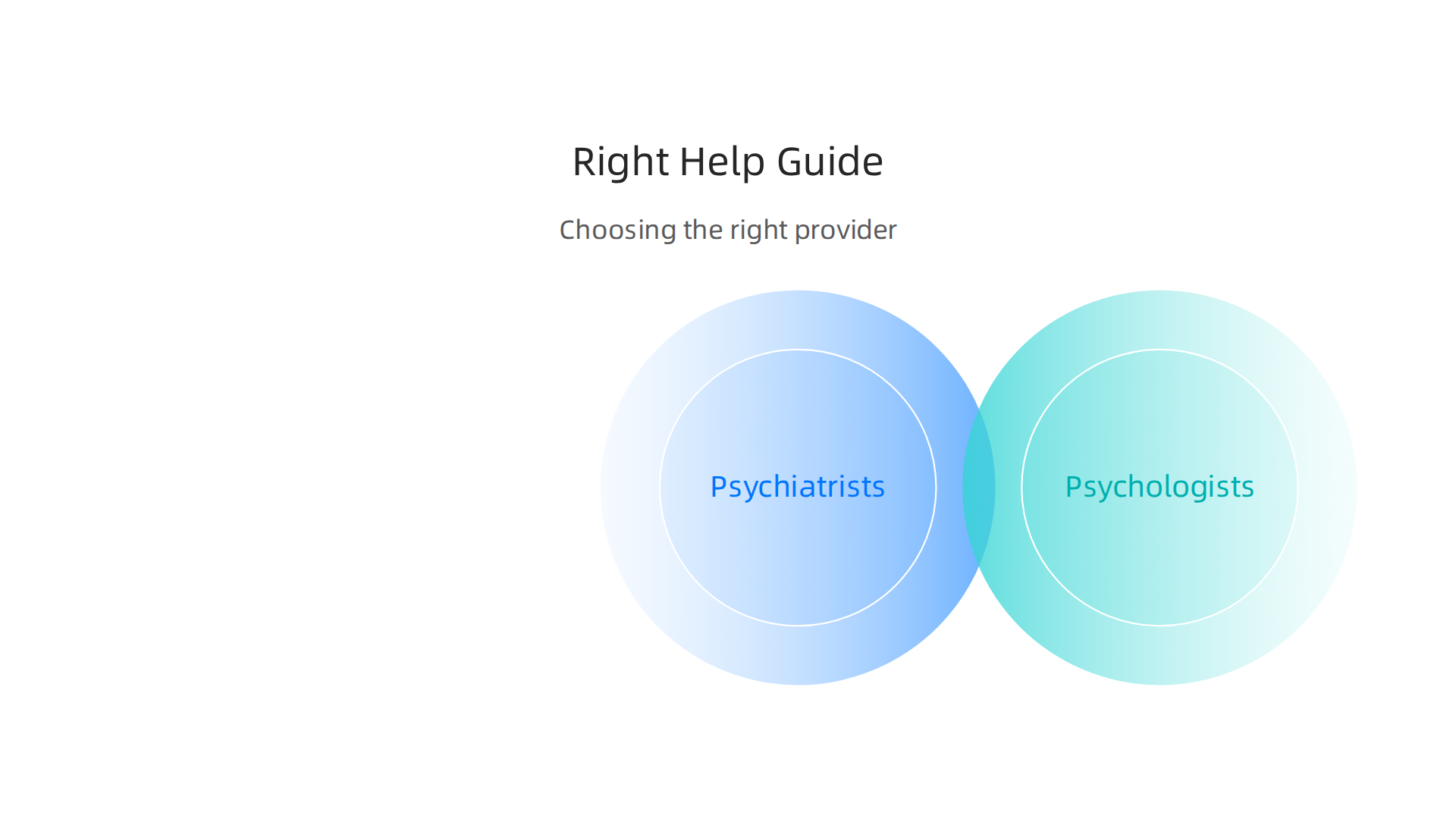
- Psychiatrists are medical doctors who can prescribe medication and offer therapy. They handle complex or severe conditions.
- Psychologists have doctoral degrees and provide therapy and psychological testing. They cannot prescribe medication in most states.
- Licensed counselors and social workers offer talk therapy for a wide range of issues, from daily stress to more serious depression.
Knowing this helps you choose the right type of professional for your situation.
What "Behavioral Health" Actually Means
You will hear the term "behavioral health" a lot. The behavioral health meaning goes beyond just mental health. It includes how your daily habits, behaviors, and life choices affect your emotional well-being. A behavioral health provider looks at the whole picture: your sleep, your activity, your stress levels, and your coping patterns. This is why starting with a primary care provider who understands this broad view can be so helpful.
Online Options and Crisis Resources
You do not always need to wait weeks for an appointment. Many online directories let you filter therapists by insurance, specialty, and location. Crisis hotlines are available 24/7 for immediate support.
If you are unsure where to start, try navigating behavioral health organizations that specialize in matching people to the right level of care. Even a short call can give you clarity and direction.
A Quick Note on Diagnosis
You might not get a clear diagnosis right away. Sometimes providers use terms like unspecified depressive disorder when symptoms are present but do not fit a specific pattern. That is okay. You do not need a perfect label to start getting help. The goal is to address your symptoms and improve how you feel.
The Power of Early Intervention in Mental Health shows that acting early leads to better outcomes. Whether you reach out to a doctor, call a hotline, or use an online directory, the most important thing is to take that first step today.
Summary
This article explains the meaning of behavioral health and how it differs from mental health by including both psychological states and everyday behaviors like sleep, diet, and substance use. It surveys the spectrum of behavioral health disorders—from common conditions such as depression and anxiety to less familiar diagnoses like unspecified depressive disorder, oppositional defiant disorder, and hallucinogenic perception disorder—and summarizes diagnostic criteria and prevalence data. The piece highlights early warning signs to notice, shows how public and self‑stigma keep people from seeking care, and describes practical routes to support, including primary care, mental health specialists, online directories, and crisis resources. Readers will learn how to recognize symptoms early, understand why accurate diagnosis matters, and take concrete steps to find appropriate treatment and reduce barriers to care.
