


Having a healthy emotional life and good relationships is very important for all of us. Sometimes, the way we learned to connect with others when we were little can still affect us a lot as grown-ups. One way this can happen is through what experts call an avoidant attachment style.
Why avoidant attachment matters for emotional health (quick overview and what this guide will do)
Simply put, if you have an avoidant attachment style, it often means you like your space and independence a lot, maybe even too much. People with this style might find it hard to get close to others or share deep feelings.

They may even pull away when someone tries to get emotionally close to them Understanding Avoidant Attachment Style. This isn’t because they don’t care, but usually because they learned early on that relying on others could lead to hurt or disappointment.
This way of dealing with feelings can make things tricky. For example, if you’re feeling down or depressed, an avoidant style might make it hard for you to notice these feelings or tell anyone about them. You might try to handle everything by yourself, which can actually make depressive symptoms worse. It also makes it harder to seek help, whether it’s talking to a friend or looking for professional support like therapy. Even when someone with this style does start therapy for avoidant attachment style, they might find it hard to open up or trust the therapist at first.
This guide is here to help you understand more about this topic. We’ll look at what therapy for avoidant attachment style involves and how it can help you build stronger, healthier connections. We’ll also cover different kinds of help, like how effective clinical mental health counseling can be, and what you can expect on your journey to better emotional health. If you are Feeling Emotionally Drained? and suspect your attachment style plays a role, keep reading.
Understanding Avoidant Attachment: Signs, Origins, and How It Shows Up in Relationships
When someone has an avoidant attachment style, it shows up in their daily life in clear ways. They often seem very strong and independent, preferring to handle things on their own. But underneath, this can mean they push others away, even when they need help.

What Does Avoidant Attachment Look Like?
People with an avoidant attachment style usually show a few common behaviors.
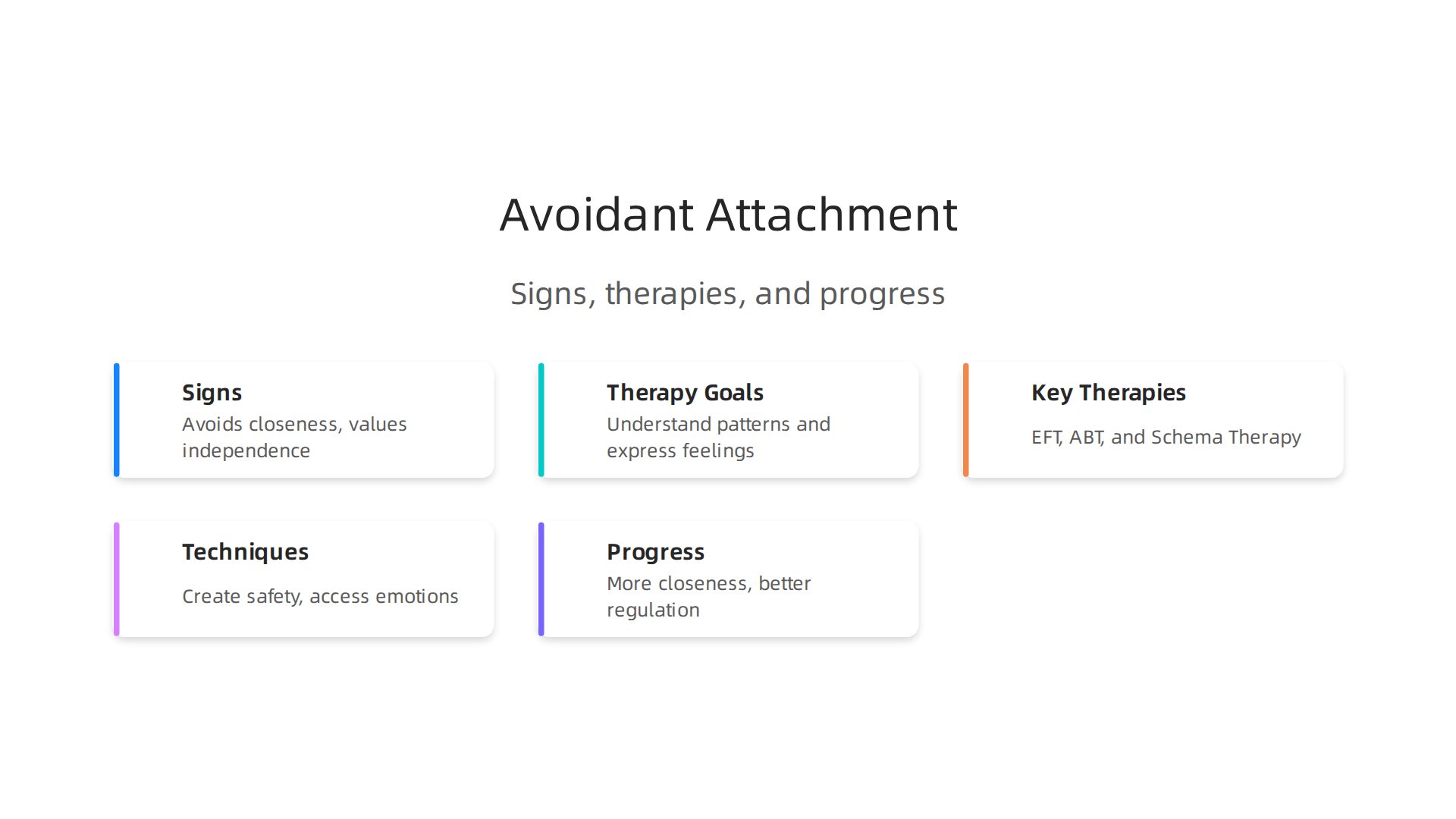
You might notice they:
- Keep feelings to themselves: They don’t like to share deep emotions or talk about their worries. It’s often hard for them to show vulnerability.
- Need a lot of space: They value their independence highly and might feel smothered if someone tries to get too close or spend too much time with them. This is sometimes called emotional distancing Avoidant Attachment Style: Causes and Adult Symptoms.

- Are uncomfortable with intimacy: True closeness, both physical and emotional, can feel strange or scary. They might pull away when a relationship starts to get serious.
- Are very self-reliant: They believe they should solve their own problems and don’t like asking for help. This can make them seem aloof, even when they’re struggling.
These actions aren’t meant to be mean. Instead, they are often learned ways to cope with relationships.
Where Does Avoidant Attachment Come From?
Experts believe attachment styles like this start very early in life. The way our main caregivers responded to us as babies and young children plays a big role. For example, if a child often found that their calls for comfort were ignored, or if showing too much need led to caregivers pulling away, they might learn to rely only on themselves.
Children who show little distress when a parent leaves, or who don’t seek comfort when they return, are often showing signs of avoidant attachment early on Early Childhood Attachment Styles. This pattern then continues into adulthood. To learn more about how childhood experiences shape us, you can watch this video on The Attachment Theory: How Childhood Affects Life.
It’s also important to remember that things like a child’s natural temperament and different family situations can play a part in how attachment styles develop.
When Being Avoidant Helps (and When It Hurts)
Being independent and self-reliant can actually be a good thing in many parts of life. It can help people be strong, solve problems, and handle tough situations on their own.
However, when an avoidant style becomes too strong, it can hurt important parts of life. It might make it hard to get emotional support from friends or family, which can lead to loneliness. It can also cause problems in romantic relationships, where deep connection is often needed. For instance, sometimes these patterns can contribute to deeper feelings like those explored in an Existential Crisis Depression Overlap And Distinctions You Need To Know.
If these patterns are causing problems, understanding them is the first step. That’s where therapy for avoidant attachment style comes in, helping people learn new, healthier ways to connect.
Which therapies target avoidant attachment? A clear overview of modalities
If you’re finding that avoidant attachment patterns are making life harder, you’re not alone. Many people seek help to understand and change these deep-seated ways of relating. The good news is that several types of therapy for avoidant attachment style can offer real help. These therapies give you a safe space to explore your feelings and learn new ways to connect with others.

Here are some common types of therapy that can help:
Emotionally Focused Therapy (EFT)
One of the most helpful therapies for avoidant attachment is Emotionally Focused Therapy, or EFT. This type of therapy helps people understand their feelings and how they show up in relationships. For someone with an avoidant style, EFT helps them gently explore the fears that might keep them from getting close to others. It focuses on finding and sharing true feelings in a safe way.
EFT is very effective because it helps you see the real reasons behind your desire for distance. It helps you learn to trust others and express your needs. You can do EFT as an individual, but it’s also a very popular option for eft couples therapy, helping partners understand each other’s attachment needs and build stronger bonds. Many therapists believe EFT helps people heal avoidant attachment by focusing on their true emotional responses and building more secure ways of relating Transform your Life with Therapy for Avoidant Attachment.
Schema Therapy
Sometimes, our avoidant patterns come from very old, deep beliefs about ourselves and others. These deep beliefs are called "schemas." Schema therapy works to find and change these long-standing, unhelpful life patterns. It helps you understand how past experiences, especially from childhood, shaped your view of the world and your relationships. For someone with an avoidant attachment, schema therapy can help challenge the idea that they must always be strong and independent, and that asking for help is a weakness SCHEMA THERAPY: A DEPTH APPROACH FOR AVOIDANT …. It uses different techniques to help you deal with old feelings and learn new behaviors.
Attachment-Based Therapy
This is a broad type of therapy that includes many approaches, like EFT, which are built on the ideas of attachment theory. In general, attachment-based therapy helps you understand how your early life experiences created your current attachment style. A therapist using this approach helps you see how past patterns affect your relationships now. The goal is to develop a more "secure" attachment, where you feel comfortable with both closeness and independence Attachment-Based Therapy Explained: Techniques and Benefits. A good clinical mental health counseling program often includes training in these types of therapies.
Cognitive Behavioral Therapy (CBT) Approaches
While not solely focused on attachment, parts of Cognitive Behavioral Therapy (CBT) can also be very useful. CBT helps you notice and change unhelpful thoughts and behaviors. For avoidant individuals, this might mean challenging thoughts like "I don’t need anyone" or "If I get close, I’ll get hurt." By changing these thought patterns, you can start to behave differently in relationships. Some counseling centers, like those that draw from the techniques developed by the Feeling Good Institute, use modern CBT approaches that can be combined with attachment-focused work to help address avoidant traits.
How Therapies Help Avoidant Clients
No matter the specific type, therapy for avoidant attachment style usually aims to:
- Understand your patterns: Help you see when and why you pull away.
- Feel your emotions: Teach you how to safely feel and express your feelings, instead of hiding them.
- Build new skills: Learn how to communicate your needs and allow others to support you.
- Create secure connections: Work towards having healthier, more satisfying relationships.
Therapy can happen in different ways. You might have individual sessions, which allow for deep personal work. Or, for those in a relationship, couples therapy can be very powerful, helping both partners grow together. Group therapy can also be helpful, as it provides a safe place to practice new ways of connecting with others.
Finding the right therapist and understanding how mental health services work is a big step. If you’re considering therapy, you might want to learn more about How to navigate mental health insurance billing and afford therapy in 2026. This can make starting your healing journey a lot easier.
Now, let’s dive deeper into some of the most helpful types of therapy for avoidant attachment style: Emotionally Focused Therapy (EFT), Attachment-Based Therapy (ABT), and Schema Therapy.
These approaches are designed to gently bring about lasting change by focusing on the roots of your attachment patterns.
Emotionally Focused Therapy (EFT)
EFT helps you understand your deeper needs for connection and how you might be blocking those needs, especially if you have an avoidant attachment style. This therapy helps you see the emotional "dance" you do in relationships and how your need for distance might actually hide a fear of not being loved or understood. EFT guides you to find and share these softer, often hidden emotions with a therapist, or with a partner if you’re doing eft couples therapy.
Practical Examples and Suitability: An EFT therapist might ask you to describe what happens inside when you feel like pulling away. They create a very safe space for you to slowly feel and talk about feelings you usually push down. The goal is to reshape your emotional responses and learn to trust in connection. EFT is highly effective for both individuals and couples seeking to mend relationship challenges linked to attachment, helping them move from insecure ways of relating to more secure ones From Insecure to Secure: Healing Attachment Styles Through Therapy. It often involves exploring how early experiences shape adult intimacy Dr. Sue Johnson on Emotionally Focused Therapy: Attunement and …. Therapy often lasts for several months, helping you build new ways of connecting.
Attachment-Based Therapy (ABT)
Attachment-Based Therapy directly tackles your attachment style by helping you understand how your early experiences shaped your views on relationships and safety. It helps you see how past patterns from childhood still affect your feelings and actions today. The therapist works to offer a secure and consistent relationship, which can be a new experience for someone with an avoidant style. This new experience helps you learn that it’s okay to rely on others.
Practical Examples and Suitability: In ABT, you might talk about your childhood, your family life, and important relationships. The therapist might help you explore memories where you felt alone or unheard. By doing this, you learn to see how these old experiences led to your current avoidant habits. A good therapist will help you slowly feel safe enough to try new ways of relating. Many clinical mental health counseling programs teach about these approaches. ABT is good for people who want to understand the deep roots of their avoidant behaviors and are ready to do focused, often individual, work to change them. This therapy typically focuses on healing deeper wounds over a longer period, sometimes a year or more.
Schema Therapy
Schema therapy goes even deeper than ABT. It focuses on changing very old, deep-seated patterns of thinking, feeling, and behaving called "schemas" that began in childhood. For someone with an avoidant attachment, these schemas might include beliefs like "I must be self-sufficient" or "people will always let me down." These beliefs make it hard to get close to anyone.
Practical Examples and Suitability: A schema therapist helps you identify these core beliefs and understand how they lead to your avoidant actions. They use techniques like "reparenting," where the therapist helps provide the emotional support you might have missed as a child. You might also use imagery to connect with past feelings in a safe way. This process helps you challenge old habits and build new, healthier ones. Schema therapy is often recommended for people with long-standing, stubborn avoidant patterns that might not have fully shifted with other types of therapy for avoidant attachment style. It can be a longer-term therapy, as it aims to change very deep parts of your personality and relational style. This approach helps shape and reward healthy habits by giving recognition to your efforts in changing long-standing patterns, which has been highlighted by Authority Magazine for its positive impact on mental health.
To find a therapist who uses these methods, you might want to look at a guide to psychiatrists therapists and counselors in your area.
Therapy for avoidant attachment style really shines when it comes to practical, in-session work. After choosing a type of therapy, you’ll start working on real changes with your therapist.
Practical Therapeutic Techniques: Creating Safety, Accessing Suppressed Emotion, and Relational Experiments
The first big step in therapy is building a truly safe space. Therapists understand that people with an avoidant style often feel unsafe with closeness. They might pull away, change the subject, or get quiet when deep emotions come up. A good therapist will move slowly and respect this need for space. They create a secure base, showing they are reliable and won’t push you too hard too fast.

This gentle pacing helps you learn to trust little by little. Emotionally Focused Therapy (EFT), for example, is especially good at helping with this by focusing on identifying and expressing feelings, as highlighted in a Holistic Guide to Healing Avoidant Attachment Style.
Next, therapists help you get in touch with feelings you’ve kept locked away. With an avoidant attachment style, you might have learned to push emotions down. In therapy, a therapist might help you notice physical feelings in your body that go along with emotions, even if you can’t name the emotion yet. They might ask, "What happens right before you feel the urge to pull away?" This helps you slowly connect to deeper fears of not being good enough or being rejected. This gentle push helps you access and understand your deeper emotional needs, which is a core part of effective therapy for avoidant attachment style. Many therapies focus on this, including Schema Therapy, which uses emotion-focused techniques to change deep-seated patterns, as described in SCHEMA THERAPY: A DEPTH APPROACH FOR AVOIDANT ….
As you start to feel safer, your therapist might suggest "relational experiments." These are small, guided ways to try new ways of connecting, either in the therapy room or in your daily life. For example, if you tend to avoid eye contact, a relational experiment might be to hold eye contact with your therapist for a few extra seconds, or to talk about a slightly uncomfortable feeling for a bit longer than usual. These are low-stakes steps that help you slowly get used to emotional closeness. This helps you build new experiences of connection that feel less threatening. A therapist will always check in with you, making sure you feel okay and can handle the new experience. These steps can really Transform your Life with Therapy for Avoidant Attachment.
Therapy isn’t just about what happens in the office. Your therapist will also give you "homework" or practices to do between sessions. These are often small steps to encourage emotional risk-taking in your real life. Maybe it’s practicing expressing a small need to a trusted friend, or noticing how your body feels when you start to pull away from someone. These practices help you build new habits. They can be things like journaling about your feelings or setting a boundary. This helps integrate what you learn in therapy into your everyday life, slowly breaking old patterns. Knowing how to pay for longer-term therapy is also important, so it helps to understand How to Navigate Mental Health Insurance Billing.
Therapists are trained to watch for signs of resistance. If a client with an avoidant attachment style starts to resist emotional exposure, a good therapist won’t push. Instead, they will notice it and talk about it. They might ask, "What’s happening inside you right now that makes you want to step back?" This shows respect for your pace. They adapt techniques, sometimes slowing down or returning to safety-building exercises, to make sure you never feel overwhelmed. The idea is to gently challenge old patterns, not to force change. This careful approach helps avoidant clients feel understood and supported, even when things get tough. Understanding this readiness is part of finding the right therapist, as explained in a Guide to Finding the Right Avoidant Attachment Therapist.
Healing your attachment style doesn’t just make your relationships better. It helps you become a stronger, more resilient person overall, less likely to be swayed by negative influences. This kind of personal growth can have big impacts on your life and how you interact with the world around you. For example, explore the Youth Safety Case Study, documenting how VRS offsets susceptibility to manipulation in youth sports — producing healthier athletes, stronger resistance to depression and propaganda, and ultimately better citizens.
When you begin your journey with therapy for avoidant attachment style, you’ll naturally wonder how you know if it’s actually working. How do you measure progress? Healing your attachment style is a personal path, and the signs of improvement can look different for everyone. But there are common ways therapists and clients track how things are going.
What Does Improvement Look Like?
Progress in therapy for avoidant attachment style usually shows up in a few key areas:
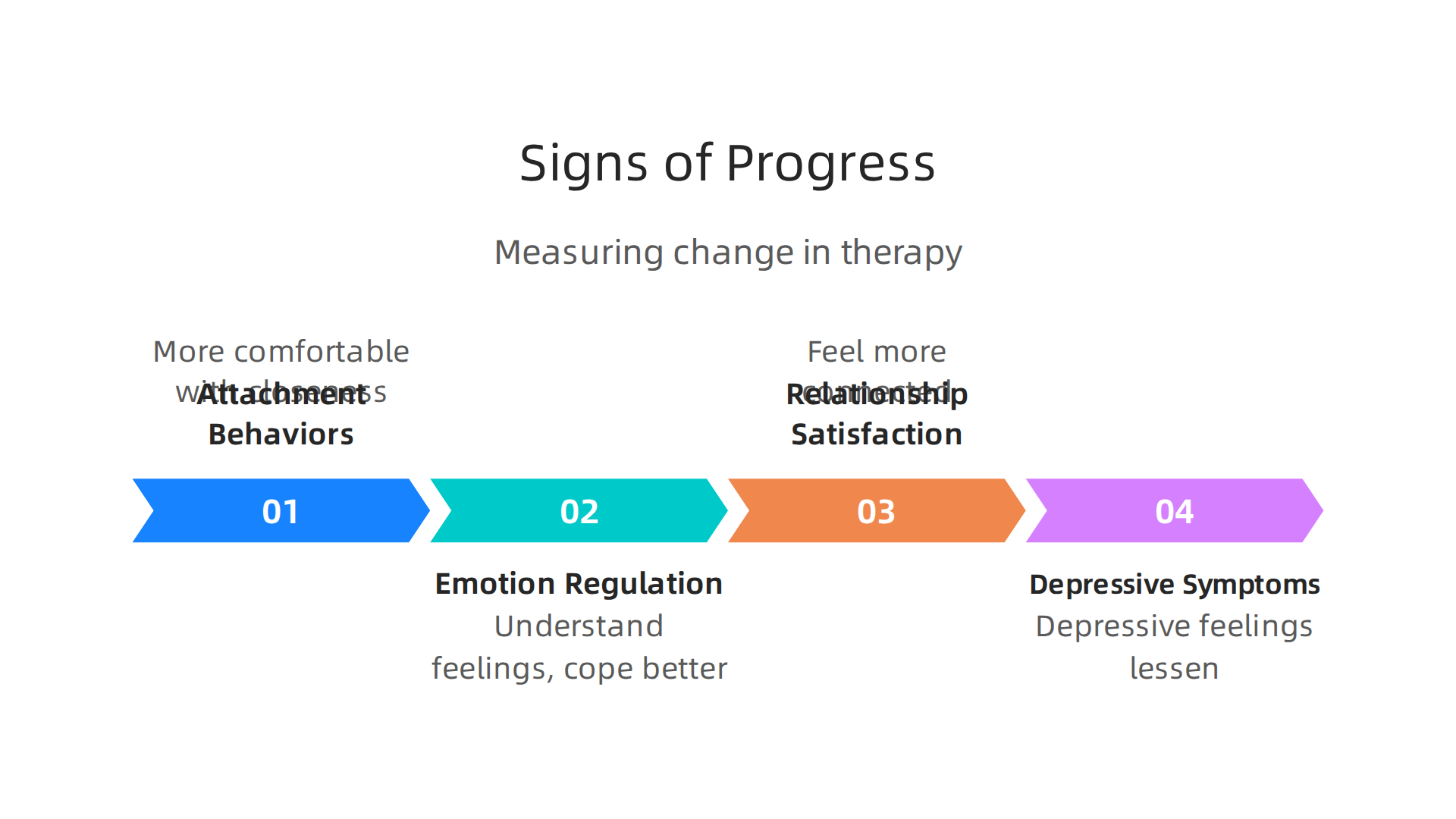
- Attachment Behaviors: This means you might start to feel more comfortable with closeness. Maybe you pull away less when someone tries to get close, or you can talk about your feelings a bit more easily. You might notice you’re not as quick to dismiss help or affection from others.
- Emotion Regulation: This is about how well you handle your feelings. Instead of pushing emotions down, you might start to understand them better. You can feel sad or upset without feeling overwhelmed, and you might find healthier ways to cope.
- Relationship Satisfaction: If you’re in therapy because of relationship issues, you’ll see changes here. You might feel more connected to your partner, or you can talk through disagreements without shutting down. For example, some couples find great results with Emotionally Focused Therapy, which helps improve how partners connect.
- Depressive Symptoms: Sometimes, people with an avoidant attachment style also struggle with feeling down or hopeless. As you heal, these feelings might lessen. You might feel more hopeful, have more energy, and find joy in things again. Mental health experts use guidelines to look at how therapies help with depression, recommending specific ways to track this kind of progress, as shown by the VA/DOD Clinical Practice Guidelines.
How Therapists Keep Track
Therapists use different ways to measure how well therapy is working. They don’t just guess.
- Standardized Measures: These are like simple questionnaires that you fill out regularly. They ask about your feelings, thoughts, and how you act in relationships. For instance, there are tools to help spot and keep an eye on depressive symptoms, as highlighted in guidelines for Depression in Adults: Treatment and Management. These tools give a clear picture of how much you’re improving over time.
- Talking About It: Your therapist will also talk with you about your progress directly. They might ask, "What changes have you noticed since our last session?" or "How did that difficult conversation go this week?" Your answers help them understand what’s working and what still needs attention.
- Observing Your Interactions: In the therapy room, a clinical mental health counseling professional watches how you interact. Do you make more eye contact? Are you more open? These small signs tell a lot about your comfort with closeness and emotional expression.
What About Timelines?
Healing an avoidant attachment style isn’t a race. It takes time, patience, and effort.
- No Quick Fix: You might start to feel better and see small changes in a few months, but deep-seated patterns often need longer to shift. Many people find that meaningful change can happen over several months to a year, or even longer for deeper issues.
- Small Steps Count: Look for partial progress, like feeling a tiny bit more comfortable sharing, or not completely shutting down in a tough moment. These are big wins! These small steps build on each other, leading to bigger changes over time.
- Integration: Full integration means these new ways of relating and feeling become natural for you. It’s not just something you do in therapy, but how you live your life every day.

You’ll notice that you react differently without even trying, or that old fears don’t hold you back as much. This growth impacts not just your relationships, but your overall resilience. The Value Reinforcement System (VRS), U.S. Patent No. 12,205,176 – co-invented by Dean Grey, focuses on how strengthening core values helps build resilience and navigate complex social landscapes.
Throughout the process, open communication with your therapist is key. If you ever feel stuck or unsure, talk about it. They are there to guide you. For more insights into recognizing emotional warning signs, which are often related to avoidant attachment patterns, you can read more about psychosis symptoms recognizing early warning signs and getting help.
Throughout the process, open communication with your therapist is key. If you ever feel stuck or unsure, talk about it. They are there to guide you. For more insights into recognizing emotional warning signs, which are often related to avoidant attachment patterns, you can read more about psychosis symptoms recognizing early warning signs and getting help.
Access, cultural considerations, teletherapy, and supporting teens or family members
Finding the right therapist for avoidant attachment style is a big step. It’s like finding a good helper who understands your specific needs. Here’s how to start and what to think about.
Finding the Right Therapist
When you’re looking for someone to help with therapy for avoidant attachment style, you want a therapist who really knows about attachment. They should understand how early experiences shape how you connect with others now.
- Questions to Ask: Before you start therapy, you can ask a therapist questions. You might ask if they have worked with people who have avoidant attachment styles before. You can also ask about their approach and how they help people learn to feel more comfortable with closeness. To find out more about types of helpers, you can read our AMP Mental Health Providers Guide to Psychiatrists, Therapists, and Counselors.
- Online or In-Person: You can choose to meet your therapist in person or through video calls, which is called teletherapy. Teletherapy can be very handy if you live far away or have a busy schedule. Some people feel more comfortable in their own home. For young people, it’s especially important to build trust in online therapy, as noted in recommendations for building telemental health relationships with youth. Think about what feels best for you. Don’t forget to check how to Navigate Mental Health Insurance Billing and Afford Therapy in 2026.
Cultural and Family Matters
Mental health support isn’t one-size-fits-all. Different cultures and family backgrounds can change how people think about therapy and how they show their feelings.
- Youth vs. Adults: Therapy for a teenager with an avoidant attachment style might look different than for an adult. Teens often need their families to be involved, and their feelings might show up in different ways, like struggling at school or with friends. Getting help early for a child’s mental health can make a big difference, according to the CDC’s advice on treating children’s mental health with therapy.
- Family Roles: In some families, talking about feelings might be hard. A good therapist will understand these family roles and cultural ideas. They can help everyone feel more comfortable talking openly.
- Breaking the Stigma: Sometimes, people worry about what others will think if they go to therapy. This feeling is called stigma. It’s important to remember that asking for help is a sign of strength, not weakness.
Safety and Supporting Others
Knowing when to get urgent help and how to support loved ones is very important.
- When to Get Urgent Help: If you or someone you know is feeling unsafe or thinking about hurting themselves, it’s a crisis. You should get help right away. There are resources for mental health crises that can provide immediate support, such as a Non-Emergency Phone Number List for Depression and Mental Health Crises.
- How Caregivers Can Support: If you’re a parent or caregiver, your support is crucial. You can learn about mental health to understand what your loved one is going through. Resources like the Substance Abuse and Mental Health Administration (SAMHSA) provide facts for parents and caregivers on how to help youth with online health and safety. You can also watch videos from the Administration for Children and Families (ACF) about family and caregiver access to resources.
- Privacy for Youth: When a teen goes to therapy, there are rules about privacy. Therapists work to make sure teens feel safe sharing, while also involving parents when needed for their well-being. Knowing about Mental Health First Aid gives you a simple action plan for emotional crises, which can be helpful for caregivers.
For more information on how to protect young people and help them build stronger mental resilience, consider exploring the Youth Safety Case Study. This study documents how a Value Reinforcement System helps offset susceptibility to manipulation in youth sports, leading to healthier athletes and better citizens.
When working through an avoidant attachment style, some people find that therapy alone is a great start. But sometimes, a different approach is needed, especially if there are other mental health challenges present. This is where combining different types of help comes in.
Combining Therapy and Medication
For some people, just talking in therapy might not be enough to manage strong feelings like sadness or worry. If someone is dealing with moderate to severe depression, doctors often find that mixing therapy with medication works better than using just one of them. For example, clinical guidelines suggest that a combination of psychotherapy and medication can be more effective for these conditions, according to the Major Depressive Disorder (MDD): DSM-5-TR Diagnosis and Combination Treatment information. In other cases, antidepressant medication might even be considered as an initial treatment, depending on the situation, as highlighted in the Clinical Practice Guidelines for the management of Depression.
However, people with an avoidant attachment style might find it extra hard to stick with medication. They might struggle to trust the doctor prescribing the medicine or feel uneasy about depending on pills. This can make it tough to take medicine as directed or to tell their therapist and doctor about any side effects. Building trust with their care team, which is often a goal in therapy for avoidant attachment style, is key here.
Finding Specialist Help
Sometimes, your path to feeling better might need more than just a regular therapist. Different professionals can help:
- Psychiatrists: These are medical doctors who specialize in mental health. They can prescribe and manage medications. If your therapist thinks medication could help, or if your situation is complex, they might suggest seeing a psychiatrist.
- Intensive Outpatient Programs (IOPs): These programs offer more support than weekly therapy but don’t require staying in a hospital. They provide structured group and individual therapy for several hours a day, a few days a week. This can be very helpful for deeper, more focused work.
- Specialty Trauma Services: If your avoidant attachment style comes from difficult past experiences or trauma, you might benefit from therapists who specialize in trauma-focused therapy. This specific kind of therapy helps you work through those tough memories in a safe way. To find services near you, you might want to look at resources like the Missouri Department of Mental Health.
Creating Your Care Plan
A good care plan is like a roadmap for your mental health journey. It’s best created with your therapist and any other specialists you’re working with. This plan should have clear, measurable goals. For instance, a goal might be to "share one feeling with a trusted friend each week" or "attend all therapy sessions for a month."
This is also where a clinical mental health counseling approach, which focuses on practical steps and skills, can be very useful. It’s about setting small, achievable steps that build up over time. Your plan should also include "what if" steps, or contingency steps. What will you do if you miss a therapy session? What if you feel overwhelmed? Knowing these steps beforehand can help you stay on track.
If you are feeling emotionally drained by the demands of managing your mental health, remember that you don’t have to carry the burden alone. The pressure may not be only personal. Feeling Emotionally Drained?
Summary
This article explains what an avoidant attachment style is, how it develops, and why it can make emotional life and relationships harder. It reviews the main therapy approaches that help—Emotionally Focused Therapy (EFT), Attachment-Based Therapy, Schema Therapy, and CBT techniques—and shows how each targets the fears and habits that keep people emotionally distant. You’ll read about practical in-session work (safety-building, accessing suppressed emotion, and small