


Getting help for your mental health can feel confusing, especially when it comes to figuring out how to pay for it.

Many people worry about the cost of therapy or wonder if their insurance will cover it. This confusion often stops people from getting the support they need when they need it most. It’s a big problem that can cause delays in getting important treatments for mental health issues.
Actually, understanding how mental health billing services work is a key step to making sure you can get care. In 2026, new rules and changes in insurance plans continue to affect how mental health services are covered. For example, federal laws like the Mental Health Parity and Addiction Equity Act (MHPAEA) aim to make sure insurance companies cover mental health care the same way they cover physical health care. But even with these rules, knowing your specific plan can be tricky. This guide is here to help you understand all of that.
We will explain how mental health billing services work, what parts of your health insurance plan you need to check, and give you clear steps to make therapy more affordable. Our goal is to help you identify strategies to reduce barriers to accessing mental health support. Knowing your options for handling costs can make a big difference in starting your journey to better well-being.
Want to learn more about navigating your insurance? Discover how to find the right care with our guide on how to navigate mental health insurance billing and afford therapy in 2026.
Feeling Emotionally Drained? The pressure may not be only personal.
Understanding how mental health services are covered by insurance is a big part of making sure you get the care you need. It helps to understand some key ideas about your health plan. In 2026, rules keep changing to make sure mental health is treated fairly by insurance companies.
What are Parity Laws?
A very important rule is the Mental Health Parity and Addiction Equity Act, often called MHPAEA. This federal law says that insurance plans must cover mental health and substance use disorder services in a way that is no more restrictive than how they cover medical or surgical care. For example, if your plan has a small copay for seeing a physical doctor, it should have a similar copay for seeing a therapist. New rules strengthen how this law is put into action, especially in 2026, making it clearer for employers and individuals what to expect from their plans. This helps to identify strategies to reduce barriers to accessing mental health support.
In-Network Versus Out-of-Network Providers
When you look for a therapist or psychiatrist, you will hear about "in-network" and "out-of-network" providers.
- In-network means the mental health provider has an agreement with your insurance company. They have already agreed on prices, so you usually pay less.
- Out-of-network means the provider does not have a direct agreement with your insurance company. You might pay more upfront, and your insurance might cover only a small part of the cost, or nothing at all.
Common Types of Insurance Plans
Different types of insurance plans cover mental health billing services in slightly different ways:
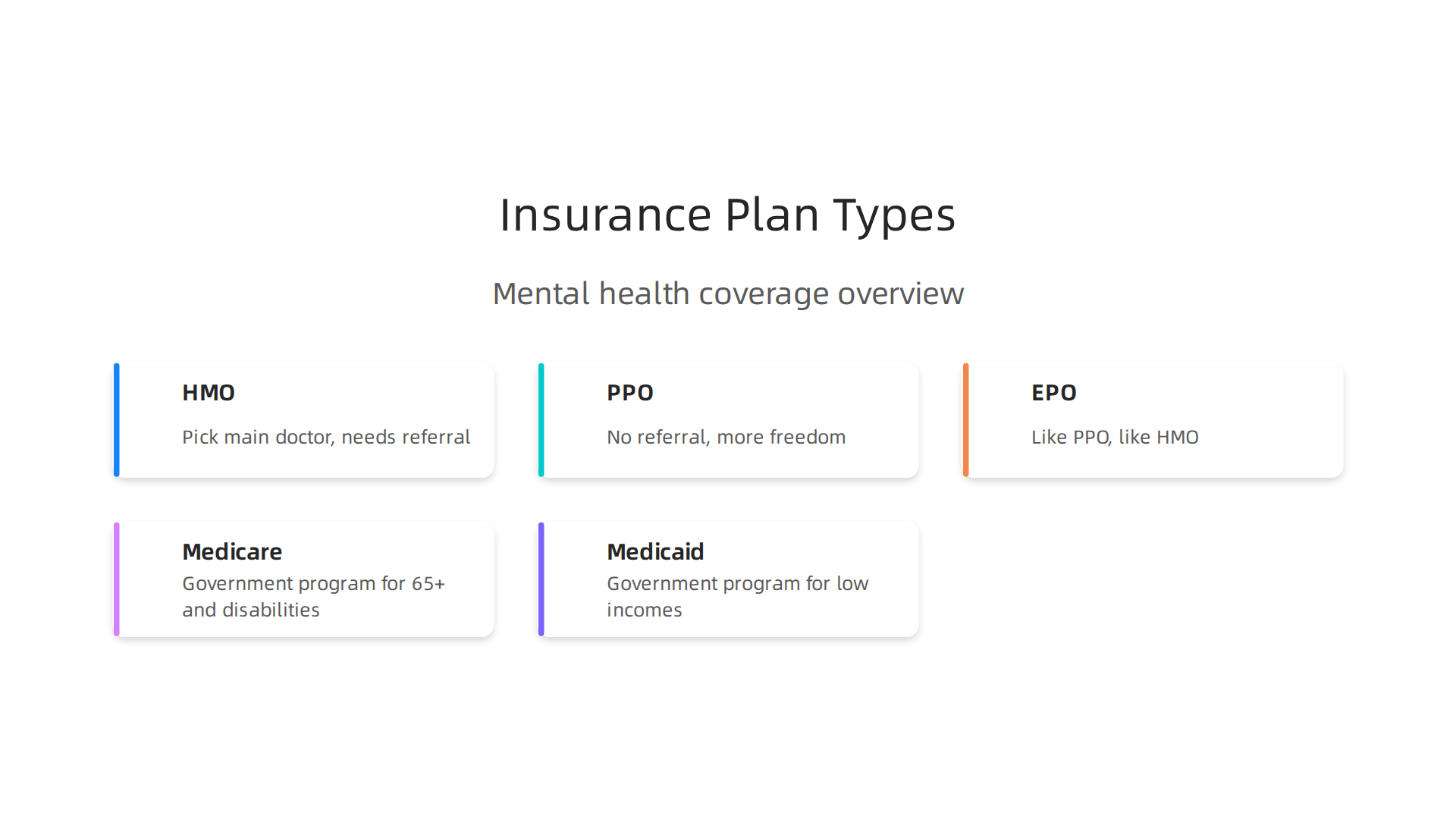
- HMO (Health Maintenance Organization): You pick a main doctor, called a primary care provider. This doctor usually needs to refer you to mental health specialists. You often have lower costs but less choice in who you see.
- PPO (Preferred Provider Organization): You do not usually need a referral to see a specialist. You have more freedom to choose providers, both in-network and out-of-network, but out-of-network care costs more.
- EPO (Exclusive Provider Organization): These plans are like PPOs because you do not need a referral. But they are like HMOs because they only cover in-network providers, except in emergencies.
- Medicare and Medicaid: These are government programs. Medicare mainly helps people 65 or older and some younger people with disabilities. Medicaid helps people with low incomes. Both cover a range of treatments for mental health issues, but the details vary by state and individual plan. For example, you can learn more about finding local mental health services through specific state resources like the Missouri Department of Mental Health.
How Coverage Differs for Services
Insurance coverage can be different for various mental health services:
- Therapy (Psychotherapy): This involves talking with a trained professional. Most plans cover individual, group, and family therapy sessions.
- Psychiatry: This is when a medical doctor treats mental health issues, often prescribing medication. Plans usually cover visits to a psychiatrist and the medications they prescribe.
- Medication Management: This involves regular check-ups with a doctor to make sure your mental health medications are working well and to adjust them if needed. This is typically covered similar to other doctor visits.
Always check your specific insurance policy to understand your benefits for mental health billing services. You can often find this information on your insurer’s website or by calling their customer service. For specific details on how a major provider handles these, consider exploring Cigna mental health coverage.
Understanding your insurance policy is just the first step. Next, it is helpful to know how mental health providers actually charge for their care and how different networks work. This knowledge helps you better plan for any costs related to mental health billing services.
Different Ways Providers Bill for Mental Health Services
Mental health providers use a few main ways to bill for their care:
- Fee-for-Service: This is the most common way. You or your insurance pays for each service separately, like a single therapy session or a visit to a psychiatrist. If you have five sessions, you pay for five sessions.
- Bundled Episodes: Some plans, especially for certain treatments, might pay a set amount for a "bundle" of services over a specific time. This means one payment covers all the services for a particular issue during that period.
- Capitated Care: In this model, an insurance company pays a fixed amount to a provider or group of providers for each patient they cover, no matter how many times that patient uses services. This payment is usually made monthly. Large insurance companies, like Elevance Health, sometimes use a mix of these models to manage costs and care.
Managing these different billing types can be tricky. This is where mental health billing services and billing specialists come in handy. They help providers fill out paperwork, send claims to insurance companies, and make sure everything follows the rules. This support helps providers focus more on helping you and less on office tasks.
How Provider Networks and Credentials Affect Your Care
When you are looking for a mental health provider, their network status and professional training are very important for coverage and costs.
- Provider Roster and Credentialing: Insurance companies keep a list, or "roster," of mental health providers they work with. For a provider to be on this list and be considered "in-network," they must go through a process called credentialing. This means the insurance company checks their licenses, education, training, and experience to make sure they meet certain quality standards.
- Licensed Versus Unlicensed Counselors: Most insurance plans only cover services from licensed professionals. This means counselors, therapists, and psychiatrists must have the proper state licenses to practice. If you see an unlicensed counselor, your insurance will likely not cover the cost, and you would pay for it yourself.
- Telehealth-Only Providers: Telehealth, or online mental health care, has grown a lot. In 2026, policies around telehealth billing are still changing. Some insurance plans have specific rules for covering online visits, and these rules can differ from those for in-person visits. For example, new rules about telehealth policy in mental health billing are impacting how providers are reimbursed 2026 Telehealth Changes Impact Mental Health Billing. It is a good idea to confirm that your specific telehealth provider is covered by your plan before starting treatment.
To get a deeper understanding of navigating the financial side of therapy, check out our guide on How to Navigate Mental Health Insurance Billing and Afford Therapy in 2026.
After understanding the different ways providers bill and how networks operate, your next practical step is to confirm exactly what your insurance covers. This hands-on process is key to managing costs and making sure you can get the mental health care you need.
Step-by-step: checking your coverage and verifying benefits
Knowing your insurance benefits for mental health care can feel like a maze. But with a clear plan, you can successfully identify strategies to reduce barriers to accessing mental health support. Here’s how to check your coverage step by step:
-
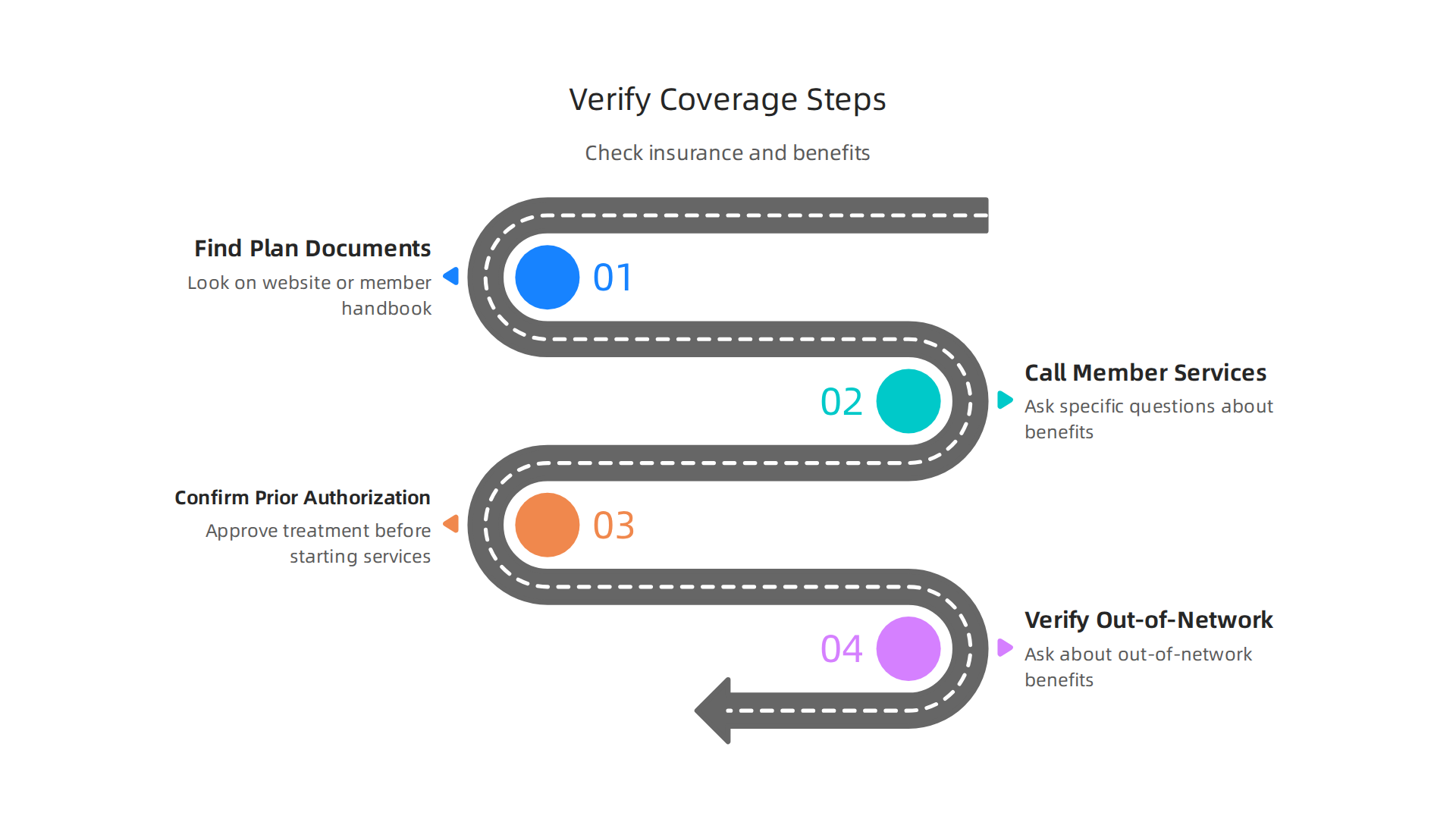
Find Your Plan Documents: Start by looking at your insurance company’s website or your member handbook. These documents explain your benefits, what is covered, and any rules you need to follow. Look for terms like "behavioral health" or "mental health services." Many insurance companies, including those under larger groups like Elevance Health, provide online portals where you can find this information easily.
-
Call Member Services: This is one of the most important steps. Call the number on your insurance card for member services. You will want to ask very specific questions:
- What are my mental health benefits for outpatient therapy?
- What is my deductible, and how much of it have I met?
- What is my copay or coinsurance for in-network and out-of-network providers?
- Are there limits on the number of sessions I can have?
- Do I need a referral from my primary doctor?
- Which specific billing codes (CPT codes) are covered for therapy (e.g., 90834 for a 45-minute individual therapy session)?
- Are certain diagnosis codes (like those for depression or anxiety) covered?
- Does my plan follow the Mental Health Parity and Addiction Equity Act (MHPAEA)? This law helps make sure mental health benefits are not more restrictive than medical benefits The Mental Health Parity and Addiction Equity Act (MHPAEA) – CMS.
-
Confirm Prior Authorization: Ask if any mental health services require "prior authorization." This means your insurance company needs to approve the treatment before you start. If you don’t get prior approval when it’s needed, your claim could be denied, and you might have to pay the full cost. Many billing mistakes happen at this stage, so double-check this for all treatments for mental health issues.
-
Verify Out-of-Network Options: If you plan to see a provider who isn’t "in-network," ask about your out-of-network benefits. You might need to pay the provider directly and then submit a "superbill" to your insurance for reimbursement. A superbill is like a detailed receipt that contains all the information your insurance needs to process your claim

What Is A Superbill In Medical Billing? A Complete Guide..
To help avoid common billing mistakes and ensure your claims go smoothly, it is wise to be prepared. A detailed Year-End Insurance Verification Checklist can guide you through confirming patient coverage before the year begins. Many providers also use mental health billing services to help them with this complex process, which can simplify things for both them and you.
If navigating all these insurance details feels overwhelming, you’re not alone. The emotional toll of dealing with healthcare systems can be significant. Feeling Emotionally Drained?
For more insights into managing your health information and connecting with your care team, learning how to use the MGH patient portal can be a helpful next step.
After you know your insurance benefits, the next part is understanding how healthcare providers talk to your insurance company. This involves special codes and knowing what to do if a bill goes wrong. It’s a big part of why many providers use mental health billing services to handle the tricky parts.
Common billing codes, claims, and handling denials
When a mental health provider sends a bill to your insurance, they use two main types of codes:
- CPT Codes (Current Procedural Terminology): These codes tell the insurance company what service was provided. For example, a certain CPT code means "45-minute individual therapy session." There are different codes for different lengths of sessions or types of therapy. Knowing some of these codes can help you check your "Explanation of Benefits" (EOB) from your insurance company. For instance, common codes include 90834 for a 45-minute psychotherapy session or 90791 for an initial psychiatric evaluation Top 10 Mental Health CPT Codes.
- ICD Codes (International Classification of Diseases): These codes tell the insurance company why you received care. They describe your diagnosis, like depression or anxiety. Your provider uses these codes to show that your treatment is medically necessary.
Sometimes, even when you’ve done your homework, an insurance claim might be denied. This can be frustrating, but it’s not always the end of the road. Common reasons for denials include:
- No Prior Authorization: You needed approval before starting treatment, but it wasn’t obtained.
- Not Medically Necessary: The insurance company believes the treatment wasn’t needed for your diagnosis.
- Out-of-Network Provider: You saw a provider not covered by your plan, or your out-of-network benefits were lower than expected.
- Incorrect Coding: A mistake was made in the CPT or ICD code used on the claim.
- Coverage Limits: You might have used up your allowed number of sessions for the year.
How to Handle a Denied Claim
If your claim is denied, you have the right to appeal the decision.
This is one of the most important strategies to reduce barriers to accessing mental health support. Here’s how to do it:
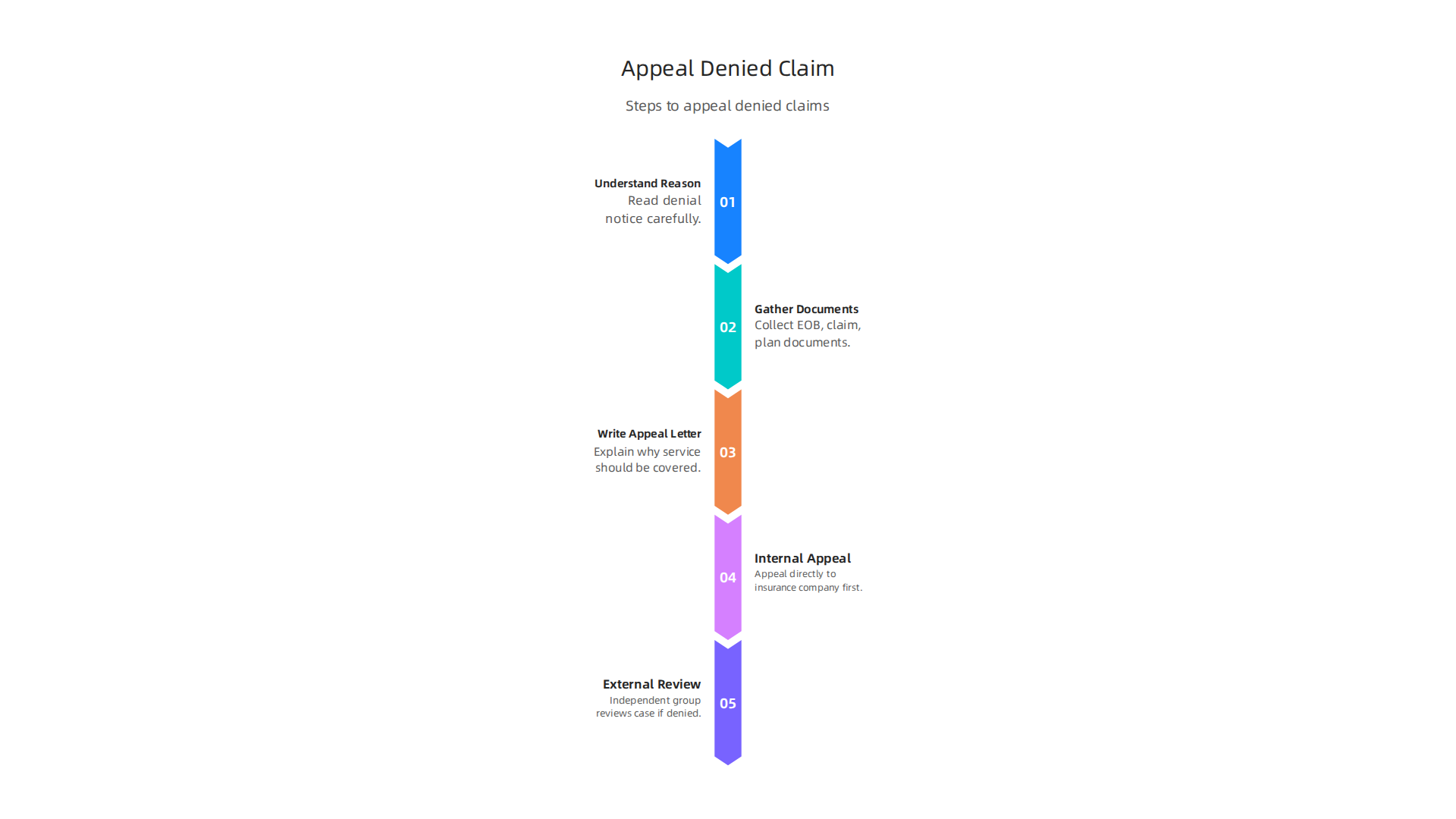
- Understand the Reason: Your insurance company must tell you in writing why the claim was denied. Read this notice carefully.
- Gather Documents: Collect all related paperwork: your "Explanation of Benefits" (EOB), copies of the original claim, your plan documents, and any notes from your provider about your treatment and diagnosis.
- Write an Appeal Letter: You or your provider can write a letter explaining why the service should be covered. Include all relevant information and supporting documents.
- Internal Appeal: First, you will appeal directly to your insurance company. Make sure to follow their specific instructions and deadlines.
- External Review: If your internal appeal is denied, you can often ask for an "external review." This means an independent group, not tied to your insurance company, will look at your case and make a decision. Your state’s Department of Insurance or a similar regulatory body can provide guidance on this.
It takes time and effort to navigate these appeals, but knowing your rights and keeping good records can make a big difference for your treatments for mental health issues.
Even after understanding how to handle denied claims, you might find other ways to get the mental health care you need. Sometimes, going outside your insurance network, using special programs, or looking for flexible payment plans can be the right choice. These options can help identify strategies to reduce barriers to accessing mental health support.
Out-of-network, EAPs, telehealth and sliding-scale options
Sometimes, the best therapist for you might not be "in-network" with your insurance plan. This means they do not have a direct contract with your insurance company. However, this does not always mean you have to pay the full cost yourself.
Out-of-Network Care
If you have a PPO plan, for example, it often gives you more freedom to choose providers, even if they are out-of-network. These plans typically cover a portion of the cost for out-of-network care, though usually less than in-network services. You can learn more about how these plans work in a PPO Insurance Guide | Understanding Your 2026 Coverage Options.
Here is how it often works:
- You pay the therapist their full fee at the time of service.
- Your therapist can give you a "superbill." This is like a special receipt with all the codes and information your insurance company needs.
- You send this superbill to your insurance company. They will then pay you back for part of the cost, based on your plan’s out-of-network benefits.
Dealing with superbills and claims can be confusing. This is where professional mental health billing services can really help. They make sure your claims are filed correctly, so you get reimbursed faster for your treatments for mental health issues.
Employer Assistance Programs (EAPs)
Many companies offer an Employee Assistance Program (EAP) as a benefit. EAPs provide short-term counseling for various problems, like stress, family issues, or mental health concerns. These sessions are usually free for a certain number of visits. EAPs can be a great first step to getting support and can help you find longer-term care if needed.
Telehealth
Talking to a therapist online or over the phone, called telehealth, has become very common.

In 2026, many insurance plans continue to cover telehealth services, making it easier to get help from home. Rules about telehealth billing have changed and become more stable, but some requirements are stricter now for providers Trends in Behavioral Health Coverage for 2026. Knowing about 2026 Telehealth Changes Impact Mental Health Billing can help you understand your coverage. This option helps more people access mental health care, especially those who live far from therapists or have trouble with travel.
Sliding-Scale Options
Some therapists offer what is called a "sliding scale" fee. This means the cost of a session changes based on how much money you earn. If your income is lower, your session fee will be lower too. This is a way for therapists to make mental health care more affordable and available to more people. You can ask therapists if they offer sliding scale fees when you first contact them.
Knowing about these different options can open up more doors to getting the mental health support you need, even if your main insurance plan seems limited.
For further insights into protecting young minds, consider reading the Youth Safety Case Study, which shows how certain approaches can build stronger resistance to depression and negative influences in young athletes.
Beyond the options we just talked about, there are many other ways to find mental health care that fits your budget. These ideas can really help you get the support you need without a big cost. It’s all about knowing where to look to identify strategies to reduce barriers to accessing mental health support.
Affordable alternatives: sliding fees, public programs, and community resources
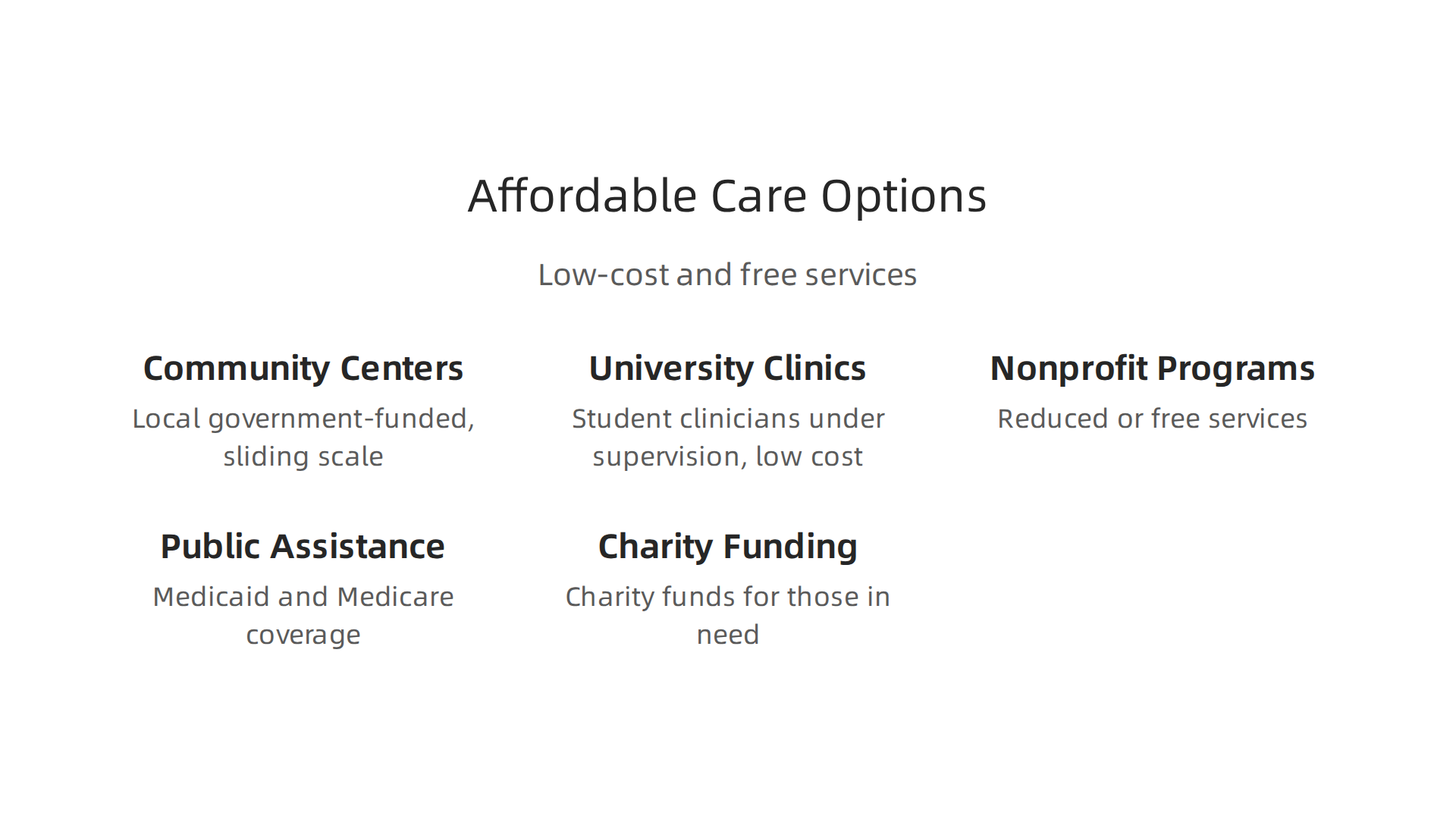
If you are looking for therapy but worry about the cost, there are places that offer lower prices or even free help.
Community Mental Health Centers
These centers are often funded by the government or local groups. They are set up to help people in the community get good mental health care, no matter how much money they make. The costs here are often much lower than private clinics, and they might even have a sliding scale for fees. They offer different treatments for mental health issues, including therapy and medicine. You can often find a local center by searching online for "community mental health services near me" or "low-cost mental health services" in your area.
University Clinics
Many universities that train new therapists or psychologists have their own clinics. Here, students who are almost finished with their training provide therapy under the close watch of their teachers. Because of this, the cost for sessions is usually much lower. This is a great way to get high-quality care at an affordable price. To find one, you can check the websites of universities close to you.
Nonprofit Programs
There are many groups that do not aim to make money but want to help people. These nonprofit organizations often offer mental health services at a reduced cost or sometimes even for free. They get money from donations or grants to help more people. One example is the Open Path Psychotherapy Collective, which connects people with therapists who offer sessions for a very low fee. Finding these groups can be a good step to getting therapy without insurance at a lower price.
Public Assistance (Medicaid/Medicare)
For people with very low incomes, or those over 65 or with certain disabilities, programs like Medicaid and Medicare can cover a lot of mental health care costs. These government health plans are designed to make sure everyone can get important medical and mental health help. If you qualify, these plans can cover many forms of therapy and treatments for mental health issues. To understand more about applying for these, you can look into your state’s health department website, for example, if you live in California you can find the CA Medi Cal phone number for mental health services.
Charity-Based Funding
Some hospitals or health systems have charity programs to help people who cannot pay for their care. You might need to fill out forms to show your income and needs. If approved, these programs can cover some or all of your costs for low-cost mental health services. It’s always worth asking about these options directly with the hospital or clinic’s billing department.
Finding mental health support does not always mean a huge bill. By looking into these choices, you can find the right care that you can afford. This helps make sure that money doesn’t stop you from taking care of your mind.
Sometimes, finding affordable mental health care is only the first step. Once you have found a therapist or program, getting ready for your appointments means knowing a bit about paperwork and how to pay. This helps make sure you get the most out of your visits without money worries. Being prepared for your sessions and understanding the world of mental health billing services can save you stress later.
Preparing for appointments: documentation, superbills, and billing questions to ask
Getting ready for your mental health appointments is important.

It means you know what to expect with costs and how to handle payment. Here’s a simple guide to help you.
What to bring to your first appointment
Having these things ready can make your first visit smoother:
- Your insurance card: This has important numbers your therapist will need.
- Your ID: Like a driver’s license, to confirm who you are.
- A list of questions: Write down anything you want to ask about your care or how much it will cost. This might include questions about specific insurance plans, like understanding your Cigna mental health coverage.
Understanding superbills
A superbill is like a detailed receipt for your therapy session. It includes all the information your insurance company needs to pay you back if you paid for your session yourself. This can include:
- Your name and contact details.
- The therapist’s name and details.
- The date of your session.
- Special codes called CPT codes that describe the service you received, like a 45-minute therapy session. You can learn more about these Mental Health CPT Codes.
- A diagnosis code, which tells the insurance company why you needed the visit.
You can ask your therapist for a superbill. They can give you one, and then you send it to your insurance company. This is especially helpful if your therapist does not take your insurance directly. To dive deeper into what these documents include, check out a complete guide to What Is A Superbill In Medical Billing?.
Documenting your sessions for insurance
It is a good idea to keep your own simple records of your appointments. This helps you keep track of things for your insurance. You can write down:
- The date of each session.
- How much you paid.
- The type of session (like individual therapy or group therapy).
When you share information with your insurance, remember that privacy is very important. You only need to share what they ask for to process your claim.
Asking your provider about billing
Before your first session, or at the start, talk to your therapist about money. Here are some good questions to ask:
- "How much does each session cost?"
- "Do you offer a sliding scale or payment plans?"
- "What mental health billing services do you use, and will you bill my insurance directly?"
- "If not, how do I get a superbill to send to my insurance?"
- "Can you tell me what CPT codes you use for my sessions?"
Knowing these answers helps you avoid surprises and manage your costs better. Good preparation can prevent many common billing problems and claim denials, which is part of ensuring good Mental Health Billing Compliance in 2026.
It can feel like a lot to think about, but taking these steps helps you focus on getting better. Dealing with all the paperwork and numbers can be tough. Feeling Emotionally Drained? The pressure may not be only personal.
Summary
This article explains how mental health billing services and insurance coverage work so you can get care without unexpected costs. It covers federal parity rules like the MHPAEA, the difference between in-network and out-of-network providers, and how HMOs, PPOs, EPOs, Medicare, and Medicaid typically handle mental health services. You’ll learn common billing models providers use, why credentialing matters, and which session types and medication management are usually covered. The guide gives a clear step-by-step process to verify benefits, check for prior authorization, and confirm covered CPT and ICD codes. It also shows how to respond to denied claims, including the appeal and external review process. Finally, the article outlines affordable alternatives—sliding-scale, community clinics, university programs, EAPs, and telehealth—and practical tips for preparing for appointments and using superbills for reimbursement.