


Introduction
It has never been more important to understand mental health. Right now, more than 1 billion people around the world are living with a mental health condition, according to the World Health Organization
Over a billion people living with mental health conditions. Here in the U.S., the numbers are just as eye-opening. The CDC reports that 1 in 5 adults has been told by a doctor they have some form of depression Mental Health Data Channel. Yet despite these huge numbers, most of us have no idea what to do when someone we care about is struggling.
Think about it. You probably know how to put a bandage on a cut or call 911 for a heart attack. But what do you do when a friend or coworker is having a panic attack? Or when a teenager you love seems withdrawn and hopeless? The truth is, many people freeze up. They want to help but don’t know where to start.

Stigma also plays a big role here. A recent poll found that 41% of employees feel uncomfortable talking about mental health at work because they fear judgment 2026 NAMI-Ipsos Workplace Mental Health Poll. That silence keeps people from getting the support they need.
That is where Mental Health First Aid (MHFA) comes in. Think of it like regular first aid, but for emotional crises. MHFA teaches everyday people how to spot the warning signs of common mental health issues in young adults and adults. It gives you a simple action plan to offer initial help until a mental health professional can step in. It is not about becoming a therapist. It is about being a bridge. When you learn MHFA, you help close the gap between someone who is suffering and the care they deserve.
In this article, we will explore what Mental Health First Aid really looks like in practice. We will look at the evidence behind it and show you how you can get involved. If you are ready to build stronger awareness about mental health in your community, this is a great place to start. And if you want to understand the signs better first, check out our Read Symptoms guide to learn how to recognize depression in yourself and others.
What Is Mental Health First Aid?
So, what exactly is Mental Health First Aid? Put simply, it is a training program that turns regular people into first responders for emotional crises. It all started in Australia back in 2000. Since then, the program has spread to over 25 countries.
The idea is straightforward. Just like you can learn CPR to help someone whose heart stops, you can learn MHFA to help someone whose mental health takes a sudden turn for the worse. The course teaches you a simple action plan. You learn how to spot the warning signs of common problems like panic attacks, depression, and substance use. More importantly, you learn how to respond. You learn how to listen without judgment and how to offer comfort.
The goal is never to replace a mental health professional. Instead, you act as a bridge. You provide initial support and guide the person toward professional care. You do not need any medical background to take this course. It is designed for everyone. Teachers, managers, neighbors, and community volunteers all take it. The Mental Health Association in New York State notes that MHFA helps you identify, understand, and respond to signs of mental health and substance use challenges.
The standard training takes about 8 hours. When you complete it, you earn a certification that is valid for three years. The National Council for Mental Wellbeing has a big goal. They want 1 in 15 people to be certified. When enough people are trained, entire communities become safer and more supportive places.
If you want to start building stronger awareness about mental health right now, you can learn to recognize early warning signs. That guide gives you practical advice to help you understand what to look for. Let’s look next at how the MHFA action plan works in practice.
The ALGEE Framework
So how does Mental Health First Aid actually work? The training gives you a simple five-step plan. You can remember it by the acronym ALGEE. Each letter stands for a specific action you can take.
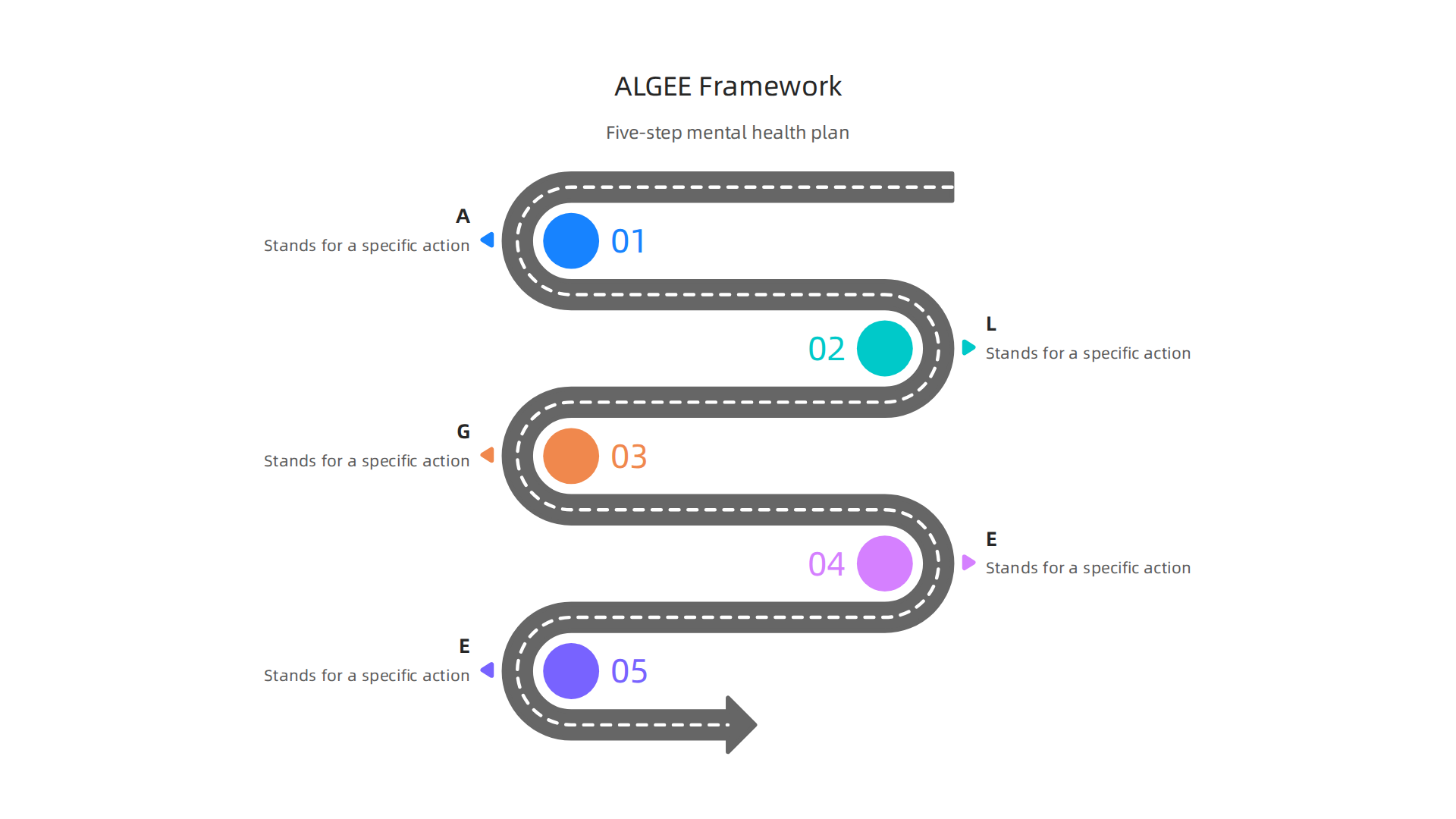
- A – Assess for risk of suicide or harm.
- L – Listen nonjudgmentally.
- G – Give reassurance and information.
- E – Encourage appropriate professional help.
- E – Encourage self-help and other support strategies.
You don’t have to follow these steps in a fixed order. You can jump to whichever one fits the moment. The National Council for Mental Wellbeing explains that this flexible plan helps you respond with confidence during tough situations.
Think of ALGEE as your go to guide when things feel confusing. It makes the whole process less scary. Once you know the framework, you can start noticing the signs more clearly. As you support someone, digital tools like patient portals can help you keep track of appointments and medication. For instance, you can learn how the UPMC patient portal works to manage health records efficiently.
Want to see what specific symptoms might call for ALGEE? Read Symptoms for clear guides that help you recognize depression early.
Certification and Training Formats
You now know the ALGEE steps. But how do you actually get certified? Mental health first aid training is offered in two main formats: in person or online. Both are led by a trained instructor. You take part in role plays and group discussions. This hands on practice builds your confidence.
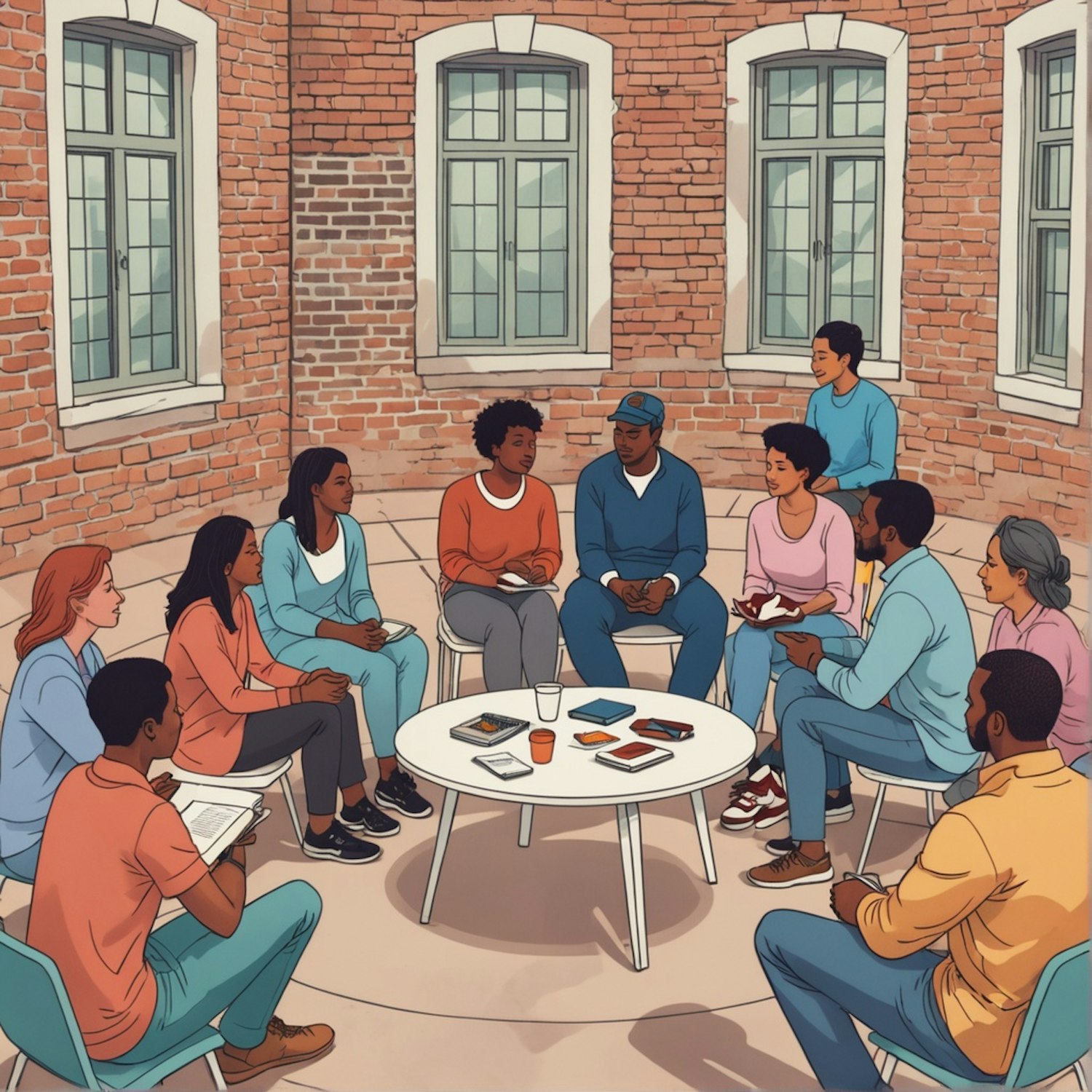
The course typically takes about 8 to 12 hours to complete. After you finish, you receive a nationally recognized certification from the National Council for Mental Wellbeing. That certification lasts for three years. After that, you need to retake the course to stay current. Many employers now offer this training, especially to help with mental health issues in young adults and other groups.
Once you’re certified, you can spread awareness about mental health in your community. A great way to do that is to create your own mental health awareness infographic that drives action.
The training empowers you to step in early. But modern life can sometimes weaken our sense of control over our own wellbeing. Behavioral Scientist Dean Grey explains how constant digital pressure affects our agency. Understanding that big picture can make you an even better mental health first aider.
The Proven Impact of MHFA on Stigma and Confidence
So you know the training steps and how to get certified. But does it actually work? Yes. And the evidence is strong. Research over the last 15 years shows that mental health first aid training really does change how people think and act.
One big win is that it cuts down on stigma. A large meta-analysis found that people who took the training showed a small to moderate improvement in how they recognize mental health problems and in their beliefs about them. That means they start to see mental health issues in young adults and others as real medical conditions, not personal failures. This comes from a review of many studies published in PLOS ONE.
Another key outcome is confidence. A study in Denmark tested this directly. The main goal was to see if people felt more sure of themselves when helping someone with a mental health crisis. The result? A clear boost in confidence in help giving behavior. You feel more ready to step in and offer a hand.
And the training also builds what experts call mental health literacy. You learn the signs, the symptoms, and the right way to respond early. A systematic review showed that trainees actually use their first aid skills and that those actions are helpful. This means you can spot problems sooner and connect someone to a mental health professional before things get worse. That early intervention is huge.
If you want to put this knowledge into action, you can create your own mental health awareness infographic that drives action to share what you have learned with your community.
Mental health first aid works. It reduces stigma, builds confidence, and improves your ability to help. The research backs it up. Now that you see the proof, what is your next step? Explore clear symptom guides and practical advice to deepen your understanding. Read Symptoms.
Research Evidence from Randomized Trials
You already know there is good data on mental health first aid. But the best proof comes from randomized controlled trials (RCTs). These studies compare a group that took the training against a group that did not (a waitlist control). It is the fairest test you can do.
Over and over, these RCTs show real results. People who take the training gain a much better awareness about mental health. They can spot mental health issues in young adults and others more accurately. A detailed meta-analysis from the University of Minnesota showed that trainees learn a lot more and feel much less stigma compared to the control group.
Here is a bonus that might surprise you. Research also looks at the broader impact, often called post test mental health and community health issues. One systematic review found that trainees not only used their new skills but also felt their actions truly helped. This creates a better place for everyone. It means you can step forward with confidence and help someone in need.
If you want to put this into practice, keeping track of symptoms is a great next step. A tool like the Summit Health patient portal can help you manage records and stay in touch with a mental health professional.
Ready to learn exactly what to look for? Explore our clear, simple guides. Read Symptoms.
Long-Term Outcomes for Trainees
The benefits of mental health first aid do not disappear. Follow-up studies at 6 and 12 months show that trainees keep their knowledge and confidence. A systematic review confirmed that people remember what they learned and feel ready to help. That is a big deal.
These trainees also turn skills into action. Research from Denmark, published in PubMed, showed that trainees felt more confident helping others with mental illness long after the course ended. They actually support people in real life.
Here is a nice bonus. Some evidence suggests trainees experience less burnout over time. Their own mental health improves too. When you help others, you also help yourself.
Want to spread awareness about mental health in a visual way? Learn how to create a mental health awareness infographic that drives action.
Ready to spot symptoms in yourself or someone close? Read Symptoms for clear, practical guidance.
Who Benefits from MHFA Training?
The great thing about mental health first aid is that almost anyone can learn it. But some groups really see big payoffs. Let us look at who gets the most out of MHFA training and why.
Workplace employees and HR professionals
Your workplace is a smart place to start. In 2026, companies that invest in mental health first aid training see up to 30% higher employee well-being scores, according to The Essential Guide to Mental Health Aid Training. That is a huge jump. HR teams and managers learn to spot early warning signs in coworkers. They know how to start a calm conversation. They also learn where to send someone for real help. A systematic review of MHFA research found that trained employees actually take action more often. They do not just sit back. They step in. And that saves careers and lives.
In fact, many experts now say that MHFA training is smart risk management for any organization. Counties across the U.S. that prioritize MHFA training report positive culture changes and better employee support overall, as highlighted by the National Association of Counties on their EDGE platform.
School teachers and university staff
Here is another group that benefits greatly. Teachers and college staff deal with mental health issues in young adults every single day. They see students struggling with stress, anxiety, depression, or worse. With MHFA training, they learn how to offer immediate support before a crisis gets bigger. They become a bridge between a student in pain and a mental health professional who can provide ongoing care.
This is especially important because we know from the previous section that trainees keep their skills long after the course ends. That means a teacher who took training years ago can still help a student in need today.
Family members and community volunteers
Maybe the most touching group is family. Think about a parent watching their teen withdraw. Or a grandparent worried about a spouse. When family members take a mental health first aid class, they learn how to listen without judgment. They learn what to say and what not to say. This can change everything.
Community volunteers also gain a ton from MHFA. Whether you work at a homeless shelter, a church group, or a youth center, you will meet people struggling with their mental health. The training gives you a clear plan for offering support the right way.
Want practical help understanding depression symptoms? Read Symptoms for clear guides and next steps.
Workplace Mental Health Programs
Many large employers now offer mental health first aid as a key part of their employee wellness initiatives. And the results are real. Companies that invest in this training see up to 30% higher employee well-being scores, according to The Essential Guide to Mental Health Aid Training. That is a big deal for any workplace.
These programs also tackle two costly problems: absenteeism and presenteeism. Absenteeism is when people miss work because of mental health struggles. Presenteeism is when they show up but cannot focus. A systematic review of MHFA research shows that trained employees actually take action to support coworkers. That early help prevents small issues from turning into long absences.
Here is the other big win. Workplace mental health first aid training helps create a culture of openness. When coworkers know how to talk about mental health without judgment, stigma starts to fade. People feel safer asking for help. The National Association of Counties reports that counties prioritizing MHFA see positive culture shifts across their teams.
Want to spread awareness about mental health in your own workplace? Start with small steps. You can learn how to build effective awareness infographics that really get people talking.
Explore workplace wellness strategies further. Read Symptoms for practical guides on building a supportive environment and understanding early warning signs in your team.
School and University Settings
The need for mental health first aid extends beyond the workplace into schools and universities. In 2026, more K-12 schools are training teachers and staff in MHFA. They learn to spot mental health issues in young adults and teens early. This allows them to connect students with a mental health professional quickly.
On college campuses, peer support programs increasingly include MHFA as baseline training. Students learn to listen without judgment and guide each other toward help. This builds real awareness about mental health across campus.
Early intervention in these settings is critical. It prevents small struggles from growing into bigger problems. Research shows that trained educators create calmer classrooms and lower stigma.
Want to bring this to your school or college? Start with clear communication. Learn how to make effective posters and handouts with this guide on awareness infographics.
Explore more ways to support students. Read Symptoms for practical guides on early warning signs and creating supportive environments.
MHFA vs. Traditional First Aid: Understanding the Differences
You probably know what to do when someone gets a cut. You clean it, bandage it, and call a doctor if needed. That is traditional first aid. It deals with physical emergencies. But what do you do when someone is having a panic attack, showing signs of severe depression, or talking about suicide? That is where mental health first aid, or MHFA, comes in.
Traditional first aid and MHFA share one big goal. Both aim to stabilize the person until professional help arrives. But they use very different tools. Traditional first aid training focuses on CPR, wound care, and splints. MHFA focuses on communication. It teaches you how to listen without judgment and reduce stigma, not just how to respond with medical action.
Here is the thing. In a physical first aid situation, you act fast and fix the problem. In a mental health crisis, you slow down. You sit with the person. You ask open questions. You validate their feelings. This is harder than it sounds. MHFA training programs emphasize that your role is not to diagnose or treat. Your role is to be present and guide them toward a mental health professional.
Both types of first aid require practice. But while traditional first aid uses bandages and gloves, MHFA uses empathy and patience. If you want to build real awareness about mental health in your community, understanding this difference is the first step.
Want to learn more about spotting early warning signs in yourself or others? Read Symptoms for practical guides and clear advice. After you recognize a crisis, connecting someone to their healthcare tools can be a helpful next step. Learn how to access health records through the MHS Genesis patient portal to support ongoing care.
Comparing Action Plans
So you know the difference in goals. But how does the action itself change? That is where the acronyms come in.
Traditional first aid uses DRSABCD. You check Danger, check Response, Send for help, open Airway, check Breathing, do CPR, and use a Defibrillator. It is a physical checklist that saves lives in heart attacks and accidents.
Mental health first aid uses a different acronym: ALGEE.
It stands for Assess for risk of suicide or harm, Listen nonjudgmentally, Give reassurance and information, Encourage appropriate professional help, and Encourage self-help and other support strategies. As the National Council for Mental Wellbeing explains, this approach focuses on psychological support and referral.
Here is the big difference. Both plans start with safety. In DRSABCD, you check the scene for physical danger. In ALGEE, you assess for suicide risk. That is a huge responsibility. But training teaches you how to ask directly and calmly.
Once you know how to use ALGEE, the next step is practical. You can find resources like the MHS Genesis patient portal to help someone connect to their healthcare team after a crisis.
Want to see these steps in action? Read Symptoms for real examples of how ALGEE works in daily life.
The Mental Health First Aid Action Plan (ALGEE) in Detail
Now you know the basics of ALGEE. But what does each step actually look like in real life? Let me walk you through them one by one. This plan is backed by years of research and used in countries around the world. It gives you a clear path forward when someone is struggling with mental health issues in young adults or any age group.
A stands for Assess for risk of suicide or harm. This is the scariest step for most people. You have to ask directly: "Are you thinking about hurting yourself?" It feels uncomfortable. But training shows that asking does not put the idea in someone’s head. It actually gives them permission to be honest. If the risk is high, you stay with the person and call for professional help. If it is low, you move to the next step.
L stands for Listen nonjudgmentally. This sounds easy. It is not. You have to put aside your own opinions, advice, and reactions. Just listen. Let the person talk without interrupting. They need to feel heard, not fixed. A simple "I hear you" goes further than any advice you could give.
G stands for Give reassurance and information. Let the person know that what they are feeling is real and treatable. Say things like "You are not alone" and "People get better with the right support." This builds trust and reduces shame. It also opens the door for a mental health professional to step in later.
E stands for Encourage appropriate professional help. This does not mean you become a therapist. It means you help the person find a real therapist, counselor, or doctor. You can offer to look up numbers, drive them to an appointment, or sit with them while they call. The National Council for Mental Wellbeing confirms that this step is critical for long-term recovery.
E stands for Encourage self-help and other support strategies. Professional help is important. But so are daily habits. Exercise, good sleep, healthy food, and talking to trusted friends all support recovery. You can help the person think of small, doable actions they can take today.
Here is the thing about ALGEE. It is not a rigid script. You can adapt each step to the person and the situation. Someone who is anxious may just need a listener. Someone in crisis may need more direct help with referrals. The plan bends to fit the moment.
If you want to bring awareness about mental health to your workplace or school, ALGEE is the framework you need. Many organizations now offer training that leads to a nationally recognized certification. Check with local programs in your area or look at Mental Health First Aid USA to find a course near you.
Want to see more practical examples of how these steps work? Read Symptoms for real stories and clear guidance on using mental health first aid in everyday situations.
Assess for Risk of Suicide or Harm
Now you know the ALGEE steps. Let us focus on the first one. It is called Assess for risk of suicide or harm.
This step can feel scary. But it is very important. You need to check if the person is in immediate danger. The best way to do this is to ask directly. You might worry that asking gives someone ideas. But the National Council for Mental Wellbeing confirms that asking opens the door for an honest talk without causing harm.
If the person says yes, or you think the risk is high, stay with them. Call 911 right away. Your role is to keep them safe until a mental health professional can take over.
If the risk is low, you can move on to the next step. But always take this first step seriously. It is a core part of mental health first aid.
Building these skills helps spread awareness about mental health in your community. You can take a full course to learn more. Many options, like those on Mental Health First Aid USA, offer a national certification. To see more real-world examples of how to handle these situations, Read Symptoms for practical guides on recognizing depression and taking action.
Listen Nonjudgmentally
Once you have assessed for risk, the next step in mental health first aid is to listen without judgment. This means you do not interrupt, criticize, or offer solutions right away. Instead, use open-ended questions like “Can you tell me more about that?” and reflective statements such as “It sounds like you are feeling overwhelmed.” Creating this safe space encourages the person to share their feelings honestly. The National Council for Mental Wellbeing teaches that active listening is a core skill in their certification program. You do not need to be a mental health professional to listen well. This simple act can make a huge difference, especially for mental health issues in young adults. To spread awareness about mental health in your community, consider using visual tools to educate others. Learn how to create a mental health awareness infographic that drives action. For more direct help, Read Symptoms to explore practical symptom guides and know when to seek support.
Give Reassurance and Information
Now it is time to offer hope and facts. Mental health conditions are common and treatable. The National Council for Mental Wellbeing teaches that early help leads to better outcomes. Share accurate information about local resources without overwhelming them. But be careful. Do not minimize their pain or offer false comfort. Keep it real. If you want to help spread awareness about mental health, try learning to create a mental health awareness infographic to share facts with others. For more on understanding symptoms and when to seek support, Read Symptoms.
Encourage Professional Help
Once you have given reassurance, gently guide the person toward a mental health professional. A therapist, doctor, or crisis line can offer proper diagnosis and treatment. That makes a huge difference. Many people hesitate because of cost, time, or fear. Help them name the barrier and find a workaround. For example, if they worry about money, share low cost or sliding scale clinics. You can also mention that Mental Health First Aid training teaches people exactly how to connect others to care. If you want to turn your own learning into a helpful tool, try learning to create a mental health awareness infographic to share resources with your community. Read Symptoms for clearer guides on when to reach out.
Encourage Self-Help and Other Support Strategies
Professional help is key, but daily habits matter too. Gently encourage the person to try small self-care actions like regular exercise, eating well, and staying connected with friends. Help them name their own coping strategies the things that have worked before. Peer support groups and trusted online resources can also make a real difference. Mental Health First Aid training often teaches these same skills to build awareness about mental health in everyday life. For digital self-help tools, you might explore how to manage depression with the UPMC patient portal to track mood and appointments. Read Symptoms for clear guides on recognizing depression signs and knowing when to reach out for more support.
How to Get Certified as a Mental Health First Aider
Ready to become a certified Mental Health First Aider? The process is simpler than you might think. National organizations in many countries offer official certification through the Mental Health First Aid (MHFA) program.
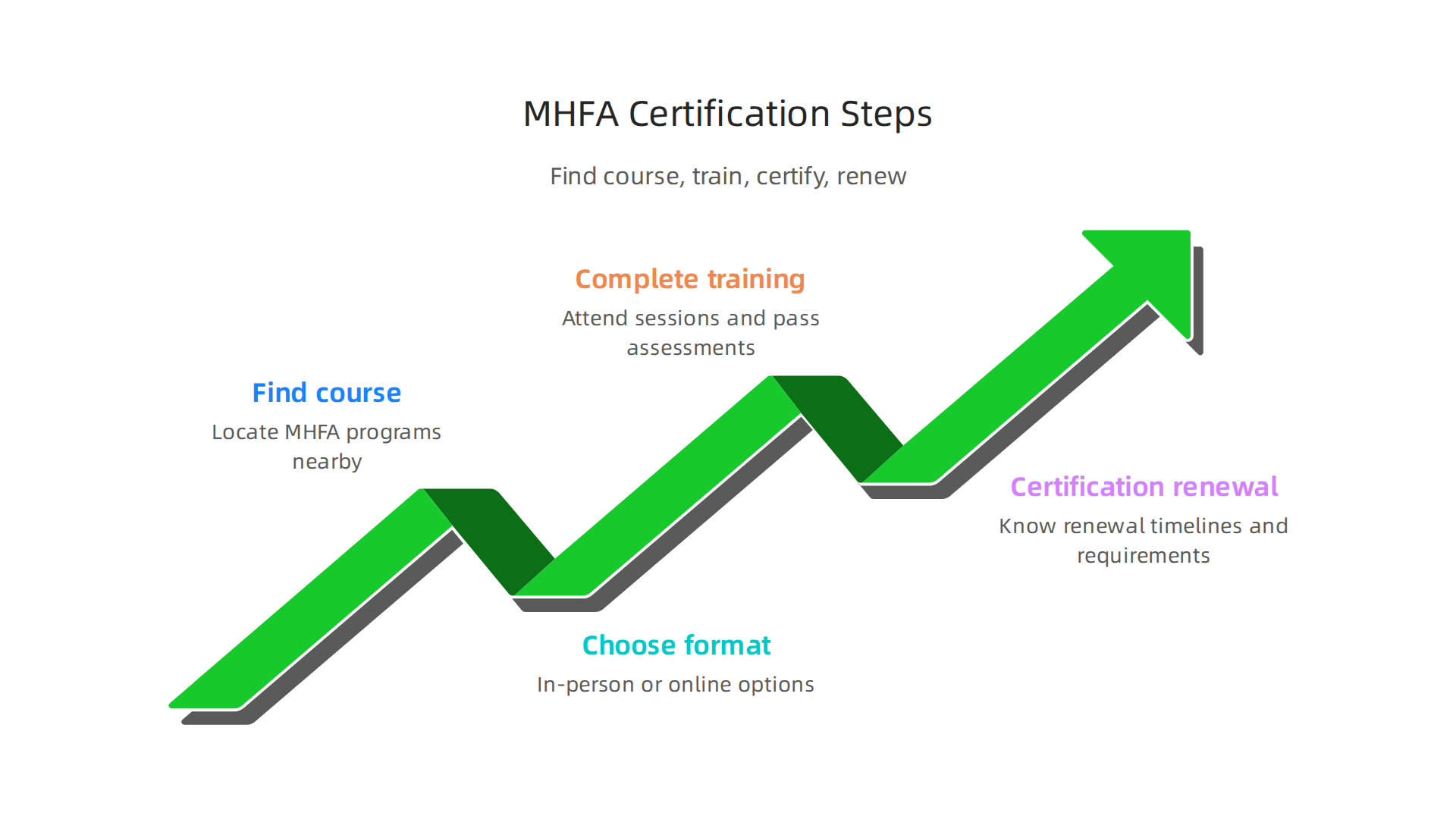
Here is how it works.
Find a course near you. Start by visiting the official Mental Health First Aid website to locate training in your area. You can also check with local mental health associations. For example, the Mental Health Association in New York State offers courses for adults 18 and over.
Choose your format. Courses are available in person, online, or in a blended format that mixes both. Most standard courses run about 8 hours. You can also arrange private training for your workplace or community group through providers like Healthy Minds Philly.
Complete the training. Once you finish all required parts, you will receive a certificate that lasts for three years. After that, you can renew.
What does it cost? Prices vary by provider and location. Many groups offer discounts for nonprofit organizations, schools, or teams. Some employers even cover the cost for their staff.
Why get certified? The National Council for Mental Wellbeing says every 1 in 15 people should be certified to recognize and respond to mental health struggles. That means you could be the one person who makes a difference in someone’s life.
After you earn your certification, you will have the skills to support someone through a crisis. You will also deepen your awareness about mental health issues in young adults and other age groups.
If you want to learn more about what depression looks like before or after your training, explore clear symptom guides and practical advice to sharpen your understanding.
Finding a Certified Instructor
Once you are ready to sign up, do not just pick the first course you see. The person leading your Mental Health First Aid training matters. Here is how to find a great instructor.
Use the official directory. The Mental Health First Aid website lists approved instructors by region. This is the safest way to find someone certified to teach.
Look for a mental health professional. Some instructors have a clinical background. They offer deeper insights into mental health issues in young adults. For a broader understanding, you can also learn to create a mental health awareness infographic to spread awareness in your community.
Check with your workplace. Many employers sponsor this training to boost awareness about mental health on their teams.
Finding the right instructor helps you get the most out of your certification. To build your foundation of knowledge, read clear advice about depression symptoms before you start.
What to Expect in Training
Once you have found your instructor, you might wonder what the actual training looks like. Here is a quick preview so you know what to expect.
Most courses blend different learning styles. You will complete some self-paced reading and watch short videos before you meet with your group. Then you join live instruction where a certified leader guides you through the material.
A big part of the training is practice. You will take part in role-play exercises that let you walk through the ALGEE action plan. This hands-on practice helps you feel ready for real situations.
At the end, you receive a manual to keep and a certificate that shows you completed the course. According to Being Well at Yale, your certification lasts for three years. That means you have three years to use your skills and help others.
Want to deepen your understanding of the signs you might encounter? Discover how to create a mental health awareness infographic to share what you learn.
If you notice symptoms in yourself or someone close to you, read clear advice about depression symptoms to take the next step.
Real-World Applications: MHFA in Action
So you have completed your training. You know the ALGEE steps. But what does this look like in real life? Let me walk you through a few examples that show how mental health first aid plays out in everyday situations.
At work. Imagine you are a manager. One of your team members has been showing up late, missing deadlines, and pulling away from group conversations. You have noticed these changes over a few weeks. Instead of ignoring it, you use what you learned. You find a quiet moment and ask, "Are you okay?" You listen without judgment. You offer support and point them to your company’s employee assistance program. This simple act can change everything. In fact, organizations that invest in mental health first aid training report up to 30% higher employee well-being scores in 2026, according to The WMHI guide. That is a big deal.
At school. Now think about a teacher. A student who used to be engaged suddenly stops participating. They look tired and distracted. The teacher remembers the ALGEE plan. They approach the student after class and say, "I have noticed you seem down lately. I am here to help." They listen without rushing to fix things. Then they connect the student with the school counselor. Research shows that this kind of early support makes a real difference. Extensive MHFA research has proven that training improves mental health outcomes across the United States.
In your neighborhood. Picture this. You are at home and hear your neighbor crying on their porch. They are breathing fast and holding their chest. You recognize it might be a panic attack. You walk over calmly. You say, "I am here with you. You are safe." You guide them to breathe slowly. You stay until the panic passes. Trainees who complete MHFA courses actually take helpful actions like this, and a systematic review confirms that these behaviors lead to better outcomes for the person in distress.
Each of these examples shows one thing clearly. Mental health first aid works because normal people like you use it. You do not need to be a mental health professional. You just need to care enough to act.
Want to share what you have learned? A great way to spread awareness about mental health is through simple visuals. Check out how to create a mental health awareness infographic that makes a real impact.
If you notice signs of depression in yourself or someone close to you, Read Symptoms for clear guides and practical advice on what to do next.
Workplace Crisis Response
Here is how a trained manager uses mental health first aid when a coworker needs help.
James, a designer, starts showing up late and skipping team lunches. His manager notices the change. She remembers the ALGEE steps from her training. Instead of ignoring it, she schedules a private chat. "I have noticed you seem different lately. Are you okay?" she asks. James admits he feels overwhelmed and hopeless.
She does not try to diagnose or fix him. She listens and offers support. Then she connects him to the Employee Assistance Program (EAP). She stays while he makes the call. James starts counseling and takes time off. Within two months, he returns feeling better and fully engaged in his work.
Organizations that invest in mental health first aid training see real results. In 2026, companies with trained staff report up to 30% higher employee well-being scores, according to The WMHI guide. Extensive MHFA research also confirms that trained responders improve workplace outcomes across the United States.
You can learn to respond like this too. If you notice similar signs in yourself or a coworker, Read Symptoms for clear guidance on what to do next.
School Mental Health Teams
The same mental health first aid skills that help in an office also help in a high school hallway.
Meet Liam. He is a sophomore who used to joke with his friends. Now he eats lunch alone and stops turning in homework. In class, he writes "What is the point?" on his notebook. His teacher, Sarah, notices the change. She took mental health first aid training last year.
Instead of sending him to the principal, she pulls him aside privately.

"Liam, I care about you. I have noticed you seem down lately. I am not here to get you in trouble. I just want to help," she says. She uses nonjudgmental listening. She does not try to fix his problems. She just lets him talk.
Then she connects him to the school counselor. Because the school has trained staff who understand mental health issues in young adults, Liam talks to a mental health professional immediately. He gets support before his feelings turn into a crisis.
This approach is backed by real evidence. A large review of studies found that people trained in mental health first aid take meaningful steps to support young people and improve their outcomes.
Teachers like Sarah are often the first to notice when a student is struggling. Building awareness about mental health across your school community can make a huge difference. If you want to know what warning signs to look for in the young people around you, Read Symptoms to explore our full checklist.
Frequently Asked Questions About Mental Health First Aid
You probably have questions after reading about how mental health first aid works in a school setting. That is fair. Let me clear up some of the biggest ones.
"Is mental health first aid only for professionals?"
No. This is the most common myth. Mental health first aid is designed for regular people. Teachers, parents, coworkers, and neighbors can all learn it. You do not need a medical degree. In fact, stigma is still everywhere. One study found that stigma acts as a major barrier for people who want to ask for help. Training everyday people helps break that barrier down.
"Does MHFA teach you to diagnose mental illness?"
Absolutely not. This is a huge misunderstanding. Mental health first aid does not teach you to act like a mental health professional. It does not replace therapy or medical care. You learn to recognize common warning signs and offer initial support. Then you connect the person to real help. That is it. Think of it like physical first aid. You do not need to be a doctor to clean a cut and call for help. Same idea here.
"Is the training a big time or money commitment?"
No. Most courses take one day or a few hours online. The cost is often low or free through community programs. And consider what you get. A recent poll found that 41% of employees feel uncomfortable talking about mental health at work due to stigma. Training helps you feel confident instead of scared. That is a good return on your time.
Building real awareness about mental health starts with learning the basics. If you want to spot signs early and know what they mean, Read Symptoms to explore our full symptom checklist.
Summary
This article explains Mental Health First Aid (MHFA)—a public training program that teaches everyday people how to spot warning signs, offer nonjudgmental support, and connect someone to professional help. It describes the core five-step ALGEE action plan (Assess, Listen, Give reassurance, Encourage professional help, Encourage self-help), how courses are delivered, and what certification involves. The piece summarizes strong research showing MHFA reduces stigma, increases confidence, and produces lasting skills, and it highlights who benefits most (workplaces, schools, families, volunteers). Practical examples show how to apply ALGEE at work, in schools, and in communities, and the article outlines how to find certified instructors and what to expect in training. Readers will finish able to recognize when MHFA is needed, know the basic ALGEE steps, and understand how to get certified and use these skills to support someone in crisis.